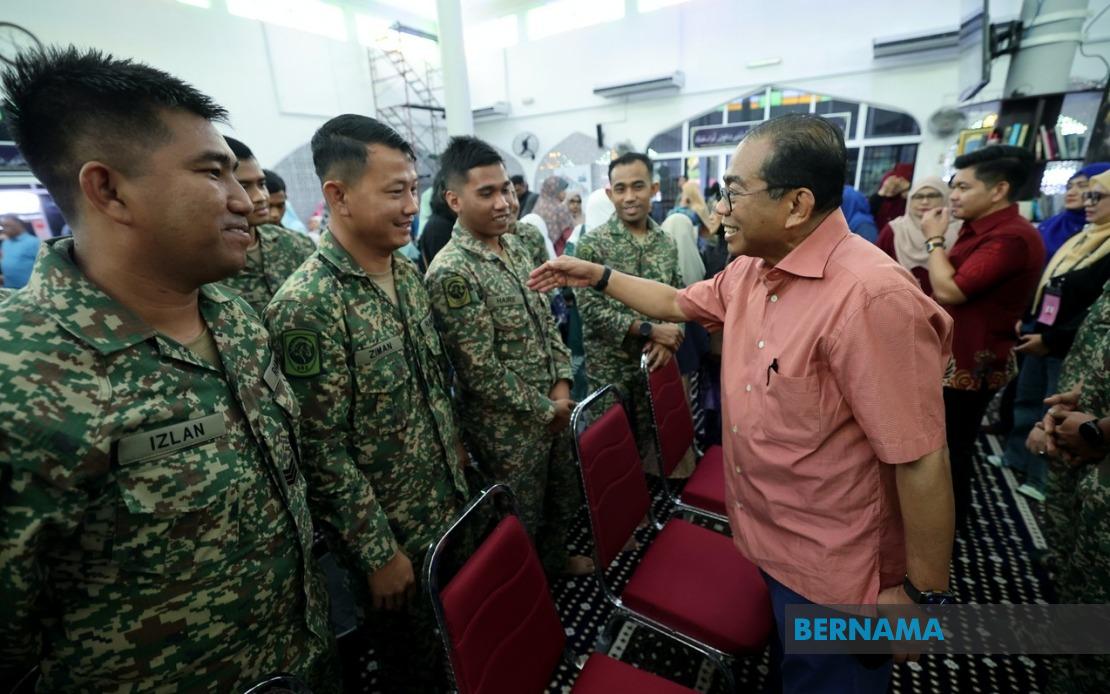
Defence Minister Datuk Seri Mohamed Khaled Nordin has indicated that a comprehensive investigation into the deadly grenade explosion at Hobart Camp in Gurun is in its final stages, with submission to the Ministry of Defence expected by the middle of July. Speaking during a visit to the 'Ilmu dan Muafakat' (PIKAT) programme at Felda Air Tawar 2 in Kota Tinggi, Mohamed Khaled confirmed that investigators were actively completing their assessment of the incident, which claimed the lives of two soldiers during a routine training exercise last month.
The explosion occurred on June 16 at approximately 10.57 am, resulting in the deaths of Corporal Norazmi Abu Bakar of the Sixth Battalion, Royal Malay Regiment (RAMD) and Private Siti Khadijah Sungip of the First Squadron, Royal Engineers Regiment (RAJD). Both service members sustained severe injuries in the blast but were pronounced dead while being transported to Sultan Abdul Halim Hospital in Sungai Petani, raising significant questions about emergency response procedures and medical evacuation protocols at the training facility.
The completion of the investigation report represents a critical juncture for the Malaysian military's institutional response to the tragedy. Defence Minister Mohamed Khaled stressed that whilst the formal inquiry was nearing conclusion, no premature decisions would be announced until the full findings had been thoroughly reviewed by the ministry. This cautious approach reflects the sensitivity surrounding military fatalities and the need for comprehensive accountability measures that command public and parliamentary confidence.
Beyond the immediate investigation, the Ministry of Defence has directed the Malaysian Army to undertake a systematic review of its entire training methodology and safety protocols. This broader examination has become increasingly urgent given the emergence of a second serious incident at the same facility, which compounds concerns about whether isolated procedural failures or systemic vulnerabilities contributed to these accidents. The Defence Minister indicated that investigators would specifically examine whether additional shortcomings or operational weaknesses existed that warranted remedial action.
Just thirteen days after the fatal grenade explosion, a second incident unfolded at Hobart Camp on June 29, when a firearm unexpectedly discharged during a combat enhancement training (LPT) exercise at 6.15 pm. Sergeant Mohamad Firdaus Che Shaharudin and Corporal Felix Franchis of the Fourth Battalion, Royal Ranger Regiment (4 RRD) sustained leg injuries from shrapnel resulting from the weapon discharge. Whilst this second incident produced injuries rather than fatalities, the rapid succession of two major accidents within a fortnight at the same location has intensified scrutiny of training protocols, equipment maintenance standards, and supervision practices at the facility.
The clustering of these incidents within such a compressed timeframe presents a troubling pattern that demands thorough forensic analysis. For the Malaysian military, establishing the precise causation factors—whether mechanical failures, human error, inadequate safety equipment, insufficient training, or deficient supervision—will determine the scope and nature of corrective measures. The defence establishment faces considerable pressure to demonstrate that it can learn from these tragedies and implement meaningful reforms that prevent recurrence.
For Malaysian observers and the families of the deceased military personnel, the investigation's findings will carry profound implications regarding accountability and systemic change. The military has traditionally maintained considerable institutional autonomy in conducting internal investigations, though heightened public awareness of these incidents has created expectations for transparency and substantive outcomes. The submission of the formal report by mid-July will mark an important moment in determining whether the Malaysian military's internal review mechanisms can satisfy public expectations for rigorous oversight.
The incidents at Hobart Camp have also renewed broader conversations about training safety across the region's armed forces. Malaysia's military commitments—including ongoing counterinsurgency operations in Sabah and regular participation in multinational exercises—place considerable demands on training frequency and intensity. Balancing operational readiness with personnel safety remains a perpetual challenge for defence establishments across Southeast Asia, where resource constraints and operational pressures sometimes create environments where safety protocols may be compromised.
Defence Minister Mohamed Khaled's commitment to withholding judgment until the investigation concludes suggests that the military leadership recognises the gravity of the situation and the necessity for evidence-based decision-making rather than reactive measures. The comprehensive review of training approaches will likely encompass equipment specifications, instructor qualifications, medical support arrangements at training sites, and the calibration of exercise intensity relative to participant experience levels. Such thoroughgoing examination could establish benchmarks for training safety across the broader regional military community.
The pathway forward will require sustained political oversight alongside professional military judgment. The Defence Ministry's involvement in receiving and acting upon the investigation report ensures civilian governmental accountability, though the ultimate implementation of reforms will depend upon the Malaysian Army's institutional commitment to adopting recommended changes. For Malaysia's military personnel and their families, the credibility of the investigation process and the substantiality of subsequent reforms will serve as measures of whether the institution has genuinely learned from these tragedies.

