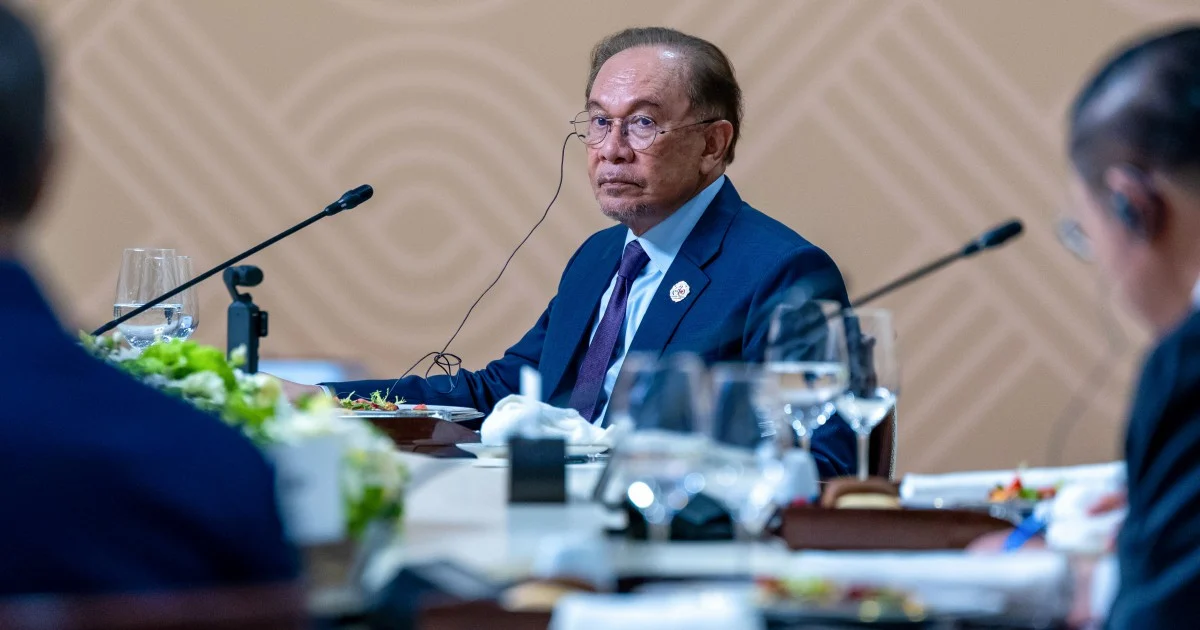
Prime Minister Datuk Seri Anwar Ibrahim has signalled that developing nations across the Global South stand at a critical juncture in their relationships with Europe, warning that persistent unfair treatment will inevitably drive these countries toward different international partners. The remarks reflect growing tensions between the developed and developing world over how economic and defence policies are implemented, with Anwar specifically citing a defence-related disagreement involving Norway as evidence of broader patterns of inequity.
Anwar's comments underscore a pivotal shift in geopolitical alignments. For decades, developing countries have relied on European partnerships for investment, technology transfer, and security cooperation. Yet this reliance has come with conditions and expectations that sometimes clash with the interests of emerging economies. When wealthy nations leverage their economic dominance or impose unilateral restrictions without adequate consultation, developing countries increasingly feel they have little choice but to seek relationships elsewhere. This dynamic has intensified as nations like China, India, and Russia expand their own spheres of influence across Asia, Africa, and the Middle East.
The Malaysian Prime Minister's position carries particular weight in Southeast Asia, where countries have historically attempted to balance relationships with Western and non-Western powers. Malaysia itself has pursued a careful diplomatic strategy, maintaining ties with the United States and European nations while simultaneously deepening economic and strategic partnerships with China and other regional players. Anwar's warning reflects this broader regional sentiment that smaller nations should not be forced to choose rigid alignment with any single bloc.
The specific dispute with Norway, though not elaborated in detail, likely illustrates the kind of friction that generates broader resentment. Norway, despite its relatively small population, wields considerable influence through its wealth and membership in Western institutional frameworks. When such nations impose restrictions or take positions that disadvantage developing countries, it often feels to policymakers in the Global South like developed nations are using their privileged position to maintain structural inequalities in the international system.
Anwar's remarks also touch on a fundamental question of equity in global governance. Developing countries frequently argue that they are held to different standards than their wealthier counterparts. Environmental regulations, labour standards, and defence procurement rules are sometimes applied more stringently to poorer nations, while wealthy countries enjoy greater flexibility. This perceived double standard breeds frustration and encourages developing nations to forge partnerships with countries that offer terms without such strings attached.
The timing of these comments is significant. Southeast Asia is experiencing rapid economic growth and increasing strategic importance, making it an attractive partner for multiple global powers. Countries in the region have demonstrated a willingness to engage with various international actors—from China to India to the United States to the European Union—based on pragmatic national interests rather than ideological alignment. Anwar's intervention suggests Malaysia and other developing nations expect to be treated as equals in these relationships, not subordinates.
For European nations seeking to maintain influence in the developing world, Anwar's message carries an implicit ultimatum. The post-Cold War order in which Europe could assume its values and interests were universally preferred has fundamentally shifted. Developing countries now have choices, and they will exercise them. If Europe wishes to remain a preferred partner, it must demonstrate genuine respect for the sovereignty and interests of other nations, and abandon the condescending or exploitative patterns of the past.
This repositioning reflects broader trends in Malaysian and Southeast Asian foreign policy. These nations are increasingly confident in their ability to negotiate from positions of strength. They possess natural resources, strategic locations, and growing economic dynamism that makes them valuable to multiple powers. They need not passively accept dictates from any external power, regardless of that power's historical prominence.
The defence dispute with Norway may seem like a minor bilateral issue, but it serves as a symbol of larger frustrations. Small incidents can trigger broader recalibrations if they are perceived as symptomatic of structural unfairness. Developing nations are signalling that such moments will be remembered and will inform future decisions about partnerships and alignments. The implicit message is that Europe must adapt to a multipolar world where influence is earned through respect and fair dealing, not assumed as a birthright.
For Malaysian readers and Southeast Asian policymakers, Anwar's position articulates an increasingly assertive stance: developing countries will no longer accept secondary status in international relations. Instead, they will calibrate their engagements based on whether partners treat them as genuine equals. Europe, like any other potential partner, must meet this threshold or accept that developing nations will direct their energies and resources toward relationships that do. This marks a subtle but significant recalibration of power dynamics in global affairs, with implications that extend far beyond trade or defence into the fundamental architecture of international cooperation.

