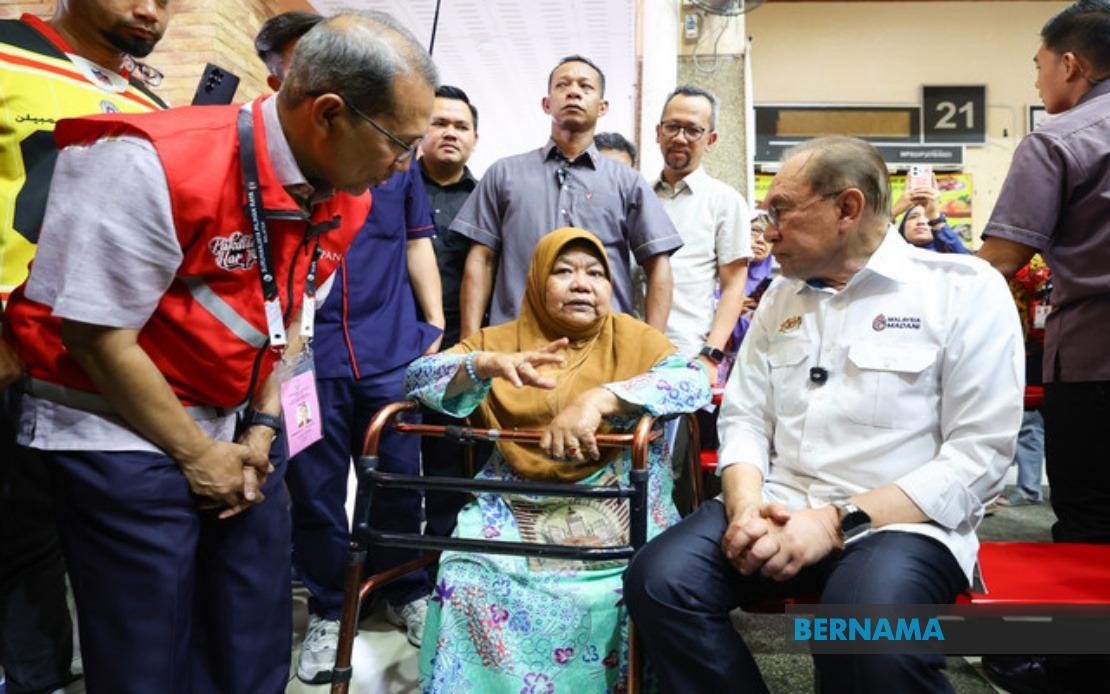
A 68-year-old resident of Kampung Gedung Lalang overcame both inclement weather and physical challenges to achieve a personal milestone on Monday, riding her specially adapted three-wheeled motorcycle to Benteng Ampangan in Seremban. Jumaah Mohd Alif, who lost her left leg in a serious accident three and a half decades ago, seized the opportunity to meet Prime Minister Datuk Seri Anwar Ibrahim during his campaign visit to Negeri Sembilan, describing the encounter as deeply meaningful and something she would treasure throughout her remaining years.
The determination displayed by Jumaah reflects broader questions about accessibility and representation for persons with disabilities in Malaysia's political landscape. Despite the steady drizzle that characterised the day, she made the journey after learning from villagers that the Prime Minister would be visiting the area. For someone navigating daily life with a prosthetic limb and relying on motorised transportation, such a decision required considerable resolve and planning. Her willingness to venture out in adverse weather conditions underscores the significance she attached to this moment, one that had eluded her for many years despite living in the same state as the nation's highest political office.
Jumaah's account reveals the limited interaction many senior citizens and persons with disabilities have with high-ranking political figures. She confessed that prior to this encounter, her knowledge of the Prime Minister came exclusively from television broadcasts and occasional glimpses from a distance—a reality that speaks to the broader accessibility challenges facing marginalised communities in Malaysia. The gap between political leaders and grassroots constituents, particularly among vulnerable populations, remains significant despite democratisation efforts and public engagement initiatives. This chance meeting thus represents not merely a personal achievement but also a symbolic moment highlighting how political campaigns can reach unexpected audiences when efforts are made to visit diverse communities.
Prime Minister Anwar Ibrahim was in the state as chairperson of Pakatan Harapan to energise support for the coalition during the ongoing campaign for the 16th Negeri Sembilan state election. His presence in towns and villages across the state forms part of a broader strategy to consolidate the coalition's electoral position ahead of the scheduled polling day. The visit to Ampangan presented an opportunity for direct engagement with constituents, including those like Jumaah whose voices might otherwise remain unheard in the political process. Such grassroots interactions, while often considered secondary to major rallies and formal campaign events, frequently generate the most authentic and emotionally resonant political narratives.
Jumaah's aspirations extend beyond the simple satisfaction of a personal meeting. She articulated hope that the government would intensify its commitment to safeguarding the welfare of Malaysia's elderly population and persons with disabilities. This comment hints at potential gaps between current policy provisions and the actual needs of these communities. Senior citizens and disabled Malaysians navigate a complex landscape of healthcare costs, accessibility infrastructure, employment discrimination, and social support systems that often fall short of adequate provision. Her public statement, made to media representatives, represents an implicit plea for enhanced government attention to these demographic groups whose contributions to society are frequently undervalued.
The significance of Jumaah's journey becomes clearer when contextualised within Malaysia's broader development narrative. The nation has made considerable progress in disability rights awareness and infrastructure improvements, yet structural barriers persist. Public spaces, transportation systems, and political processes remain insufficiently designed with disabled citizens' participation in mind. That a 68-year-old woman felt compelled to undertake a challenging journey in adverse conditions simply to meet her country's leader suggests that inclusive governance remains an aspirational rather than realised objective. Her experience serves as a practical reminder that democracy functions optimally when all citizens, regardless of age or physical capability, can engage meaningfully with political processes.
The timing of Jumaah's encounter coincides with the Election Commission's schedule for the Negeri Sembilan state election, with early voting designated for July 28 and general polling scheduled for August 1. During this period, political parties and candidates typically intensify ground-level engagement, visiting markets, community centres, and residential areas. Prime Minister Anwar Ibrahim's visit to Ampangan formed part of this campaign activity, creating conditions that allowed Jumaah to pursue her long-held aspiration. The convergence of electoral schedules and grassroots political outreach occasionally generates such unscripted human-interest moments that transcend formal campaign narratives.
For persons with disabilities across Malaysia and Southeast Asia, Jumaah's story carries particular resonance. It illustrates both the determination required of disabled individuals simply to participate in civic life and the inspiration that can emerge from overcoming systemic barriers. Her three-wheeled motorcycle, adapted for her specific needs, enabled mobility that many able-bodied citizens take for granted. The image of her riding through drizzle to meet a national leader communicates something powerful about personal agency and the refusal to accept marginality as inevitable. At the same time, it highlights how much work remains to create societies where such journeys are unnecessary because accessibility and inclusion are structurally embedded.
The broader implication of this encounter extends to how Malaysia's political leadership engages with vulnerable constituencies. While Anwar Ibrahim took time to meet Jumaah during a busy campaign schedule, the persistence of structural barriers that make such informal meetings necessary suggests gaps in systematic outreach. Government departments responsible for elderly welfare, disability services, and social support would ideally identify and engage with citizens like Jumaah proactively rather than relying on chance encounters during campaign visits. This would require more sophisticated constituent tracking systems and dedicated accessibility units within political and bureaucratic structures.
Jumaah's experience also reflects the emotional and social dimensions of political belonging that academic discussions of electoral systems sometimes overlook. For many citizens, particularly those in marginalised categories, the opportunity to see and speak with national leaders carries psychological significance beyond policy considerations. It affirms their inclusion in the national body politic and validates their citizenship status. That Jumaah described meeting the Prime Minister as a dream fulfilled indicates how profoundly isolated some Malaysians feel from their government and political institutions. Reducing this gap requires not just campaign visits but sustained engagement structures that make political leadership accessible throughout the electoral cycle.
Moving forward, this incident should prompt deeper examination of how Malaysia's political parties and government agencies serve disabled citizens and seniors. While Jumaah's determination and the Prime Minister's willingness to meet her deserve recognition, truly inclusive governance would ensure that such extraordinary efforts become unnecessary. Investment in accessible public spaces, targeted outreach programmes, and dedicated disability advisory bodies within government could transform encounters between citizens and leaders from serendipitous moments into routine, systematised interactions. The Negeri Sembilan state election campaign created the conditions for Jumaah's dream to materialise, but sustained political commitment must follow to address the underlying accessibility challenges her journey illuminated.

