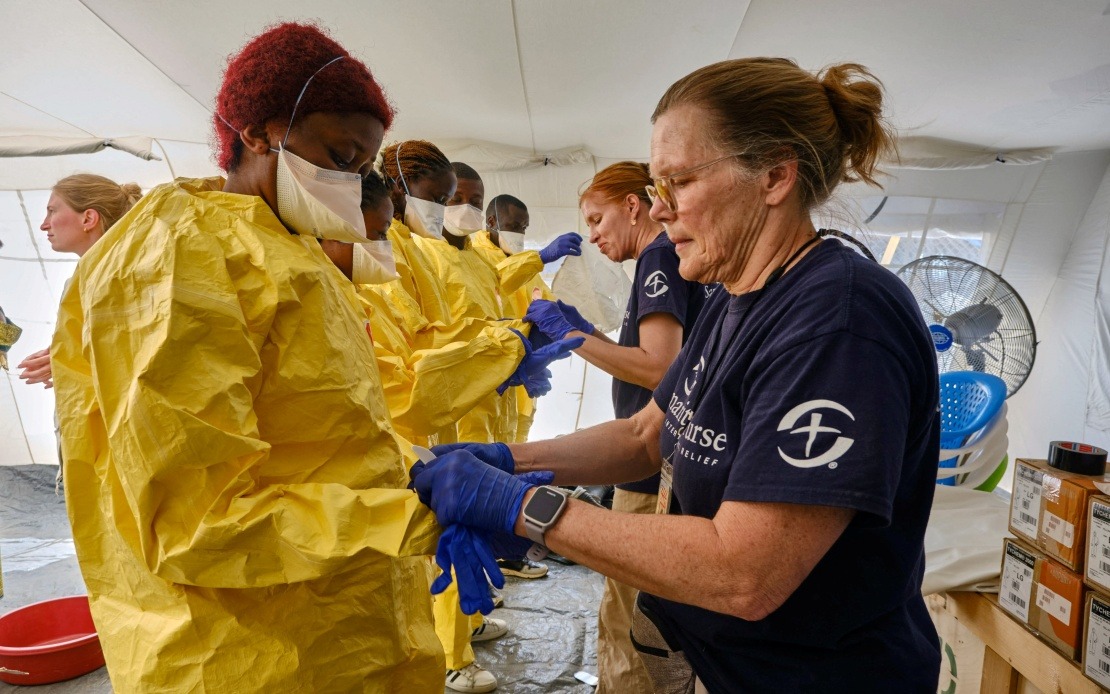
The Democratic Republic of the Congo's Ebola outbreak has escalated to 2,905 confirmed cases and 1,269 deaths, according to figures released by the health ministry on Friday. The dramatic jump in cumulative numbers reflects the integration of previously fragmented disease surveillance databases from the eastern provinces of Ituri and North Kivu into a unified national tracking system, a consolidation that occurred on Wednesday. Officials emphasised that this statistical revision, while significant, does not represent a surge in new infections from the preceding 24 hours alone, but rather incorporates historically uncounted cases now captured in the harmonised system.
The outbreak's trajectory reveals mounting challenges in containing transmission across the country's sprawling eastern region. On Wednesday alone, authorities documented 97 new confirmed cases alongside 62 deaths, underscoring the relentless pace of the epidemic. Among those already affected, 519 patients have successfully recovered and returned to their communities, though 722 individuals remain confined to isolation or treatment centres, representing a substantial clinical burden on the DRC's already strained health infrastructure.
The epidemiological picture presents a complex challenge that extends beyond simple case management. Prime Minister Judith Suminwa Tuluka visited Kisangani, the capital of Tshopo province which has recently emerged as a focal point of transmission, and identified a critical obstacle to effective disease control. Many patients are presenting to health facilities only after their conditions have deteriorated significantly, having developed severe symptoms that render treatment substantially more difficult and prognosis considerably worse. This pattern of late presentation—driven by factors including geographical remoteness, limited health literacy, and deep-rooted community mistrust of medical institutions—necessitates a fundamental shift in public health strategy.
The government's response strategy therefore encompasses both immediate clinical interventions and longer-term behavioural change initiatives. Authorities plan to intensify community education and awareness campaigns targeting the general population, with the objective of encouraging individuals exhibiting suspect symptoms to seek professional medical evaluation promptly. This preventive approach recognises that early intervention, when viral loads remain lower and patients retain greater physiological reserve, substantially improves survival outcomes and reduces transmission risk within households and healthcare settings.
Financial commitment represents another pillar of the outbreak response framework. The DRC government has committed US$50 million to comprehensive disease control efforts, allocating resources strategically across four priority domains. Laboratory capacity expansion enables more rapid and accurate diagnostic confirmation, reducing delays in case identification. Enhanced medical equipment procurement strengthens treatment capabilities at designated Ebola treatment centres. Community surveillance programmes expand the detection net beyond formal healthcare facilities, identifying cases in remote areas before they transmit infection widely. And scaled patient care delivery systems expand the availability of isolation beds and therapeutic interventions.
A significant development in the global response emerged on Friday when the University of Oxford announced that the first human volunteer had received an injection of an experimental Ebola vaccine. The milestone marks the commencement of worldwide human trials for ChAdOx1 BDBV, a candidate immunisation developed through collaboration between Oxford's vaccine research group and its Pandemic Sciences Institute. The vaccine specifically targets the Bundibugyo ebolavirus strain responsible for the current DRC outbreak, representing a targeted rather than broad-spectrum approach to immunological protection.
The vaccine development and manufacturing pipeline demonstrates international cooperation at multiple stages. The Serum Institute of India has assumed responsibility for producing and stockpiling doses, having manufactured approximately 620,000 total units. Of this production capacity, 4,000 doses have been specifically allocated for investigational trial purposes, enabling the initial human safety and efficacy evaluation. This manufacturing scale-up, initiated even before regulatory approval for human testing, reflects confidence among health authorities that the vaccine demonstrates sufficient promise to justify preparatory manufacturing investment.
The clinical trial design prioritises safety assessment and immunological response measurement over efficacy demonstration at this preliminary stage. Researchers anticipate enrolling approximately 50 healthy adult volunteers, a relatively small cohort appropriate for determining whether the vaccine triggers dangerous adverse reactions and measuring the robustness of immune system activation. These Phase 1 assessments provide essential data required before proceeding to larger trials that would evaluate real-world protective effectiveness against infection.
The strategic pathway for vaccine development extends beyond the initial Oxford trial. Regulatory approvals are being pursued concurrently for subsequent clinical studies planned in partnership with research institutions and health authorities in Uganda, positioning the vaccine for evaluation in a population with greater exposure risk and cultural context closer to the outbreak epicentre. This geographical expansion of trials, contingent upon successful completion of early safety assessments, reflects lessons learned from previous vaccine development efforts that benefited from testing in affected regions alongside established research centres in higher-income countries.
For the Southeast Asian region, the DRC Ebola situation carries implications regarding preparedness and regional disease surveillance architecture. While Bundibugyo ebolavirus has not previously caused outbreaks in Asia, the rapid evolution and geographical spread of infectious diseases in an interconnected world demands that Southeast Asian health systems maintain vigilance and technical capacity. Malaysia and neighbouring countries have strengthened port of entry screening and laboratory diagnosis capabilities following prior outbreaks of novel pathogens, capabilities that remain relevant should emerging infectious diseases reach the region. The vaccine trial advancement also illustrates how collaborative international research, with contributions from institutions across continents and manufacturing capacity in South Asia, supports global health security through diverse participation in innovation and production pipelines.

