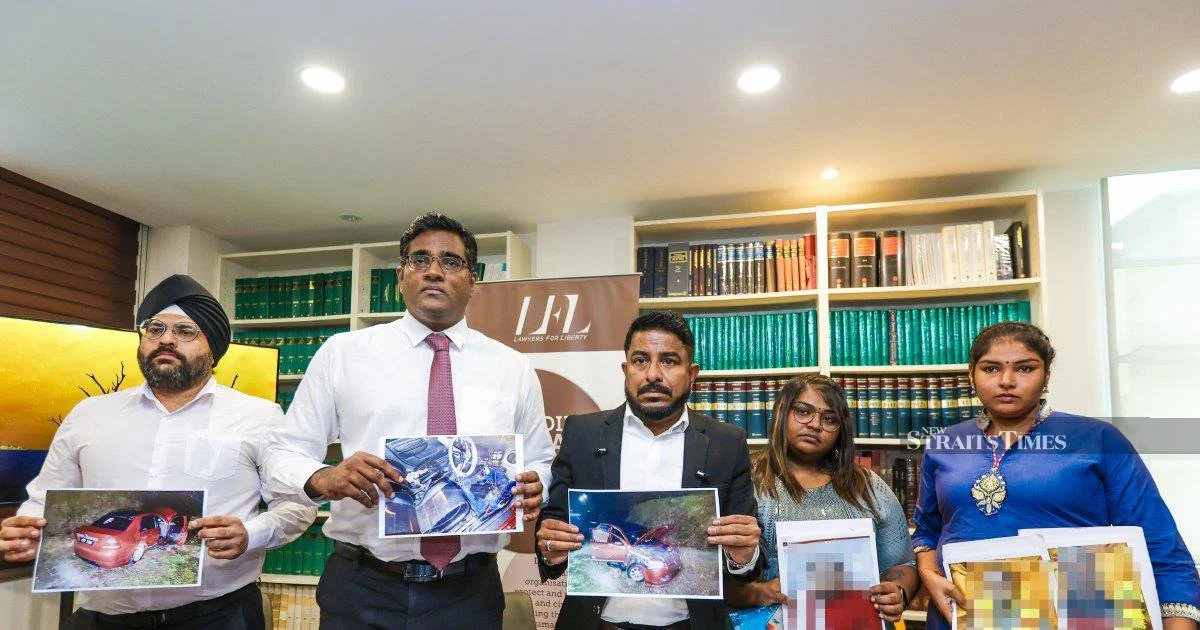
The relatives of three men who died in a police shooting at Durian Tunggal in Melaka have escalated their grievances by formally requesting the Malaysian Anti-Corruption Commission to investigate what they characterize as a systematic cover-up in the case's handling. The families, speaking from Putrajaya, contend that the official narrative surrounding the incident warrants scrutiny and that institutional oversight mechanisms have fallen short of their mandate.
The shooting incident, which resulted in the deaths of the three individuals, has remained a flashpoint for concerns about police accountability and transparency in Malaysia. Families have consistently questioned the circumstances leading up to the encounter and the proportionality of the police response. Rather than accepting the official explanations provided by law enforcement authorities, the relatives have pursued multiple avenues to seek clarity, escalating from initial complaints to now involving the country's premier anti-corruption body.
This development underscores a broader pattern of public mistrust surrounding fatal police encounters in Malaysia. When deaths occur during police operations, official investigations often proceed through internal channels, raising questions about the independence and credibility of such inquiries. The families' decision to approach MACC specifically suggests they believe the issue extends beyond operational mistakes to potentially encompassing misconduct or misrepresentation by officials involved in either the incident itself or its subsequent investigation.
The MACC's involvement could potentially expand the scope of the inquiry beyond the shooting itself to examine whether proper documentation occurred, whether evidence was appropriately preserved and handled, and whether officials acted with integrity throughout the investigative process. Such probes often uncover systemic weaknesses in how such sensitive cases are managed, potentially leading to procedural reforms.
For Malaysian observers and legal experts, this case represents a critical juncture in the country's efforts to establish meaningful oversight of law enforcement operations. The involvement of the anti-corruption commission introduces an institutional layer that transcends traditional police accountability structures, though the extent of MACC's mandate in this particular domain remains subject to interpretation.
The families' persistence in pursuing this course of action also reflects a shift in how Malaysian citizens engage with state institutions when dissatisfied with official responses. Rather than accepting initial explanations, relatives are demonstrating increasing sophistication in understanding which agencies possess authority to investigate different categories of alleged wrongdoing. This development carries implications for how government institutions approach transparency and citizen engagement.
The Durian Tunggal case has previously garnered attention from human rights organizations and civil society groups concerned with police conduct standards. Their documentation and advocacy have provided platforms for the families to air their grievances and maintain public attention on the matter. The escalation to MACC suggests these advocacy efforts have influenced how families frame their concerns within formal institutional language and procedures.
For the Malaysian public, particularly in Melaka where the incident occurred, the outcome of any MACC investigation could significantly affect local perceptions of institutional responsiveness and the credibility of official investigations. Communities where fatal police encounters have occurred often experience lingering tensions that investigations conducted transparently and independently can help address. Conversely, opaque processes tend to deepen skepticism about state institutions.
The involvement of MACC also carries broader Southeast Asian significance, as Malaysia's approach to investigating controversial police actions receives attention from regional human rights monitors and governments. How Malaysian authorities respond to family demands for independent oversight influences perceptions of the country's commitment to rule of law and institutional accountability throughout the region.
Whether MACC will formally accept the investigation request remains to be determined, as the commission must assess whether the alleged misconduct falls within its purview. Officials at the anti-corruption body have not publicly commented on the families' request at this stage. The procedural mechanics of how such matters are evaluated within MACC typically involve preliminary assessments of whether allegations constitute corruption-related offences rather than purely operational police matters.
If MACC does undertake an investigation, it would represent a significant step toward establishing independent oversight mechanisms for fatal police encounters in Malaysia. Such an inquiry could examine whether officials involved in either the shooting or the investigation thereof engaged in acts designed to conceal facts, manipulate evidence, or obstruct the truth-seeking process. These would constitute corruption-related offences distinct from questions about the propriety of the police operation itself.
The families' advocacy also highlights the limitations of existing accountability mechanisms in satisfying public demands for answers in high-profile fatal encounters. Their decision to involve MACC suggests frustration with previous investigative processes and a belief that fresh, independent examination is necessary. How Malaysian institutions respond to such demands will shape both the outcome of this particular case and broader expectations about police accountability.
Looking forward, the Durian Tunggal case may influence how other families of individuals killed in police operations pursue their own grievances. If successful in securing MACC involvement, the families will have demonstrated a viable pathway for escalating concerns beyond traditional police oversight structures, potentially establishing a precedent that other Malaysians facing similar circumstances could follow.