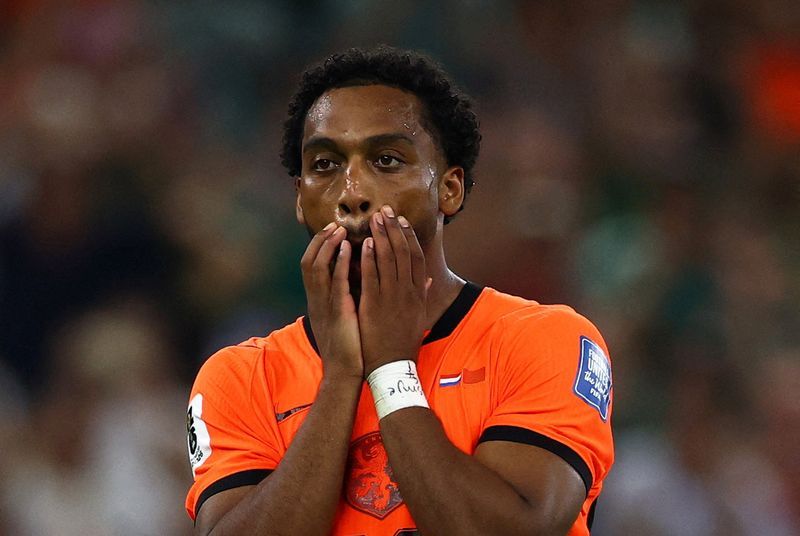
The Netherlands' World Cup campaign ended in heartbreak on Monday when Morocco prevailed 3-2 on penalties following a 1-1 draw in their last-32 encounter in Monterrey, but the sporting disappointment has been overshadowed by disturbing behaviour in the digital sphere. Justin Kluivert, Quinten Timber, and Crysencio Summerville, all of whom failed to convert their spot-kicks in the shootout, have been subjected to a barrage of racist and discriminatory messages across social media platforms, according to statements from the Royal Netherlands Football Association (KNVB).
The Dutch football governing body responded swiftly to the offensive content directed at the three players, expressing strong condemnation of what it characterised as appalling conduct. The KNVB announced that it would escalate matters by formally lodging a complaint with Meld Online Discriminatie, the Dutch organisation dedicated to documenting and combating online discrimination. This procedural step represents the federation's commitment to pursuing accountability through established legal channels rather than allowing such incidents to pass without consequence.
The process initiated by the KNVB involves multiple layers of institutional oversight. Once a formal report reaches Meld Online Discriminatie, their legal team undertakes a thorough assessment to determine whether the offensive statements constitute criminal offences under Dutch law. Should the evaluation conclude that criminal conduct has occurred, the organisation proceeds to lodge an official complaint with the Public Prosecution Service, which then possesses the authority to launch criminal investigations into the perpetrators. This mechanism demonstrates how serious online racism cases can eventually reach the criminal justice system.
The incident reflects a troubling pattern that has emerged across international football in recent years, particularly when high-pressure moments result in individual player failures that become targets for abuse. The visibility of penalty shootouts makes the players who miss their kicks especially vulnerable to public blame and, regrettably, racist vitriol that extends far beyond legitimate sporting criticism. The phenomenon has become so prevalent that major tournaments now anticipate such occurrences rather than treating them as aberrations.
Perhaps the most instructive precedent comes from the 2020 European Championship final between England and Italy, held in 2021. Three England players—Marcus Rashford, Bukayo Saka, and Jadon Sancho—endured significant racist harassment following their missed penalties in the tournament's climactic match. The British response to those incidents demonstrated that law enforcement could take decisive action, with multiple individuals eventually facing criminal prosecution. Two individuals received custodial sentences while another received a suspended sentence, sending a message that online racist abuse carries legal consequences.
The broader enforcement campaign that followed the Euro 2020 final saw British police intensify their efforts against online hate speech specifically targeting the England players. This coordinated crackdown illustrated how institutional commitment at the police, political, and governing body levels could translate into meaningful deterrence. The willingness of authorities to prosecute offenders, even in the challenging context of social media where perpetrators often believed they operated with anonymity, proved instrumental in holding people accountable.
The KNVB's decision to pursue similar legal remedies suggests that European football associations are becoming increasingly aligned in their approach to combating racist abuse. Rather than accepting online discrimination as an inevitable consequence of modern sports fandom, governing bodies are now systematically documenting incidents, cooperating with legal authorities, and supporting affected players through formal complaint procedures. This represents a significant shift from earlier eras when such abuse was often dismissed as the price of public life.
For Malaysian and Southeast Asian readers following international football, these incidents underscore how racism in sport operates across geographical boundaries and how different jurisdictions grapple with the intersection of free speech, social media regulation, and criminal law. The Dutch case also demonstrates that responsibility extends beyond individual bad actors to include platforms that host such content, though the KNVB's approach focuses primarily on criminal prosecution rather than platform accountability.
The KNVB concluded its statement by articulating a fundamental principle that transcends national boundaries: football's essential purpose is to unite diverse populations across lines of ethnicity, religion, and background. Discrimination, by its very nature, contradicts this unifying mission and represents a rejection of the values that make sport meaningful beyond the final score. The association's statement that discrimination runs counter to everything football represents reflects a growing consensus among governing bodies that they have both the moral authority and institutional responsibility to defend players against such abuse.
This incident arrives at a moment when the global football community faces sustained pressure to address systemic racism both within and beyond stadiums. The Netherlands, with its significant immigrant populations and multicultural society, has particular stakes in ensuring that athletic competition does not become a vehicle for racial hostility. The willingness of Dutch authorities and the KNVB to pursue legal action sends a signal that racist speech carries consequences, potentially influencing the behaviour of individuals across the Dutch-speaking world and beyond.
The case also highlights the specific vulnerability of elite athletes of colour in penalty situations, where individual decisions become hyper-visible and subject to instantaneous public judgment. The concentration of racist abuse following these moments suggests that some perpetrators use sporting failure as a pretext for expressing racial animus that may have deeper social roots. Understanding this pattern is essential for developing effective prevention strategies that address not just the surface manifestation but the underlying prejudices that animate such harassment.

