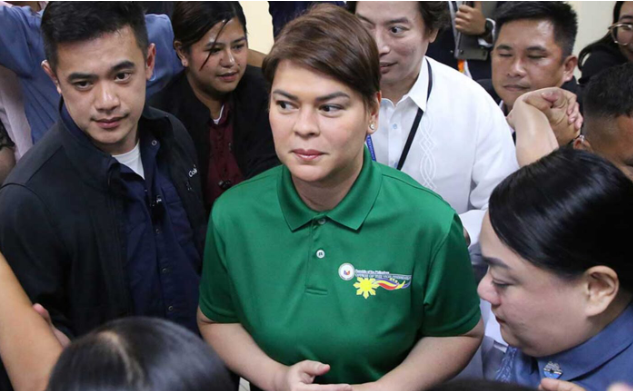
The impeachment trial of Vice President Sara Duterte entered a critical phase on Tuesday when she reiterated that the charges against her—involving an alleged assassination plot targeting President Ferdinand R. Marcos Jr., First Lady Liza Marcos, and former House Speaker Martin Romualdez—rest on a foundation of conjecture rather than verifiable facts. Speaking ahead of proceedings that would see her chief of staff, Zuleika Lopez, testify before the House prosecution panel, Duterte asserted that the case presented so far demonstrated the weakness of the accusations levelled against her.
The substance of Duterte's rebuttal centred on technical and procedural deficiencies that her legal team exposed during cross-examination on the trial's fourth day. Mark Vinluan, a member of her defence counsel, questioned Jeremy Lotoc, the National Bureau of Investigation's Regional Director for the Bangsamoro Autonomous Region in Muslim Mindanao, about discrepancies in affidavit dates and docket numbers within NBI file records. These inconsistencies, Duterte's team argued, undermined the prosecution's narrative and suggested carelessness or deliberate mishandling of evidence—a significant consideration in a proceeding of such constitutional magnitude.
In her statement, Duterte articulated a broader critique of what she characterised as the prosecution's methodology. She accused the House panel of conflating repetition with verification, suggesting that merely asserting threats repeatedly did not render them real, and that inventing culprits to match a predetermined narrative represented a dangerous perversion of justice. This framing shifts the impeachment debate from questions of whether a threat occurred to whether the evidence presented can withstand judicial scrutiny—a distinction with profound implications for how Filipinos evaluate the legitimacy of the proceedings.
The Vice President emphasised that the foundation of any legal system depends upon the rigorous application of evidentiary standards. "The rule of law depends on facts, not fiction," she declared, placing the burden squarely on prosecutors to demonstrate their case with documentation, witness testimony, and logical consistency rather than suppositions or circumstantial narratives. This argument resonates particularly in the Philippine context, where questions about institutional credibility and the politicisation of the judiciary remain live concerns following the nation's recent political turbulence.
The trial is currently focused on Article IV of the impeachment complaints, which addresses what Duterte herself initially disclosed regarding an alleged kill plot. This detail represents a notable aspect of the case: the Vice President brought forward information about purported threats against the President and his family, rather than the information being uncovered through investigation. The prosecution must therefore not only prove that such a plot existed but also demonstrate that Duterte bore some culpability beyond her role in reporting it.
Progress in the trial has been methodical at best. The House prosecution panel has called only two witnesses so far and has covered less than half of the eleven days allocated to them for addressing Article IV. Given the extended timeline and the trial's projected duration of 92 days, the proceedings could stretch well into early 2027, creating a prolonged period of political uncertainty. This extended timeframe raises questions about governmental efficiency and the practical constraints of impeachment as a constitutional remedy, particularly in a nation facing pressing economic and security challenges.
Notably, Duterte has not appeared in person at any session of the impeachment trial, a choice that speaks to her defence strategy and her confidence in her legal team's ability to dismantle the prosecution's case through procedural and evidentiary challenges. Her absence also prevents the kind of dramatic courtroom confrontation that might capture public attention and shape narrative perceptions of the case. Instead, the trial proceeds as a technical legal exercise, with victory potentially determined by the minutiae of filings and the coherence of witness statements rather than compelling public testimony.
For Malaysian observers, the Duterte impeachment trial offers instructive parallels regarding the mechanics of removing a sitting vice president and the vulnerabilities of impeachment proceedings to partisan manipulation. The case demonstrates how technical deficiencies in investigation and prosecution can substantially undermine politically motivated charges, but also how such trials can consume institutional resources and political energy for extended periods. The trial's slow progression and evidentiary gaps suggest that impeachment, while constitutionally available, may not be an efficient mechanism for addressing allegations of serious misconduct when evidence collection and presentation are inadequate.
Duterte's assertion that the complaint conflates speculation with fact, and her accusation that the prosecution is fabricating narratives to support predetermined conclusions, raises fundamental questions about investigative standards across Southeast Asia. The NBI discrepancies that emerged during cross-examination hint at systemic weaknesses in how governmental agencies document and preserve evidence—a concern transcending the Philippines. These procedural failures, if substantiated, would suggest that the prosecution proceeded on an insufficient evidentiary foundation, a reality that could colour how the Senate, sitting as an impeachment court, ultimately evaluates the case.
The unfolding trial also illuminates the political dimension of constitutional mechanisms. Impeachment in the Philippines, as in many democracies, operates within a political environment where institutional credibility remains contested. Duterte's emphasis on the absence of supporting evidence serves a dual purpose: it defends her against specific charges while simultaneously challenging the broader legitimacy of the proceeding itself. Whether the Senate will accept her framework—prioritising evidentiary rigor over political convenience—remains an open question with implications extending well beyond this single trial.
As the proceedings continue through subsequent articles and testimony, the trial's trajectory will hinge on whether the House prosecution can overcome the evidentiary gaps and procedural deficiencies that have emerged thus far. The case exemplifies how constitutional processes can become battlegrounds for competing visions of justice and institutional legitimacy, with stakes that extend far beyond the individual defendant to encompass questions about the rule of law, governmental accountability, and public trust in Philippine institutions.

