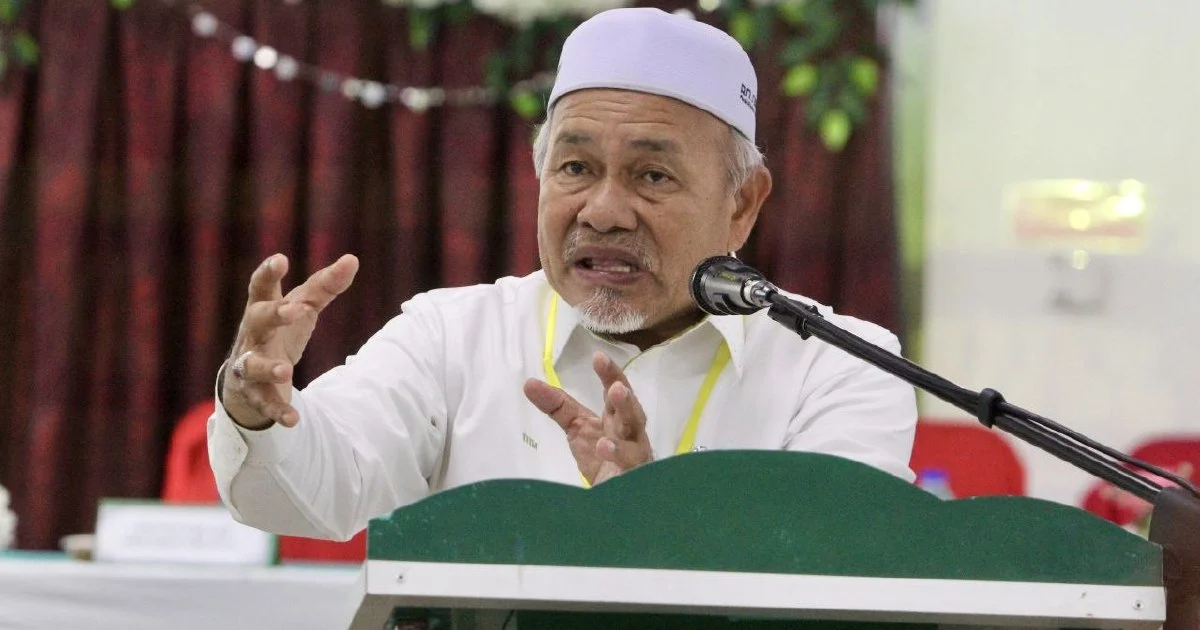
Political stability appears to be strengthening across Malaysia's federal and state administrations following Barisan Nasional's decisive victory in Johor's recent state elections, with senior opposition figures now forecasting that Prime Minister Datuk Seri Anwar Ibrahim will shelve any plans for an early national election. Datuk Seri Tuan Ibrahim Tuan Man, the deputy president of PAS, has indicated that the ruling coalition governing Putrajaya currently has no compelling reason to rush into a general election, particularly as the broader electoral landscape shows signs of consolidation favouring the government.
The Johor outcome represents a significant political development in Malaysia's ongoing electoral cycle. The coalition's commanding performance in the southern state demonstrates sustained voter confidence in the current administration's direction, reinforcing the government's mandate across multiple electoral tiers. This result effectively neutralises one of the principal arguments that might otherwise have motivated an early ballot—the need to capitalise on electoral momentum while public sentiment remains favourable. Instead, with the administration now commanding demonstrable support at both federal and state levels, the incentive structure for calling an early election has fundamentally shifted.
For Malaysian observers tracking the nation's political trajectory, the implications extend beyond simple electoral mathematics. A postponement of general elections typically indicates that incumbent administrations believe they can consolidate power more effectively through conventional governance than through fresh balloting. The Anwar government's apparent confidence in maintaining its current parliamentary advantage without fresh validation suggests the administration is focused on implementing its policy agenda rather than seeking renewed mandates at the earliest opportunity. This approach aligns with established Malaysian political practice, where governments typically call elections only when circumstances appear advantageous or when the constitutional window demands a fresh ballot.
The PAS assessment carries particular significance given the party's position within Malaysia's political ecosystem. As part of the governing coalition while simultaneously maintaining its traditional base in certain states and rural constituencies, PAS offers insights into coalition dynamics that external observers might miss. Tuan Ibrahim's statement reflects internal coalition deliberations about optimal timing, suggesting that the major players within the ruling alliance have reached consensus on maintaining the current electoral timetable rather than accelerating the ballot.
Barisan Nasional's Johor performance demonstrates that the traditional coalition machinery remains capable of delivering significant electoral victories, even in an era of more fragmented voting patterns. The southern state has historically served as a political bellwether for national trends, meaning the BN's success there carries implications beyond provincial politics. Johor's significance derives partly from its size, partly from its economic importance as Malaysia's industrial and manufacturing hub, and partly from its strategic position as a gateway state that influences national perceptions of government performance.
For the current administration, a delayed election timeline offers distinct advantages. Governance continuity allows the government to demonstrate tangible results on its policy commitments, potentially strengthening its position ahead of an eventual general election. Extended timeframes permit infrastructure projects to reach visible completion stages, economic initiatives to show measurable outcomes, and legislative agendas to progress further than would be possible in a compressed electoral cycle. These considerations often weigh heavily in governmental deliberations about election timing.
The broader Malaysian political context has shifted noticeably since the current government assumed office. The coalition's composition, its internal dynamics, and the opposition's positioning have all evolved in ways that generally favour the incumbent administration. Under these circumstances, political actors face less urgency to seek immediate electoral validation. Instead, the focus appears to have shifted toward maximising the current parliamentary term's legislative capacity and demonstrating administrative competence.
Regional observers should note that Malaysia's electoral cycle remains subject to constitutional constraints and broader political circumstances that could force earlier balloting. However, Tuan Ibrahim's assessment reflects the current thinking among senior coalition figures, suggesting that absent unforeseen developments, the administration intends to proceed with standard constitutional timelines. This approach represents a shift from the more volatile electoral politics that characterised Malaysia's landscape in recent years, when governments frequently opted for strategic early elections to take advantage of momentary political circumstances.
The stability implied by postponing early elections carries implications for Malaysia's economic and social policy. Businesses and investors often benefit from extended governance windows that permit predictable policy implementation without the disruptions accompanying electoral campaigns. Extended timelines also allow civil servants and state administrations to pursue longer-term planning without the uncertainty that accompanies imminent electoral contests.
Looking forward, the question of general election timing will likely remain subject to evolving circumstances. However, the consensus apparently reflected in Tuan Ibrahim's remarks suggests that Malaysia's political actors currently view the administration's position as sufficiently secure to permit proceeding without premature appeals to voters. This represents a potentially stabilising force in Malaysian politics, where extended electoral uncertainty has sometimes complicated governance and policy implementation. The administration's confidence in its political standing, validated by recent state-level electoral results, appears to have translated into a collective decision to focus on governance over electioneering.

