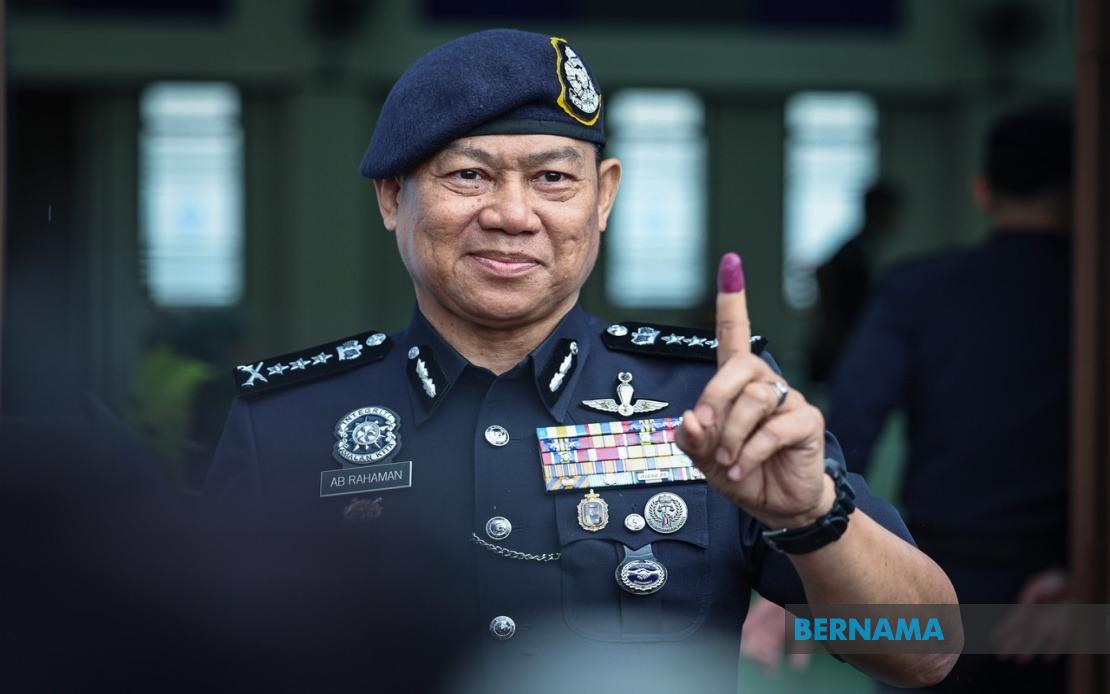
The first phase of voting in Johor's 16th state election unfolded without major complications on July 7, as police and armed forces personnel participated in early balloting across the southern Malaysian state. By 10:30 am, some 4,257 police officers—representing 36.3 per cent of those eligible to vote early—had submitted their ballots at designated centres, suggesting a reasonably engaged electorate among the security apparatus ahead of the main polling day scheduled for Saturday.
Johor's police chief Datuk Ab Rahaman Arsad confirmed the voting operations were running smoothly at all 53 early voting venues dispersed throughout the state. Neither complaints nor security incidents marred the process, he noted, underlining the orderly nature of proceedings despite the high stakes surrounding a major state election in Malaysia's second-largest economy by GDP. The absence of disruptions at this stage reflected effective coordination between electoral authorities and law enforcement in managing a sensitive democratic exercise.
Across 64 polling centres that opened simultaneously at 8 am, a total of 20,607 registered early voters—primarily service personnel—were given the opportunity to cast their votes before the scheduled ballot day. These staggered early voting sessions, a now-standard feature of Malaysian electoral practice, allow police and military personnel to participate without disrupting operational duties. The centres were scheduled to close in stages between noon and 6 pm, depending on voter numbers and geographical location, allowing administrators to process ballots methodically rather than under time pressure.
The main state election itself would see competition among 172 candidates seeking 56 seats across Johor's state assembly. With more than 2.7 million registered voters eligible to participate on the scheduled Saturday polling date, the contest represents one of the largest single-state elections held in Malaysia in recent years. The sheer scale of voter participation required careful logistical coordination across multiple constituencies, making the smooth execution of early voting phases all the more critical to overall electoral credibility.
Beyond the mechanics of voting, the campaign period leading up to polling day had generated considerable police attention, though mostly centred on relatively routine matters. Datuk Ab Rahaman disclosed that most reports filed with authorities involved vandalism of campaign materials—party flags, political billboards, and associated propaganda—rather than more serious offences. This pattern reflects ongoing challenges in Malaysian politics where campaign-period discipline remains inconsistently enforced, though the limited scale of incidents suggested broad compliance with electoral conduct guidelines.
A more substantive matter remained under active investigation: a police report against former Johor State Assembly Speaker Datuk Dr Mohd Puad Zarkashi concerning allegations that the Johor Palace had interfered in the dissolution of the state legislature. Nationally, 153 reports had been lodged related to Mohd Puad's controversial claims by the afternoon of early voting, indicating the sensitive nature of institutional relationships between the monarchy and elected government in Malaysia's constitutional framework. The investigations remained ongoing, with implications potentially extending beyond the immediate election context.
For Malaysian observers and the broader Southeast Asian region, Johor's state election carries significance beyond its immediate constituency. The state has historically served as a barometer of political sentiment in Malaysia's more developed southern corridor, and the results could influence calculations at the federal level where coalition politics remain fluid. The professional conduct demonstrated during early voting stages suggests electoral administrators are determined to maintain the integrity of the process, despite occasional controversies surrounding campaign conduct and institutional tensions.
The involvement of security personnel as early voters underscores their designated role as part of Malaysia's electoral constituency, a recognition that extends voting privileges to those unable to participate on standard polling days due to operational commitments. This inclusionary approach reflects evolving democratic practice in the country, ensuring broad participation while maintaining security arrangements. The 36.3 per cent turnout among police by mid-morning suggested reasonable engagement levels, though the final early voting figures would provide a clearer picture of participation rates across the uniformed services.
As polling centres wound down their early voting operations on July 7, attention focused on the main election scheduled for the following Saturday. The smooth conduct of early voting phases had established a positive foundation, suggesting that technical and operational arrangements were functioning effectively. However, broader political dynamics—including the institutional tensions reflected in the Mohd Puad investigation and the competition among 172 candidates across diverse constituencies—would ultimately determine how comprehensively the electoral process reflected the genuine preferences of Johor's 2.7 million registered voters and, by extension, the political direction of this strategically important Malaysian state.

