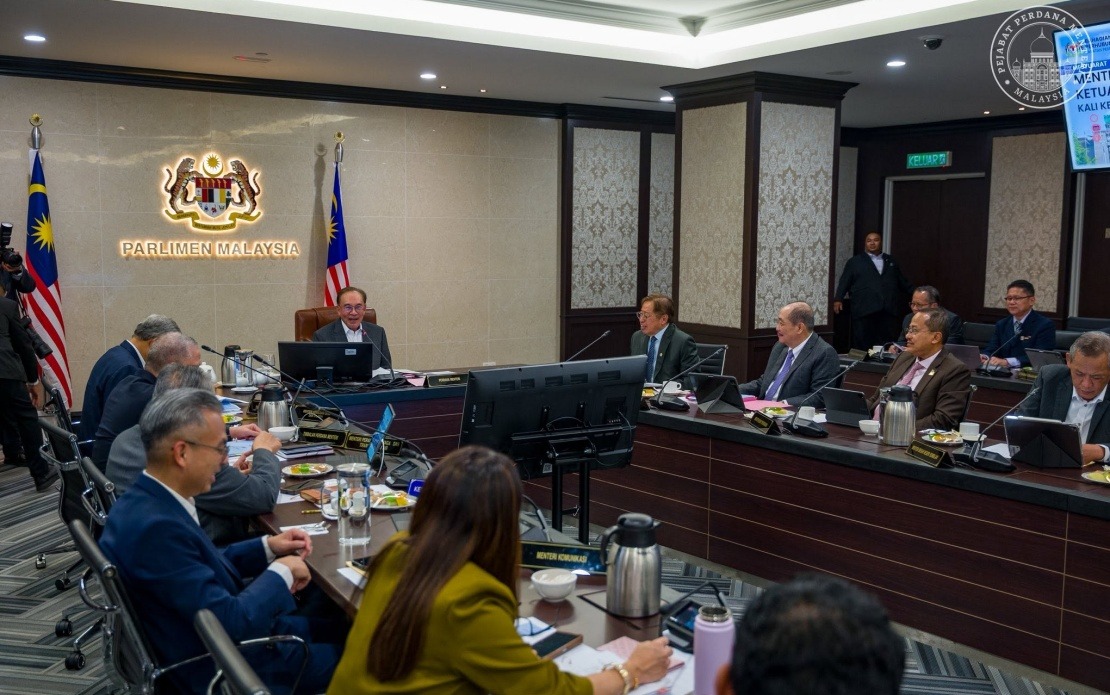
Prime Minister Datuk Seri Anwar Ibrahim convened the 149th Meeting of Menteris Besar and Chief Ministers at Parliament Building on June 23, directing high-level attention toward revitalising Malaysia's economy in a climate of considerable global instability. The assembly of state leaders, representing Malaysia's diverse economic interests and development priorities, engaged in substantive discussions about reinforcing the nation's financial resilience at a moment when international conflicts are reshaping global trade patterns and investment flows.
The gathering took place against a backdrop of pronounced uncertainty in global markets, triggered by escalating tensions in West Asia. These conflicts have created ripple effects across international supply chains and financial systems, presenting immediate challenges to Malaysia's open economy. The Prime Minister's focus on economic revival reflects the government's concern that persistent regional instability could dampen foreign direct investment and disrupt the manufacturing and services sectors that form the backbone of Malaysia's export-dependent growth model.
Beyond conventional economic policy, the meeting examined Malaysia's readiness for the El Niño phenomenon, an environmental challenge that carries tangible consequences for the Malaysian economy and population. The climatic pattern threatens to compress water availability during critical months, potentially affecting both urban consumption and agricultural output. This focus underscores growing recognition among federal and state administrators that climate-related risks demand coordinated preparedness planning involving multiple government levels.
The agricultural sector emerged as a particular area of concern during deliberations. Malaysia's farming communities depend heavily on consistent rainfall patterns for crop production, and prolonged dry conditions associated with El Niño could reduce yields and strain food security. For a nation that imports substantial food volumes, any disruption to domestic production carries price implications for consumers and policy implications for government food security strategies.
Water supply management formed another critical discussion point, as several Malaysian states depend on reservoirs that can become critically depleted during El Niño conditions. Both Peninsular Malaysia and East Malaysian states have experienced water rationing episodes in previous years, with significant economic costs to households and industry. The meeting's attention to this issue reflects lessons learned from past dry seasons and acknowledgment that water infrastructure planning requires state-level coordination with federal support.
The Prime Minister also flagged the risk of heightened extreme heat and haze conditions accompanying El Niño. Malaysia's experience with transboundary haze from regional agricultural burning has demonstrated how air quality crises create public health burdens, disrupt transport and commerce, and impose respiratory costs on vulnerable populations. Preparing response mechanisms now could mitigate these impacts when conditions materialise.
Anwar emphasised that all policies and government initiatives must be implemented through integrated, efficient, and people-centred frameworks. This messaging signals intent to break down departmental silos that sometimes fragment Malaysia's federal-state administration. The emphasis on integration carries particular significance for climate adaptation, where water agencies, agricultural ministries, health departments, and environmental bodies must coordinate seamlessly to protect citizens and economic interests.
The Prime Minister highlighted attracting quality foreign investment as integral to the economic revival agenda. Malaysia competes with Indonesia, Thailand, and Vietnam for manufacturing and technology investment flows. Regional conflicts and climate uncertainties create competitive disadvantages unless Malaysia can demonstrate strong governance, policy predictability, and crisis preparedness. Quality investment—focused on high-skilled sectors rather than low-wage manufacturing—supports wage growth and develops Malaysia's technological capacity.
The consensus-building emphasis during the meeting points toward harmonising federal and state implementation, a chronic challenge in Malaysia's federal system. State governments control land, agriculture, water, and certain development matters, while the federal government commands monetary policy and major fiscal instruments. Effective economic revival and climate adaptation require genuine collaboration rather than parallel efforts that waste resources and confuse the business community and public.
Anwar's framing of development benefits reaching all Malaysians reflects consciousness that economic growth concentrated geographically or among specific communities generates political fragmentation. Inclusive development ensures that rural, smaller-state, and lower-income communities share in prosperity, reinforcing national cohesion during periods of external pressure. This inclusive message also carries electoral implications, signalling to all states that the federal government values their contributions to national recovery.
The meeting's emphasis on safeguarding Malaysian wellbeing amid global uncertainty acknowledges that citizens judge governments not only on headline GDP figures but on tangible security—economic stability, food availability, clean water, and breathable air. These concerns cross state and income boundaries and form the foundation of public confidence in governance.
Looking forward, the 149th Menteris Besar meeting demonstrates that Malaysia's leadership recognises both external and environmental threats require systematic, coordinated responses. The outcomes will depend on implementation follow-through at state and federal levels, resource allocation toward preparedness, and institutional capacity to execute integrated policies across jurisdictional boundaries. For Malaysia's economy and its citizens, success in these areas determines whether the nation successfully navigates the volatile period ahead.

