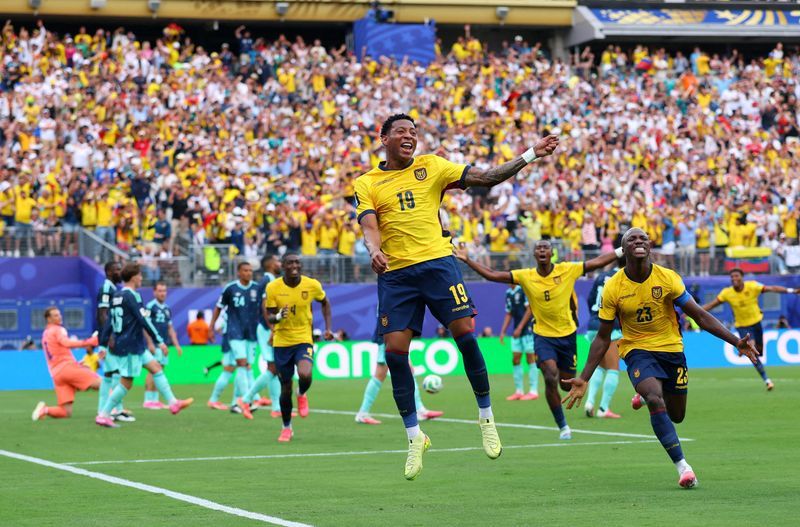
Ecuador's World Cup survival story took a dramatic turn on Thursday evening at a packed stadium in East Rutherford, New Jersey, when the South American nation produced a rousing comeback to overturn an early German lead and secure a 2-1 victory that kept their tournament hopes alive. Facing the axe after mixed results in their opening matches, Ecuador needed nothing less than a win to remain in contention, and they delivered precisely that against a Germany side that had already secured top spot in Group E.
The opening moments offered little hope for Ecuador's ambitions. Germany, already assured of advancing as group winners, struck with devastating efficiency just 120 seconds into the match when Leroy Sane converted coolly from inside the penalty area. The goal represented Sane's breakthrough moment at a major international tournament after 14 previous appearances without finding the net, arriving from a clever setup by Florian Wirtz that exploited Ecuador's early defensive frailty. The South American backline's troubles mounted further when Ecuador protested what they believed was a high foot challenge from Aleksandar Pavlovic on Pedro Vite during the buildup, but referee Tori Penso waved away their complaints and allowed the goal to stand.
Yet Ecuador's response came with remarkable swiftness. In the ninth minute, a turning point arrived when Nilson Angulo restored parity with a superbly struck effort from the edge of the box. The goal carried particular significance given Ecuador's previous struggles in front of goal—they had managed just 39 shots without scoring before Angulo's leveller represented their crucial breakthrough after weeks of frustration. The moment ignited the Ecuadorian supporters in the stands, transforming the atmosphere at the sold-out venue and injecting newfound belief into a team that just moments earlier appeared destined for elimination.
Manuel Neuer's performance came under scrutiny following Angulo's finish, with the German goalkeeper appearing slow to react to the curling trajectory of the ball from outside the area. This defensive vulnerability would resurface again before the final whistle, as Germany's backline continued to show the same softness that had plagued them throughout the group phase. Indeed, Germany conceded in all three of their opening fixtures, a concerning trend for a defensive unit that entered the tournament as defending champions.
The second half introduced fresh controversy when referee Penso pointed to the penalty spot after Felix Nmecha's involvement in play led to contact between Kai Havertz and defender Joel Ordonez. The decision appeared to hand Germany a crucial opportunity to reclaim their advantage, yet the intervention of the Video Assistant Referee proved decisive. The technology's review revealed that Germany had committed an infringement during the buildup sequence, prompting Penso to overturn her original decision and cancel the penalty. This reversal proved momentous in determining the match's final outcome, as Ecuador seized momentum while Germany's attacking rhythm faltered.
For much of the second period, neither team created clear-cut opportunities despite their contrasting motivations. Germany, already secure atop the group with six points from victories in their first two matches, appeared to lose the intensity that had characterized their early play. They still harbored hopes of extending their remarkable unbeaten run—they had won 11 consecutive matches before this fixture—but their opponents' improving organization restricted the space the Germans typically exploit.
The decisive moment came in the 78th minute when Gonzalo Plata reacted with heightened awareness near Germany's goal line. After substitute Kevin Rodriguez flicked a corner toward the near post, Plata pounced fastest and produced a finishing touch that sent the ball beyond Neuer's reach. The stadium erupted into jubilation as Ecuador's supporters realized their team had escaped the group stage against considerable odds. Plata's intervention completed Ecuador's remarkable turnaround, transforming what had appeared a hopeless situation into a triumphant advancement.
Germany ultimately finished atop Group E with six points, maintaining their top-of-table status ahead of Ivory Coast, who claimed second place on goal difference following their separate 2-0 victory over Curacao. Ecuador's qualification came through an alternative route—they secured advancement as one of the eight best third-placed teams across the tournament's groups. This route to the knockout stage underscores how the expanded tournament format provides additional pathways for teams to progress, even after disappointing opening performances.
For Malaysian and Southeast Asian observers, Ecuador's achievement represents a valuable lesson in tournament resilience and the capacity for dramatic reversals in knockout football. The victory demonstrated that group-stage positioning does not determine a team's ultimate ceiling, a principle of particular relevance as the continent's own nations navigate international competitions. Ecuador's recovery from apparent elimination—combined with Germany's defensive struggles despite their credentials—suggests that established hierarchies can be disrupted by determined opponent play and tactical adjustment during crucial matches.

