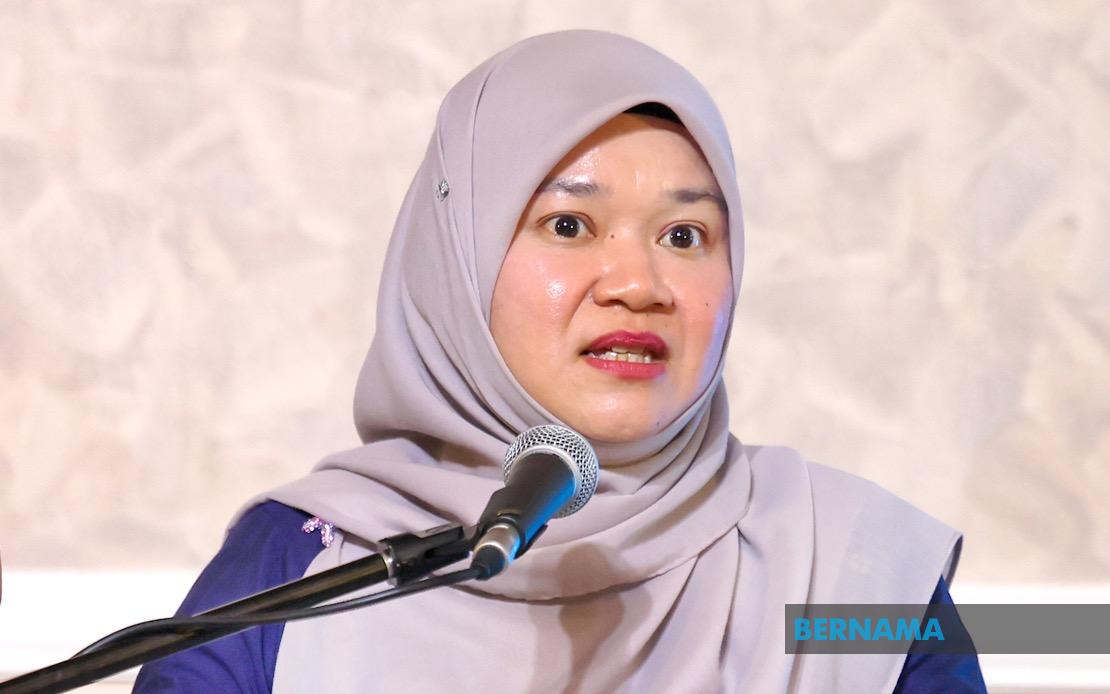
Education Minister Fadhlina Sidek has lodged a police report over the circulation of an artificial intelligence-generated video containing fabricated allegations against her. The PKR Wanita chief released a statement on June 24 expressing her serious concern about the deepfake material and its intent to damage her standing and character. She has requested law enforcement authorities to investigate the matter thoroughly and pursue legal remedies commensurate with applicable legislation.
The emergence of this AI-generated content represents a troubling intersection of technology abuse and political targeting that has become increasingly prevalent across Malaysian political discourse. Deepfake videos—synthetic media created through machine learning techniques—pose a unique challenge to public figures, particularly women in positions of power, as they can be distributed rapidly across social media platforms before fact-checking mechanisms can take hold. The sophistication of modern AI tools means that fabricated content can appear remarkably authentic to casual viewers, potentially influencing public perception before the subjects have opportunity to respond.
Fadhlina's case underscores a broader pattern affecting female politicians across Malaysia and the region. Women holding ministerial and party leadership positions increasingly face coordinated online harassment campaigns that exploit emerging technologies to amplify their impact. The targeting of women in politics through sexual or defamatory deepfakes serves multiple purposes for those behind such campaigns: it damages credibility, creates emotional distress, and discourages political participation by other women who fear similar treatment. This gendered dimension of online abuse represents a significant democratic concern that extends beyond individual grievance to affect institutional representation.
The Education Minister's statement placed particular emphasis on the malicious nature of the video's distribution, framing it not merely as a technical issue but as a deliberate reputational attack. By filing a formal police report, Fadhlina has escalated the matter to law enforcement, signalling her intention to pursue accountability through established legal channels. This approach demonstrates a determination to contest such attacks seriously rather than dismiss them as inevitable consequences of public life. Her action may also serve to establish legal precedent regarding AI-generated defamatory content in Malaysia, an area where jurisprudence remains underdeveloped.
In her statement, Fadhlina extended her concern beyond her personal situation, calling upon all stakeholders to adopt a principled stance against slander, character assassination, and sexual harassment targeting women in politics. This broader framing reflects an understanding that individual cases of online abuse are symptomatic of systemic challenges requiring institutional and cultural responses. Her appeal suggests frustration with the current ecosystem's capacity to protect public figures from technology-enabled harassment and points toward a need for more robust safeguards.
The challenge of addressing AI-generated defamatory content presents Malaysian law enforcement and judicial authorities with novel questions about jurisdiction, evidence gathering, and appropriate remedies. Traditional defamation and slander laws were formulated in an era of slower information dissemination and greater verification gatekeeping. The viral nature of social media, combined with the difficulty of proving synthetic origin and tracing sources through pseudonymous accounts, complicates investigation and prosecution. Police authorities will need to navigate complex technical terrain to identify those responsible for creating and initially distributing the content.
Social media platforms themselves bear responsibility for the proliferation of deepfake content, yet their enforcement mechanisms remain inconsistent and often reactive rather than preventive. Major platforms have introduced labelling systems and removal policies for synthetic media, but implementation varies significantly across regions and languages. Content in Malay, Tamil, and other regional languages often receives less scrutiny than English-language equivalents due to resource constraints and algorithm training biases. This disparity means that Malaysian political figures may face elevated risks from deepfake campaigns compared to counterparts in more heavily-monitored linguistic communities.
The political implications of deepfake attacks on women politicians deserve serious consideration. When female ministers and party leaders become targets of coordinated AI-generated defamation campaigns, it creates a chilling effect that influences not only the targeted individuals but also other women considering political careers. This self-censorship effect undermines democratic representation and denies voters the benefit of diverse perspectives in political leadership. Countries that fail to address technology-enabled gender-based harassment in politics risk diminishing female political participation over time as talented women choose alternative career paths.
Fadhlina's intervention also highlights the necessity for political parties and government institutions to develop comprehensive protocols for supporting members targeted by deepfake campaigns. Currently, responses tend to be ad hoc and individual, rather than systematic. Developing party-level support structures, providing technical assistance for content removal, and coordinating legal strategies could significantly improve the capacity of targeted individuals to defend themselves. Government ministries might similarly benefit from establishing dedicated units to manage emerging threats from synthetic media.
The broader question of digital literacy and public awareness remains central to combating the effectiveness of deepfake disinformation campaigns. Many citizens, particularly older demographics, struggle to distinguish synthetic from authentic video content, making them vulnerable to manipulation. Educational initiatives promoting critical evaluation of online video content, understanding of AI capabilities, and awareness of manipulation techniques could reduce the potential audience for malicious deepfakes. Schools and community organisations have roles to play in building societal resilience against synthetic media deception.
Moving forward, Malaysia faces a decision about whether existing legislative frameworks adequately address AI-generated defamatory content or whether new legislation specifically targeting deepfakes becomes necessary. Countries including Singapore have begun developing legal tools to specifically address synthetic media, and Malaysia may need to follow suit. Such legislation would need to carefully balance protecting legitimate free speech and creative expression while preventing malicious use of AI technology for defamation and harassment. Regional coordination through ASEAN could also prove valuable, as many Southeast Asian nations face similar challenges from cross-border deepfake campaigns.
Fadhlina's willingness to pursue formal legal action sets an important precedent for other Malaysian public figures facing similar attacks. By refusing to normalise deepfake harassment and instead invoking legal remedies, she signals that such tactics carry consequences. This approach differs markedly from simply ignoring or publicly denouncing such content, instead creating institutional accountability mechanisms. The outcome of any investigation and potential prosecution will likely establish important benchmarks for how Malaysian authorities respond to technology-enabled political harassment, with implications extending well beyond this individual case.

