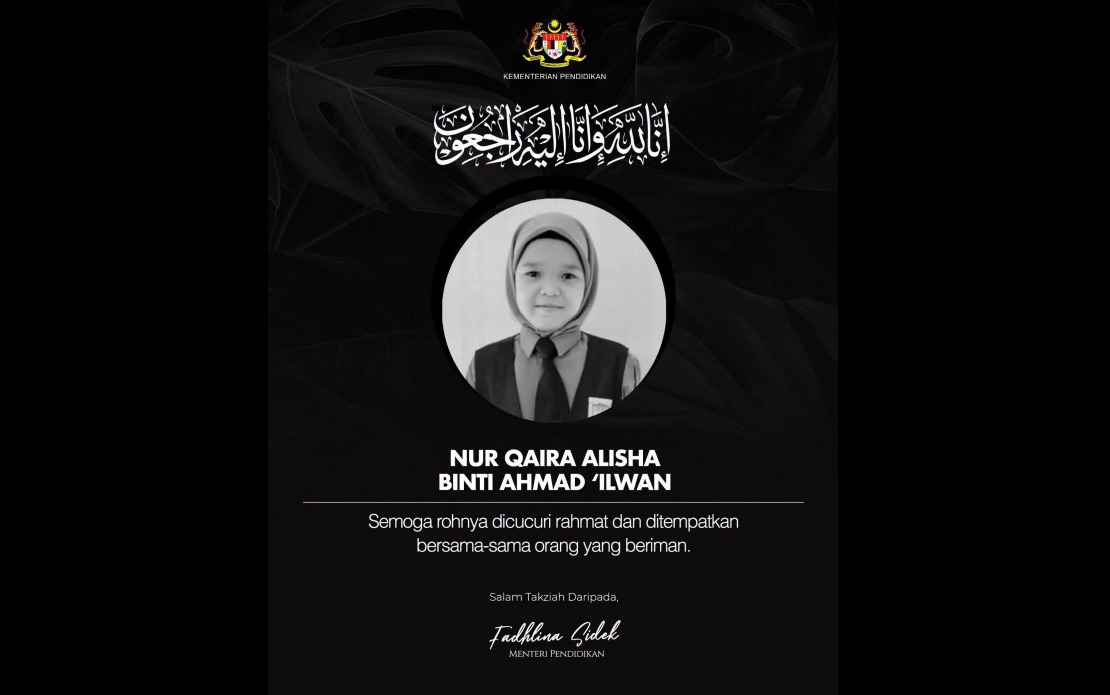
Education Minister Datuk Seri Fadhlina Sidek has instructed the Ministry of Education's Integrity Unit to pursue further investigations into circumstances surrounding the death of Year Four pupil Nur Qaira Alisha Ahmad Ilwan, following a formal complaint lodged by her family. The minister announced the decision via social media on August 27, emphasising that any action would adhere strictly to established protocols while upholding principles of fairness and impartiality for all involved parties. The Kedah State Education Department had already completed its own inquiry into the matter, with findings now escalating to the federal ministry level for comprehensive review.
The case has drawn significant public attention and raised troubling questions about safeguarding procedures in Malaysian schools. Nur Qaira suffered from a serious cardiac condition since infancy at just three months old, a reality that fundamentally shaped her educational experience and physical capabilities throughout her early childhood. Her school had formally documented this medical vulnerability and granted her complete exemption from participation in organised sports activities, a precautionary measure intended to shield her from exertion-related risks.
According to accounts provided by her grieving parents, a teacher directed Nur Qaira to take part in a running competition held during the school's annual house selection sports day on April 15 of this year. This instruction appears to have contradicted not only the established medical exemption but also the formal health documentation that the institution had received from her family and medical practitioners. The decision to permit—or mandate—the child's participation represents a critical breakdown in the chain of safeguarding protocols that should have protected a vulnerable student.
Within days of the sporting event, Nur Qaira's condition deteriorated markedly. By April 24, she required emergency hospital admission to Sultanah Bahiyah Hospital following episodes of severe vomiting and facial swelling. Medical professionals diagnosed her with acute heart failure stemming from decompensated dilated cardiomyopathy, a progressive weakening of the heart muscle that had remained her underlying condition since early infancy. Despite medical intervention, her condition proved unsurvivable, and she passed away during her hospital stay.
For Malaysian parents of children with chronic medical conditions, this incident underscores a fundamental anxiety: whether schools adequately respect and implement documented health restrictions. Dilated cardiomyopathy is a serious cardiac ailment that substantially limits physical exertion capacity, meaning that intense exercise like competitive running can trigger life-threatening complications. The exemption granted to Nur Qaira reflected legitimate medical necessity rather than parental overprotectiveness, making the decision to override it particularly troubling from a duty-of-care perspective.
Minister Fadhlina's statement acknowledged the gravity of student safety and welfare concerns, positioning these matters as central to the education ministry's operational priorities. She extended formal condolences to Nur Qaira's parents and extended family, offering prayers for their strength and resilience during an unimaginably painful period of bereavement. Her public response also signalled governmental recognition that the case warranted elevation beyond routine state-level administrative review.
The involvement of the MOE Integrity Unit suggests that questions extend beyond mere procedural lapses into potential accountability for individual actors. Such units typically investigate matters involving ethical violations, breach of duty, or professional misconduct within educational institutions. The unit's mandate to examine the circumstances will likely encompass evaluating whether the responsible teacher acted within proper authority, whether school leadership failed to enforce medical protocols, and whether systemic weaknesses in safeguarding procedures contributed to the tragedy.
This case arrives amid broader Southeast Asian conversations about student protection frameworks in schools. While Malaysia's education system has established policies for managing students with medical needs, the Nur Qaira incident suggests implementation gaps may persist at institutional level. Teachers and administrators require not only access to medical information about students but also clear training in recognising when exemptions are binding and understanding the health risks associated with non-compliance. Schools must develop cultures where documented medical restrictions are treated as inviolable rather than discretionary.
The investigation's scope will likely examine communication channels between school administration, teaching staff, and parents regarding health-related accommodations. Effective safeguarding depends upon all personnel understanding their responsibilities and the serious consequences of overriding medical directives. Whether the school possessed clear written protocols, whether staff received adequate training, and whether there existed mechanisms for parents to escalate concerns will all influence findings about institutional preparedness.
For Malaysian families managing chronic childhood conditions, the case carries sobering implications about institutional accountability. While investigations cannot restore Nur Qaira's life, transparent examination of what occurred and identification of preventable failures may help establish precedents for stricter enforcement of medical protocols. The ministry's decision to pursue formal integrity investigations signals that such incidents will not pass without scrutiny, potentially strengthening protections for other vulnerable students navigating Malaysia's school systems.

