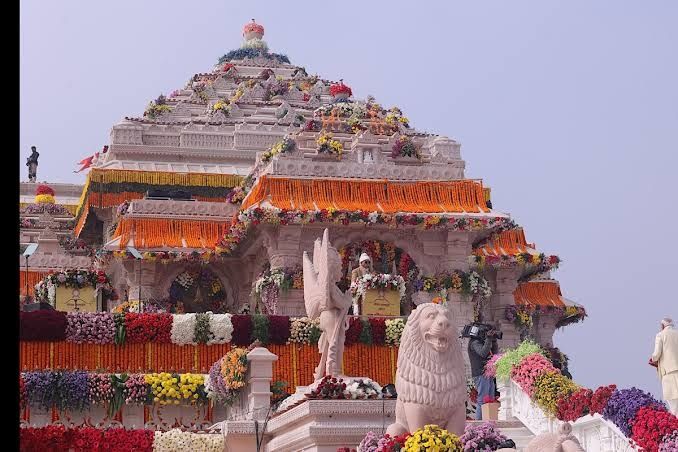
Indian police have arrested eight individuals in connection with allegations of systematic theft and embezzlement at the Ram Mandir, a temple in northern Uttar Pradesh that has become emblematic of Prime Minister Narendra Modi's Hindu-nationalist political platform. The arrests, announced by authorities on Thursday, June 25, centre on criminal allegations including breach of trust, theft, conspiracy and corruption involving the misappropriation of religious donations. The case has thrown an unwelcome spotlight on a site that Modi personally inaugurated in 2024 with considerable ceremonial fanfare.
The Ram Mandir stands at the convergence of religious devotion and Indian political history. Built on ground where the Babri mosque had stood for nearly five centuries until its destruction by Hindu activists in 1992, the temple carries immense symbolic weight within Hindu nationalist circles. Its construction consumed approximately US$240 million, sourced entirely through public donations collected from devotees across India. The temple's management structure, under a dedicated trust, was tasked with stewarding these resources for religious purposes and ongoing operations.
Among those arrested were multiple temple employees whose roles involved direct handling of donated cash and valuables. Devotees regularly contribute gold, silver, and monetary offerings to the temple, and these items required careful accounting and security protocols. The alleged irregularities centred on improper handling, counting and potentially misdirection of these materials. A Special Investigation Team, established by the Uttar Pradesh state government under Chief Minister Yogi Adityanath, had been examining discrepancies in the temple's donation management systems before the arrests were made.
While official statements have avoided specifying the financial scale of the alleged theft, opposition parties and media investigations have suggested that the embezzlement could amount to more than US$20 million. The precise figure remains undisclosed, leaving considerable uncertainty about the true magnitude of the misappropriation. This opacity has intensified public scrutiny and raised questions about transparency in how such large religious institutions manage public contributions.
The allegations have triggered a crisis of faith among many Hindu worshippers who donated in good conscience to what they believed was a sacred undertaking. Viti Saxena, a 44-year-old homemaker and temple donor, articulated the spiritual distress affecting believers, expressing profound dismay that such a shrine of immense religious importance has become tainted by criminal misconduct. Saxena's concern extended beyond personal disillusionment, touching on broader reputational implications for Hindu devotion globally. The criminal case has transformed the temple from a symbol of Hindu religious aspiration into an emblem of institutional betrayal.
The political dimensions of this scandal cannot be separated from its criminal aspects. The Ram Mandir has served as a cornerstone of the Bharatiya Janata Party's political identity and Hindu nationalist mobilisation. When Modi's BJP was in opposition, the party orchestrated sustained public campaigns to popularise the temple's construction, helping to catalyse the very political movement that eventually brought Modi to power. The temple's inauguration represented the culmination of decades of political struggle and religious advocacy championed by BJP leadership.
Uttar Pradesh Chief Minister Yogi Adityanath, responding to the scandal through official statements, pledged that no guilty party would escape accountability. His public commitment to prosecuting those responsible aims to restore institutional credibility, yet the timing and scale of the alleged crimes present a significant challenge to the state government's oversight and governance. The establishment of a Special Investigation Team signals acknowledgment of the seriousness involved, though critics may question why such irregularities escaped detection until this point.
The theological significance attributed to Ayodhya's Ram Mandir extends far beyond its physical structure. Hindu devotees believe that Lord Ram was born in this location more than seven millennia ago, according to religious tradition, making the site among the most sacred in Hinduism. This profound religious centrality amplifies the damage wrought by allegations of financial criminality. When institutions managing such spiritually significant spaces betray that trust, the consequences ripple through religious communities and challenge the integrity of sacred institutions themselves.
For Southeast Asian observers, the Ram Mandir scandal offers instructive lessons about institutional governance within large religious organisations across the region. Similar temples, mosques, churches and gurdwaras throughout Southeast Asia manage substantial public donations, raising comparable questions about financial accountability, internal controls and transparency mechanisms. The case underscores the vulnerability of even high-profile religious institutions to embezzlement when administrative oversight proves inadequate or when individuals exploit positions of trust.
The trajectory from opposition campaigning to governing authority has positioned Modi's BJP to either rebuild confidence in the temple's stewardship or face enduring questions about institutional credibility. How authorities handle prosecutions, implement structural reforms and restore donor confidence will significantly influence public perception. The criminal investigation represents an opportunity to establish more rigorous governance frameworks, yet failure to achieve visible accountability risks deeper erosion of faith among the Hindu faithful who financed the temple's construction.

