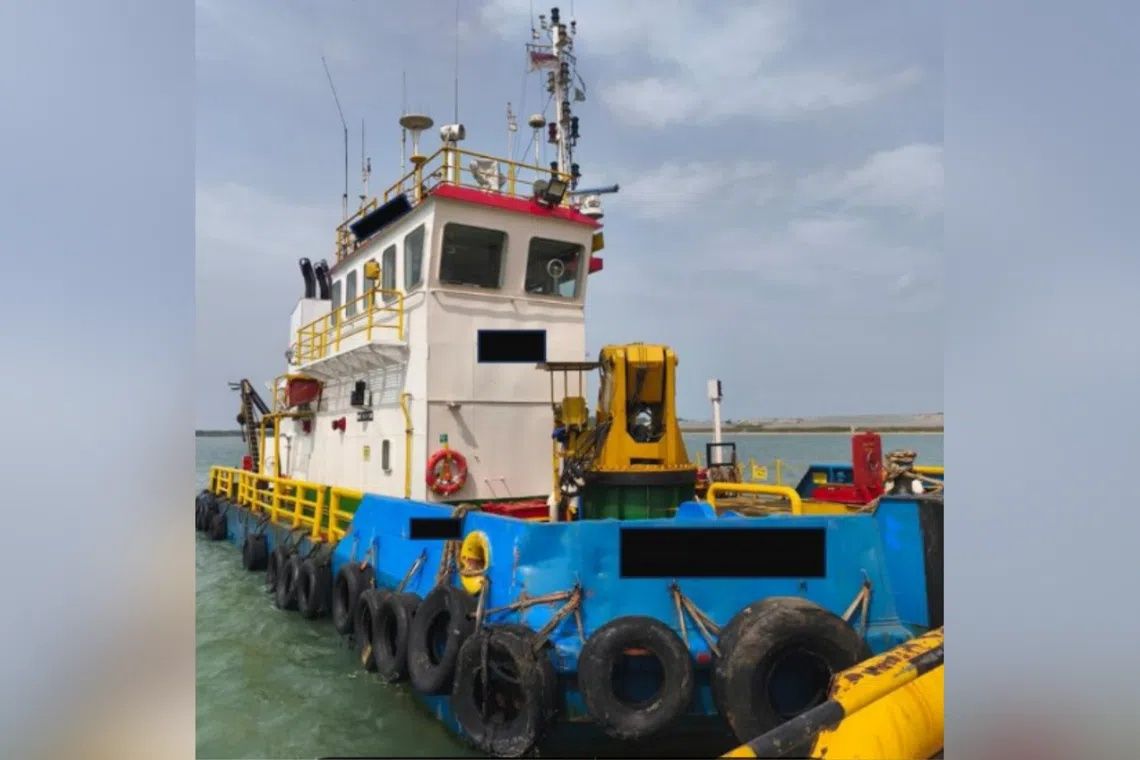
A coordinated enforcement operation in Singapore's territorial waters has resulted in the arrest of eight tugboat crew members suspected of orchestrating an illegal transaction involving marine gas oil. The suspects, whose ages range from 25 to 54 years old, were apprehended following an early-morning inspection conducted by Police Coast Guard officers on August 13 at approximately 1.05am near the Tuas area. All eight individuals are scheduled to appear before the courts on Friday, August 14, to face formal charges related to their alleged involvement in the theft and unauthorised sale of petroleum products.
The investigation that led to the arrests commenced when Police Coast Guard officers boarded a Singapore-registered tugboat operating in the waters off Tuas. During the routine inspection, officers discovered evidence suggesting that crew members had been systematically misappropriating marine gas oil from the vessel without the knowledge or consent of their employer. The preliminary findings indicated that the stolen petroleum product had a market value of approximately S$10,570, representing a significant loss to the company whose vessel was targeted.
According to police investigations, the crew members had not only stolen the marine gas oil but had also proceeded to sell it illegally for personal profit. This dimension of the alleged crime elevates the seriousness of the offence, as it demonstrates a deliberate scheme rather than an isolated incident of carelessness or administrative error. The sale of the stolen fuel appears to have been conducted outside official channels, suggesting a level of planning and coordination among the accused individuals. Such practices, when successful, can create lucrative informal markets within maritime industries, particularly in busy shipping hubs where enforcement challenges are considerable.
The offence with which the eight men are expected to be charged—theft by servant of property in possession of master—carries substantial legal penalties under Singapore law. A conviction on this charge can result in a custodial sentence of up to seven years imprisonment, in addition to financial fines imposed by the court. The severity of potential sentences underscores the legal system's approach to crimes committed by employees against their employers, particularly in the maritime context where trust and security are fundamental operational requirements.
Marine gas oil, also known as marine diesel oil, represents a critical component of maritime operations in Southeast Asia's most congested shipping lanes. The Strait of Malacca and Singapore's territorial waters together constitute one of the world's busiest maritime corridors, handling an enormous volume of vessel traffic daily. In this environment, fuel theft and illegal fuel trading have emerged as persistent challenges for port authorities, shipping companies, and coastal enforcement agencies. The commercial value of petroleum products ensures that such theft remains an attractive prospect for individuals seeking rapid financial gains, despite the legal risks involved.
For Malaysian observers and maritime professionals, the incident demonstrates the regional significance of fuel security in Southeast Asian waters. Singapore's aggressive enforcement stance, as evidenced by the early-morning Police Coast Guard operation, reflects broader regional concerns about illicit maritime commerce. These enforcement actions have direct implications for Malaysian ports and waters, as criminal syndicates operating in one jurisdiction may expand operations across territorial boundaries. The coordination and sophistication exhibited in the alleged Tuas incident suggest that fuel theft networks may operate across multiple jurisdictions within the region.
The police statement issued following the arrests emphasised that Singapore authorities regard illegal transactions involving marine gas oil as a matter of considerable concern. Officials noted that such activities undermine port security and create opportunities for broader criminal enterprise development. The government's commitment to sustained enforcement and security checks reflects recognition that one-off operations prove insufficient to address systemic vulnerabilities. Instead, a continuous programme of checks and inspections is required to maintain deterrence and detect emerging illicit networks before they become established.
For the tugboat company whose vessel was targeted, the theft represents not only direct financial loss but also potential reputational damage and operational disruption. Companies operating in Singapore's competitive maritime sector depend heavily on maintaining unblemished safety and compliance records. The involvement of crew members in theft creates liability questions and may necessitate comprehensive reviews of onboard security procedures, crew vetting protocols, and supervisory mechanisms. Other shipping companies operating in Singapore waters are likely to review their own procedures in response to this incident, viewing it as a cautionary example of internal vulnerabilities.
The broader context of this case extends beyond simple employee dishonesty. The existence of markets willing to purchase stolen marine fuel indicates that organised networks facilitating such transactions continue to operate within the region. These networks require coordination across multiple points—acquisition, storage, distribution, and end-user sales. The Police Coast Guard's success in disrupting one apparent node within such a network may prompt investigators to examine whether these eight individuals form part of a larger operation. Intelligence gathering following the arrests could potentially yield information about downstream buyers and upstream facilitators involved in the fuel distribution chain.
From a regional maritime security perspective, this incident highlights the importance of inter-agency cooperation and information sharing among Southeast Asian governments. Fuel theft networks operating in Singapore waters may exploit gaps in enforcement coordination with neighbouring Malaysian and Indonesian authorities. Enhanced communication protocols and joint enforcement operations across the Strait of Malacca region could help disrupt transnational fuel trafficking operations more effectively. The centralised enforcement capacity demonstrated by Singapore's Police Coast Guard offers a model that other regional states are increasingly attempting to replicate.
The August 13 operation also underscores the vulnerabilities that exist despite substantial security investments in one of the world's most heavily monitored maritime zones. Even in Singapore's jurisdiction, where surveillance capabilities and enforcement resources significantly exceed those available in most developing nations, illegal activities persist. This reality suggests that maritime security challenges throughout Southeast Asia represent systemic problems requiring sustained, multi-dimensional responses rather than solutions achievable through occasional enforcement operations alone.
As the eight accused individuals prepare for their court appearances, their cases will likely attract attention from maritime industry professionals and compliance officers throughout the region. The outcomes of their legal proceedings could influence how shipping companies approach crew training, financial incentives, and security procedures. Additionally, intelligence derived from police investigations into these arrests may illuminate broader networks engaged in maritime fuel trafficking, potentially informing future enforcement priorities for regional authorities tasked with maintaining security and order in Southeast Asian waters.

