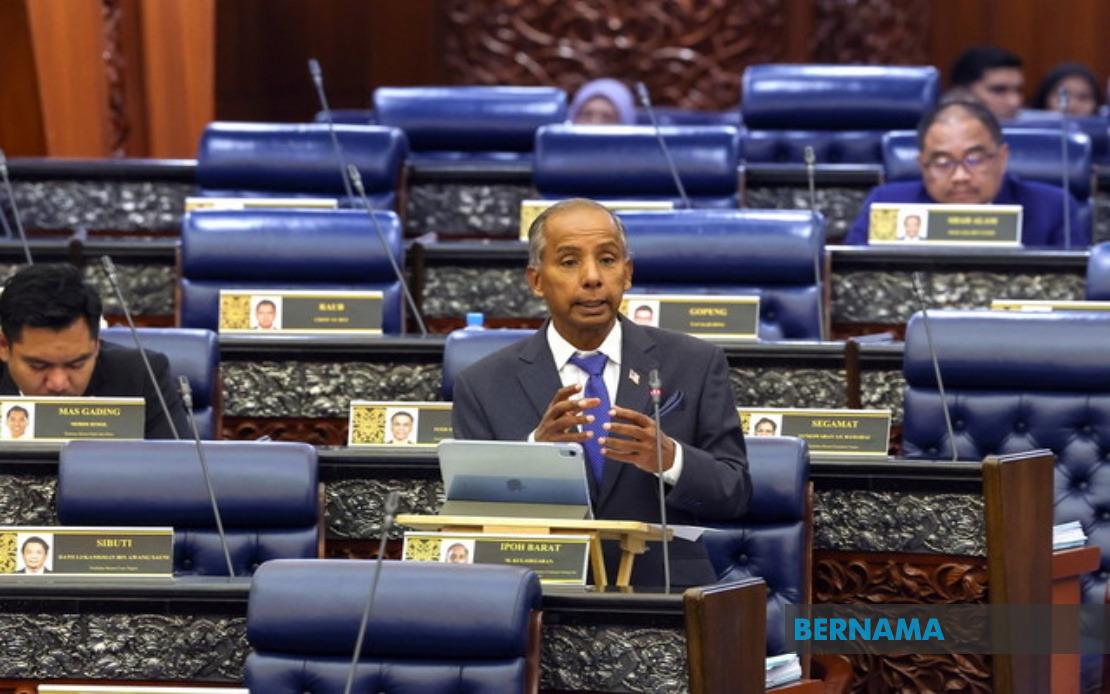
The Election Commission has embarked on a comprehensive examination of a proposal that could fundamentally reshape how Malaysians cast their votes. Specifically, the EC is investigating the feasibility of implementing domestic postal voting for eligible voters across Peninsular Malaysia, Sabah and Sarawak—a move that would expand voting accessibility beyond the current mechanisms. The research effort reflects growing recognition within government circles that electoral processes require modernisation to accommodate the diverse geographic and demographic realities of the country.
Deputy Minister in the Prime Minister's Department (Law and Institutional Reform) M. Kulasegaran outlined the scope and timeline of this exploratory work during parliamentary proceedings. He emphasised that the study cannot proceed in isolation but demands meaningful consultation with a broad spectrum of stakeholders. Political parties, which have vested interests in electoral mechanics, will feature prominently in these discussions, alongside other relevant parties whose perspectives on implementation logistics and safeguards remain critical to the ultimate feasibility assessment.
The decision to conduct such a study acknowledges a persistent challenge facing Malaysian democracy: ensuring that eligible voters can participate in elections regardless of their circumstances or location. Domestic postal voting—allowing citizens within the country to vote by mail rather than at polling stations—addresses practical barriers that prevent some voters from casting ballots, whether due to work commitments, health considerations, or geographic remoteness. Several developed democracies have successfully implemented such systems, though each context presents distinct administrative and security challenges.
Kulasegaran provided an estimated completion date for the investigation, indicating that stakeholders and policymakers should expect findings and recommendations by the end of next year. This timeline provides the EC with adequate opportunity to conduct thorough research, examine international best practices, and evaluate the logistical requirements for rolling out postal voting across three geographically and administratively distinct regions. The extended timeframe suggests the government recognises that rushing implementation could introduce vulnerabilities into the electoral process.
Parallel to the postal voting inquiry, Kulasegaran disclosed that the government is receptive to reconsidering the institutional positioning of the Election Commission itself. Currently, the EC operates under the purview of the Prime Minister's Department, an arrangement that some observers argue blurs the line between the executive branch and the supposedly independent electoral authority. The proposal under consideration would transfer the EC's oversight to Parliament, a structural change that proponents contend would enhance the commission's autonomy and strengthen public confidence in electoral integrity.
The suggestion to relocate EC authority to parliamentary oversight represents a significant governance reform, as it would establish greater institutional separation between the electoral administrator and the sitting government. Kulasegaran indicated openness to this proposal, characterising it as worthy of serious consideration. He committed to escalating the matter to appropriate decision-makers, signalling that the administration does not dismiss such structural reform out of hand. The pace at which this institutional question moves through government channels will partly determine whether postal voting implementation occurs within a substantially reformed electoral framework.
On a separate but related matter, Kulasegaran addressed concerns about inadequate enforcement of existing rules prohibiting mobile phone use at polling stations. Some observers have suggested that policing this restriction remains inconsistent across voting locations, potentially allowing voters to photograph ballots or facilitate other irregularities. The deputy minister reported that the Election Commission maintains confidence in its current control mechanisms and sees no necessity for procedural amendments or the introduction of mobile phone violations as a discrete offence category within the Election Offences Act 1954.
The government's position on phone enforcement suggests a degree of confidence in existing systems that some election observers might question. Nevertheless, the statement indicates that regulatory tightening on this front is unlikely in the near term unless the EC itself recommends change. This constrained approach to enforcement measures may reflect concerns about creating excessive bureaucratic barriers at polling sites or worry about burdening polling staff with additional responsibilities.
For Malaysian voters, particularly those in remote areas of Sabah, Sarawak, and the peninsula, the postal voting study carries tangible implications. If implemented successfully, such a system could significantly increase voter turnout among citizens currently unable to reach polling stations conveniently. The expansion would represent a democratic dividend for underrepresented populations and align Malaysian electoral practice with contemporary norms in several comparable democracies. However, the success of any postal voting regime depends critically on robust security protocols, transparent counting procedures, and public confidence that the system cannot be exploited for fraud.
The proposed transfer of EC oversight to Parliament, should it advance, would carry constitutional and political dimensions extending beyond electoral administration. Such a move would position Malaysia more closely with Commonwealth parliamentary traditions where electoral commissions typically operate at arm's length from executive authority. This institutional realignment could enhance the EC's perceived legitimacy, particularly among opposition parties and civil society observers who scrutinise potential government influence over electoral processes.
Regionally, Malaysia's exploration of postal voting places it alongside other Southeast Asian democracies grappling with similar modernisation questions. Countries across the region face comparable challenges of geographic diversity, dispersed populations, and the need to maximise voter participation. Malaysia's approach to these challenges, including the deliberateness of its study process and its receptiveness to institutional reform, may offer instructive lessons for neighbouring democracies considering parallel reforms.
Looking ahead, the coming months will reveal whether the comprehensive nature of the postal voting study translates into rigorous research and whether governmental openness to parliamentary oversight of the EC represents a genuine commitment to reform or principally rhetorical accommodation. The convergence of these two initiatives—electoral modernisation through postal voting and institutional reform through parliamentary oversight—could mark a watershed moment in Malaysian democratic governance. Alternatively, implementation could proceed haltingly if political calculations among stakeholder groups produce competing visions of electoral reform.

