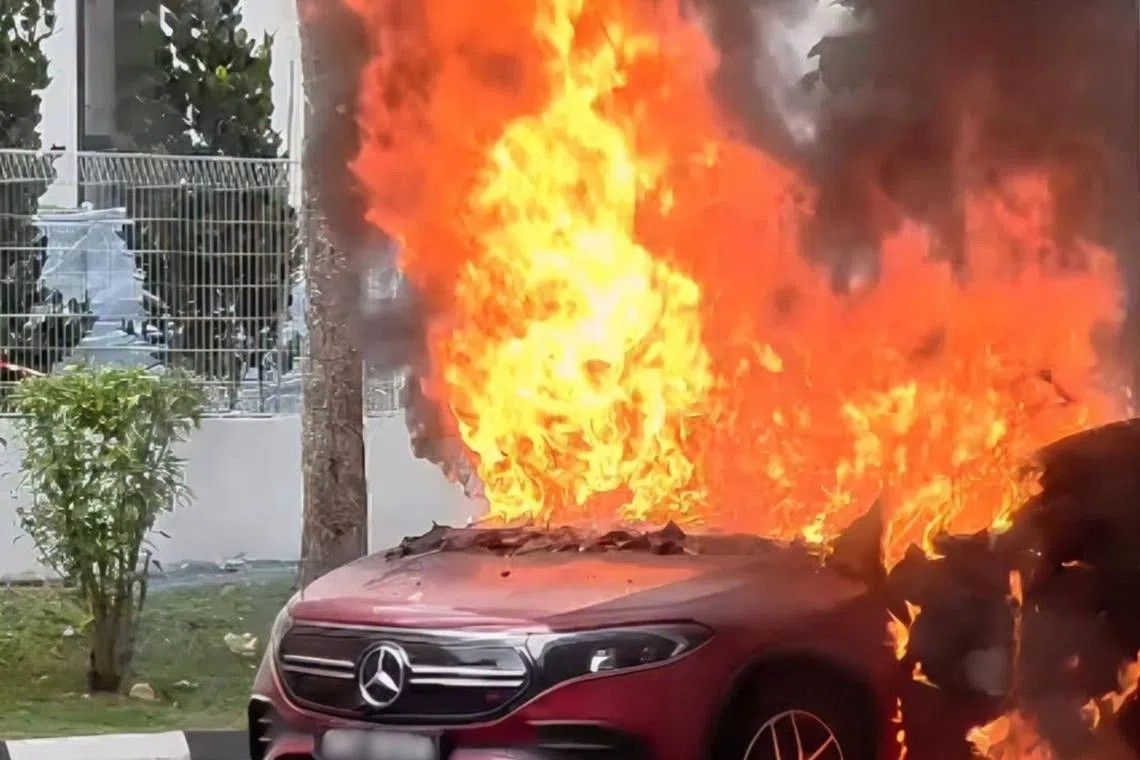
A battery-powered vehicle ignited near the entrance of a multi-storey carpark in Singapore's Woodlands district on the morning of July 21, prompting a swift response from emergency services and raising fresh questions about electric vehicle safety in high-density residential areas. The Singapore Civil Defence Force (SCDF) responded to the incident at Block 548 Woodlands Drive 44 at approximately 10.10am, where firefighters employed a single water jet to extinguish the flames consuming the vehicle's interior. The incident concluded without injuries, though the vehicle sustained extensive damage throughout its cabin and structural components.
The driver of the affected vehicle reported to Shin Min Daily News that she had been exiting the carpark when an acrid burning odour alerted her to a potential malfunction. Upon stopping the vehicle, she observed smoke billowing from within the car, indicating that thermal runaway had already commenced. The fire appeared to originate in the tight space separating the driver and front passenger seats, precisely where the vehicle's lithium-ion battery pack is typically housed in modern electric vehicles. This location represents the most critical and dangerous zone in any EV fire incident, as battery thermal events can escalate rapidly once ignition begins.
When the driver requested assistance from security personnel stationed nearby, the guards attempted to suppress the emerging flames using portable fire extinguishers. However, the intensity and nature of the battery fire overwhelmed these standard firefighting tools, which are designed for conventional combustible materials rather than the self-sustaining chemical reactions occurring within damaged lithium-ion cells. Recognising the escalating danger and the possibility of a catastrophic explosion as the fire spread deeper into the vehicle's structure, the driver and security personnel prudently retreated from the vehicle and activated the SCDF emergency response system.
Photographic documentation of the aftermath reveals the severity of the thermal damage inflicted on the vehicle. The entire interior of the cabin appeared completely charred, with virtually all organic materials consumed by the intense heat. The vehicle's instrument panel had warped and deformed significantly, while the metal support structures that anchor the driver and passenger seats stood exposed amid the destruction. This level of damage underscores the ferocity of lithium-ion battery fires, which burn substantially hotter and more intensely than conventional petrol or diesel fuel fires, posing unique challenges to both emergency responders and vehicle occupants.
While the SCDF has indicated that the precise cause of the fire remains under investigation, preliminary evidence strongly suggests a battery malfunction or thermal runaway event. Battery failures in electric vehicles can stem from multiple sources including manufacturing defects, collision damage incurred over the vehicle's operational life, extreme temperature exposure, or degradation accumulated through repeated charging cycles. In residential settings like HDB carparks where vehicles remain parked for extended periods, environmental factors such as high humidity and temperature fluctuations common to tropical Singapore may accelerate battery degradation, particularly in older EV models.
This incident occurs within a broader context of growing EV adoption across Southeast Asia, including Malaysia, where electric vehicles represent an increasingly significant portion of new vehicle registrations. Regulatory bodies and automotive authorities throughout the region have been monitoring battery safety performance, particularly regarding incidents in enclosed spaces such as carparks and underground facilities where smoke accumulation and explosive atmospheres present heightened hazards. The Woodlands incident serves as a practical reminder of the distinct fire characteristics of battery electric vehicles compared to traditional internal combustion engine vehicles.
Emergency response procedures for EV fires differ substantially from conventional vehicle fire protocols. Water-based suppression methods, while effective against some aspects of battery fires, require larger volumes and longer application times compared to ordinary vehicle fires. The SCDF's successful deployment of a single water jet in this instance represents efficient resource application, though it underscores the importance of ensuring adequate water supply infrastructure in carpark facilities where EV charging is anticipated to increase. Singapore's dense urban environment and heavy reliance on high-rise residential carparks mean that understanding and preparing for EV fire scenarios has become a critical public safety consideration.
For residents across the region considering electric vehicle purchases, this incident highlights the importance of understanding their vehicles' battery management systems, recognising early warning signs of malfunction such as unusual odours or temperature changes, and maintaining appropriate distance from the vehicle if any anomalies manifest. Manufacturers continue refining battery thermal management systems and incorporating additional safeguards, though catastrophic failures occasionally occur despite these protections. Regular servicing and adherence to manufacturer maintenance schedules remain essential for identifying potential battery degradation before critical failures develop.
The extraction and removal of the damaged vehicle at approximately 12.15pm concluded the immediate response phase, but the investigation into the underlying cause will continue. As electric vehicles proliferate in Singapore and throughout Malaysia and the broader Southeast Asian region, the lessons drawn from incidents such as this one become increasingly valuable for policymakers, building managers, and emergency responders tasked with ensuring public safety in parking facilities designed and constructed during the era of petroleum-powered transportation.

