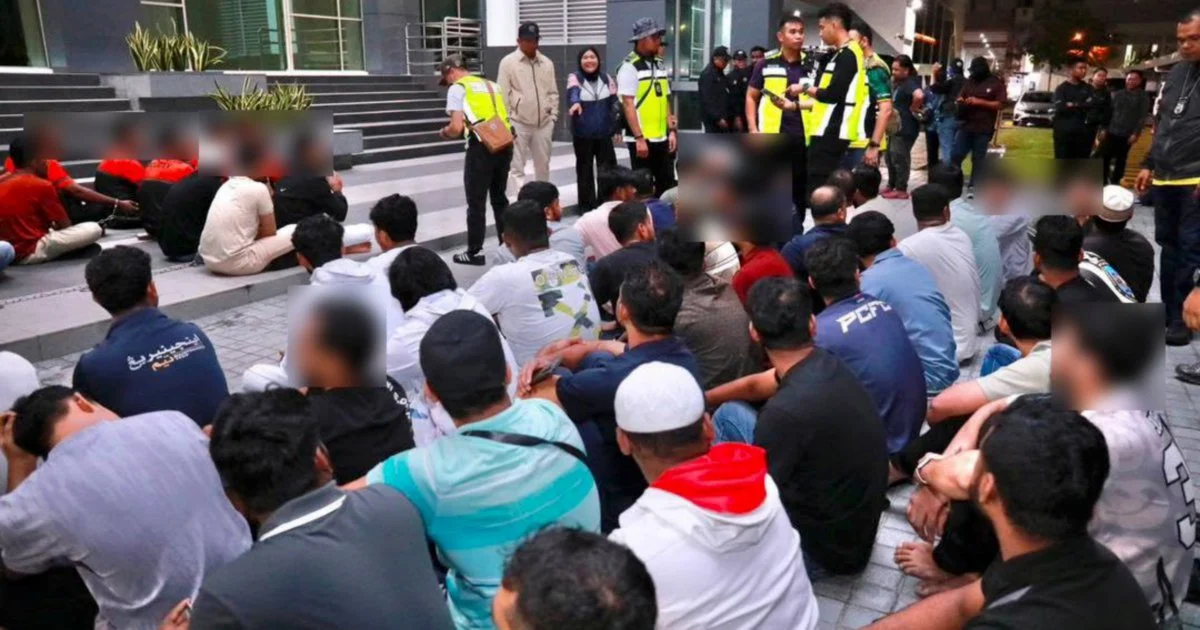
Immigration enforcement authorities in Klang have uncovered a scheme involving foreign workers obtaining employment through the fraudulent use of Malaysian identity cards and forged documentation, following a coordinated raid at a frozen food processing facility located in Pulau Indah. The operation, conducted overnight, resulted in the detention of multiple individuals, including a 20-year-old Indonesian national who claimed unfamiliarity with Malaysian employment law when confronted about using his cousin's MyKad to secure work at the factory.
The arrested individual's assertion of ignorance regarding the legality of identity card misuse highlights a troubling pattern that immigration officials have observed with increasing frequency across Malaysia's labour-intensive manufacturing and processing sectors. The claim raises questions about whether such incidents reflect genuine unawareness among migrant workers or represent a calculated strategy employed during questioning. Regardless of intent, the practice of utilising relatives' documentation to circumvent labour regulations represents a serious breach of Malaysia's employment framework and immigration statutes.
The frozen food processing sector, particularly in the Selangor industrial corridor, has historically attracted significant numbers of foreign workers seeking employment opportunities. Pulau Indah's concentration of manufacturing facilities—spanning food processing, chemicals, and related industries—creates an environment where unscrupulous employers and labour brokers may exploit vulnerable migrant workers unfamiliar with local legal requirements. The factory targeted in this raid appears to have become a focal point for such violations, suggesting potential systemic issues within that specific operation.
Use of another person's MyKad to gain employment violates multiple provisions of Malaysian law, including the Immigration Act, the Employment Act, and regulations governing identity document misuse. The offence carries serious consequences, including potential criminal prosecution, fines, and deportation for foreign nationals. Yet the persistence of such schemes suggests that enforcement capacity remains stretched across Malaysia's vast industrial landscape, and that education regarding legal employment procedures among migrant worker communities remains inadequate.
The involvement of family members' legitimate identity documents in this fraud—rather than entirely counterfeit papers—indicates a particularly calculated approach. This method potentially provides perpetrators with documentation that passes initial scrutiny, as the MyKad itself is genuine, creating complications for front-line verification processes. Employers utilising such arrangements may attempt to argue they conducted reasonable due diligence, while the true documentation holder bears little responsibility, complicating accountability mechanisms.
The discovery of what authorities describe as fake identity cards alongside the misuse of legitimate MyKad suggests multiple layers of document fraud operating simultaneously within this facility. Some workers may have been provided entirely fabricated identification, while others employed relatives' genuine cards, indicating either different supplier networks or varying sophistication levels among those orchestrating the scheme. This multi-pronged approach suggests coordination rather than isolated instances of worker misconduct.
For Malaysia's manufacturing sectors reliant on migrant labour, such raids represent critical pressure points where enforcement capacity must be concentrated. The frozen food processing industry contributes substantially to the nation's export economy, making labour compliance not merely a regulatory matter but an economic and reputational concern. International buyers increasingly scrutinise supply chains for labour violations, meaning that incidents like the Pulau Indah raid carry implications extending beyond domestic regulation to Malaysia's standing as a responsible trading partner.
The broader context of migrant worker vulnerability in Malaysia requires consideration when examining such incidents. Many foreign nationals working in processing facilities come from backgrounds where documentation requirements differ substantially, and employer-provided information about legal procedures may be deliberately obscured or falsified to ensure worker dependence. The 20-year-old's claimed ignorance, while legally immaterial, reflects a reality that many migrant workers operate within information environments deliberately shaped by employers and labour brokers seeking to maximise compliance and minimise worker rights awareness.
Authorities have intensified workplace enforcement operations across Selangor's industrial zones in recent months, reflecting heightened attention to labour violations within manufacturing and processing sectors. These raids typically target both worker documentation fraud and broader employment law breaches, including wage theft, unsafe working conditions, and excessive working hours. The Klang operation appears consistent with this enforcement trajectory, suggesting coordination with broader crackdowns rather than isolated investigative efforts.
Looking forward, addressing such schemes requires action operating across multiple levels. Employers must implement robust identity verification systems that cross-reference with national databases rather than accepting documents at face value. Labour brokers and recruitment agencies require stricter licensing and monitoring to prevent them from facilitating fraudulent placements. Migrant worker education programmes, ideally provided in languages familiar to target populations, should clearly communicate employment law requirements and workers' rights.
The incident also underscores Malaysia's ongoing challenge in balancing economic reliance on foreign labour with rigorous enforcement of employment and immigration standards. Effective solutions demand sustained investment in enforcement capacity, technological systems for identity verification, and genuine commitment from employers to maintain compliant workforces. Without such comprehensive approaches, incidents like the Pulau Indah raid will likely continue recurring, reflecting persistent vulnerabilities within Malaysia's migrant labour management systems.

