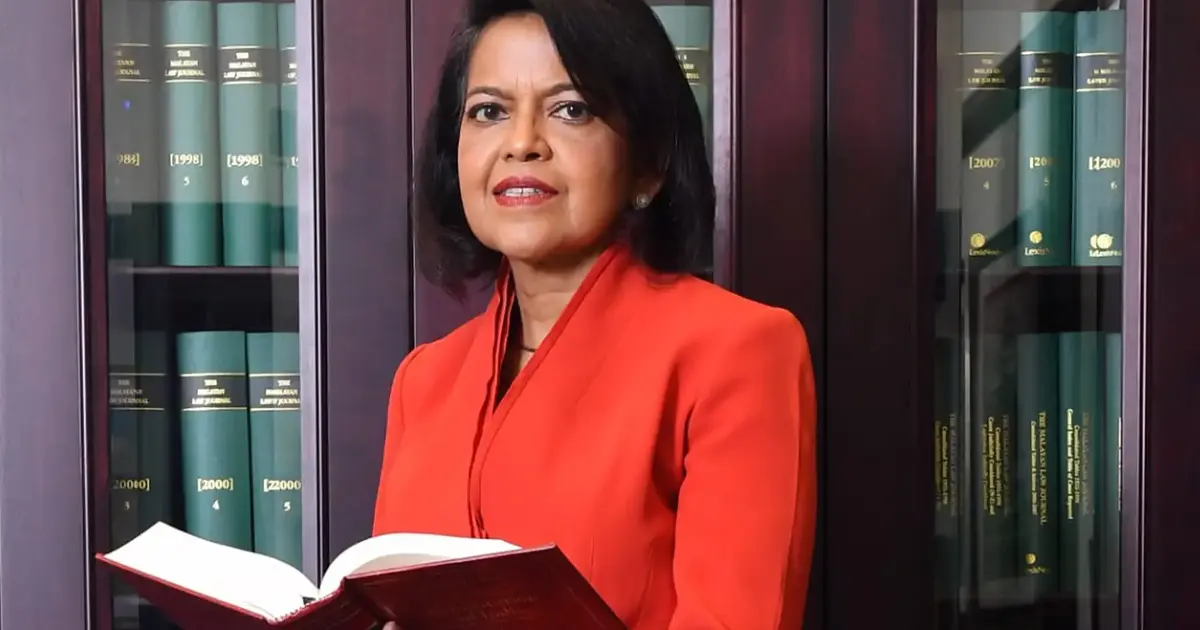
The Malaysian Media Council has appointed Nallini Pathmanathan, a retired Federal Court judge, to serve as its new chairman. The appointment arrives at a critical juncture for Malaysia's media landscape, which is currently navigating a complex array of institutional and operational obstacles that threaten both editorial independence and commercial viability.
Pathmanathan brings substantial judicial experience to the role, having spent her career in Malaysia's highest court. Her appointment signals an intention by the council to draw upon legal expertise and institutional credibility as it seeks to address systemic issues affecting newsrooms, publishers, and broadcast operators across the country. The decision reflects confidence in her capacity to navigate the intricate relationships between media freedom, regulatory compliance, and public accountability that characterize contemporary Malaysian journalism.
The Malaysian media industry currently confronts challenges spanning multiple dimensions. Financial sustainability remains precarious for many news organisations, particularly regional and independent outlets struggling to compete with digital platforms and maintain advertising revenue. Simultaneously, regulatory frameworks governing media operations have become increasingly complex, with journalists and publishers required to interpret and comply with evolving legislation while safeguarding editorial standards and audience trust.
Mediaisation of politics and the rapid dissemination of unverified information through social media have fundamentally altered the information ecosystem. Traditional news outlets now compete not only with each other but with countless digital sources of varying credibility, forcing established journalists to rethink their gatekeeping functions and verification processes. This transformation has also intensified scrutiny of media houses themselves, with audiences and regulators demanding greater transparency regarding ownership structures, editorial decision-making, and commercial interests influencing coverage.
Pathmanathan's judicial background positions her uniquely to address these intersecting challenges. Courts increasingly adjudicate disputes involving media organisations, defamation claims, and questions of reporting privilege, making judicial understanding of media law and constitutional protections for press freedom invaluable. Her experience interpreting constitutional provisions and statutory frameworks applicable to Malaysian journalism will likely inform her approach to council governance and industry advocacy.
The Malaysian Media Council functions as a self-regulatory body tasked with establishing and enforcing ethical standards within the industry. Its effectiveness depends heavily on credibility among news professionals and public confidence in its impartiality. By selecting a figure with Pathmanathan's stature and judicial background, the council signals commitment to principled self-regulation rather than external control, an assertion increasingly important given ongoing debates about media autonomy and government oversight in Southeast Asia.
For Malaysian newsrooms, the appointment carries implications for how the council will balance competing imperatives during a period of structural transformation. News organisations need robust support mechanisms to resist political pressure and commercial coercion while maintaining ethical practices. Simultaneously, audiences and policymakers expect media accountability and responsible reporting that respects privacy, accuracy, and fairness principles. Pathmanathan's role will involve mediating these tensions through the council's regulatory frameworks and advocacy initiatives.
Regionally, Malaysia's media challenges reflect broader Southeast Asian patterns. Across the region, news industries face comparable economic pressures, regulatory scrutiny, and digital disruption. The appointment of a figure with legal credentials to lead Malaysian self-regulation may influence regional discussions about media governance and the optimal balance between industry autonomy and governmental regulation. Other nations grappling with similar transitions often observe peer developments in neighbouring countries.
The council's mandate extends beyond reactive complaint investigation to proactive leadership in shaping industry norms and standards. Under Pathmanathan's chairmanship, opportunities exist to clarify expectations around digital journalism practices, artificial intelligence use in news production, and transparency regarding sources and funding. Such forward-looking governance becomes increasingly necessary as technologies and distribution models evolve faster than regulatory mechanisms can accommodate.
Pathmanathan's appointment also underscores the relevance of institutional bridges between different sectors of Malaysian society. Judges who transition to leadership roles in quasi-regulatory bodies like the Media Council bring institutional legitimacy and legal reasoning habits that can strengthen governance frameworks. Her presence may encourage both media professionals and governmental actors to respect the council's independence and value its determinations regarding industry standards and ethical practices.
Looking forward, the effectiveness of this appointment will depend substantially on resources available to the council and the level of industry cooperation it receives. Media houses must view the council not as an adversary but as a collective voice articulating professional standards and defending editorial independence. Pathmanathan's challenge will involve building consensus among diverse stakeholders while maintaining the council's credibility as an impartial arbiter of journalistic conduct and media ethics during an era of profound industry transformation.