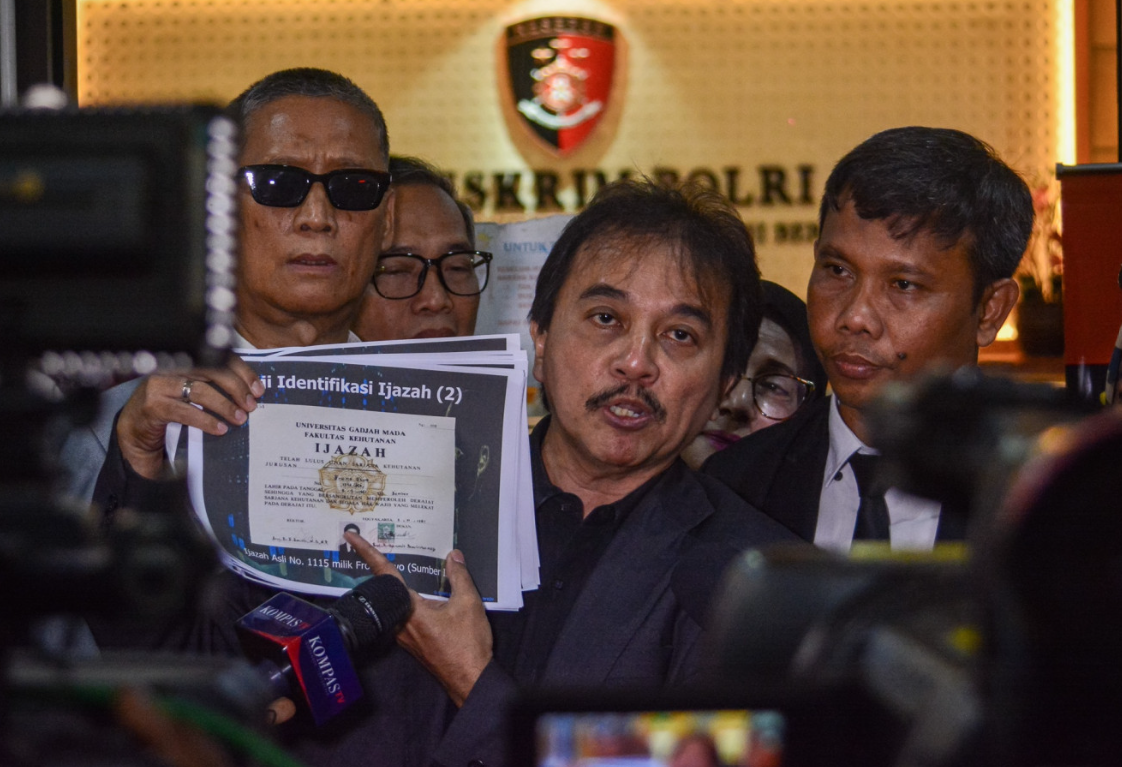
Jakarta authorities have taken the controversial dispute over former president Joko 'Jokowi' Widodo's academic credentials to a new stage by detaining former youth and sports minister Roy Suryo and health activist Tifauzia 'Tifa' Tyassuma on Friday morning, June 19. The pair face allegations of defamation and electronic document manipulation in connection with their claims that Jokowi's university diploma is inauthentic. Their arrest marks a significant turning point in what has become one of Indonesia's most protracted political controversies, one that continues to divide public discourse and test the boundaries of free speech in the world's largest Muslim-majority democracy.
According to Roy's legal representative Ahmad Khozinudin, both suspects were apprehended at their homes as standard procedure before transferring the investigation to the Jakarta Prosecutor's Office. The Jakarta Police's General Crimes Directorate characterised the detention as a routine administrative step necessary to ensure the criminal process moves forward without delay. Investigation director Senior Commissioner Iman Imanuddin explained that the measure facilitates the formal handover of case materials and evidence once police dossiers are deemed complete, permitting the prosecution to proceed with the next phase of legal action.
Beyond the defamation charges, Roy and Tifa stand accused of fabricating electronic documents to substantiate their assertions regarding the diploma's authenticity. This additional allegation transforms the case from a simple dispute about factual claims into one involving potential document fraud—a more serious criminal matter. The charges operate under Indonesia's Electronic Information and Transactions Law, which prescribes a maximum sentence of six years imprisonment, creating substantial legal jeopardy for both defendants.
The diploma controversy traces its origins to 2019, when initial questions about Jokowi's academic background first emerged through social media channels. What began as online speculation evolved into a sustained campaign questioning whether the former president genuinely possessed the qualifications he claimed. The dispute has since spawned numerous legal proceedings, including a civil lawsuit filed in 2022 and fresh investigations launched in 2025 as new parties entered the fray with varying claims and counterclaims.
In May 2025, Indonesia's National Police formally declared Jokowi's diploma authentic and shuttered their initial investigation into forgery allegations. This determination appeared to offer finality to the matter. However, a subsequent case review conducted in July 2025 reopened the debate when critics, including Roy Suryo, continued pressing their objections to the police findings. Rather than settling the question definitively, the official validation seemed to intensify rather than defuse the controversy, suggesting deeper divisions persist within Indonesian society regarding institutional trust and political accountability.
Roy's defence counsel, Refly Harun, promptly challenged the detention order, characterising it as excessive and unnecessary. Refly pointed out that his clients had consistently appeared for all police summonses and maintained their reporting obligations throughout the investigation. Since the prosecutor was not scheduled to receive the case materials until the following Monday, detaining the suspects for several intervening days served no apparent procedural purpose. The legal strategy signals an intent to contest the detention through formal channels and challenge the proportionality of the police action.
The detention decision carries particular significance given Roy's background. As a former minister under Susilo Bambang Yudhoyono's administration, Roy represents the old guard of Indonesian politics—a figure from the pre-Jokowi era now facing serious criminal charges. His prosecution might be viewed through multiple lenses: as legitimate accountability for spreading false information, as political vendetta against Jokowi critics, or as a cautionary tale about the consequences of challenging powerful figures in Indonesia's complex political landscape. The ambiguity itself underscores the polarization that the diploma issue has generated.
The broader implications of this case extend beyond the immediate question of whether Jokowi's diploma is genuine. The prosecution raises substantial questions about acceptable bounds of political criticism in Indonesia. Prominent figures and activists have faced similar charges under the Elektronik Information and Transactions Law—a statute that critics contend has been weaponised to silence dissent and suppress legitimate inquiry into matters of public concern. The detention of Roy and Tifa will likely reignite debates about whether Indonesian law adequately protects the right to question official narratives and challenge government claims.
Police records indicate that at least nine individuals were initially named as suspects in this defamation investigation. Notably, however, authorities subsequently dropped charges against three suspects—Eggi Sudjana, Damai Hari Lubis, and Rismon Sianipar—following mediation efforts. This selective outcome raises questions about the consistency of enforcement and whether political considerations influenced which defendants faced prosecution. The distinction between those charged and those granted relief through negotiation adds another layer of complexity to evaluating the case's fairness and objectivity.
For Malaysian observers, this Indonesian saga offers instructive parallels regarding how political controversies involving public figures intersect with defamation law, document authenticity disputes, and questions of institutional credibility. Southeast Asia's democracies grapple with comparable tensions between protecting free expression and maintaining respect for public office. The Roy Suryo detention demonstrates how unresolved political conflicts can metastasise into protracted legal battles that consume governmental resources and public attention while potentially deepening rather than healing societal divisions.
The prosecution's trajectory will illuminate how Indonesian courts weigh competing interests: the reputational interests of powerful political figures, the public's right to scrutinise official records, and the proper scope of defamation liability in an era of digital communication. As the case proceeds toward the Prosecutor's Office and potentially beyond, the fundamental question remains unresolved: whether vigorous criticism of a former president's credentials constitutes criminal defamation or legitimate democratic discourse. The answer Indonesia's legal system provides will reshape the terrain of political accountability and free speech throughout the region.

