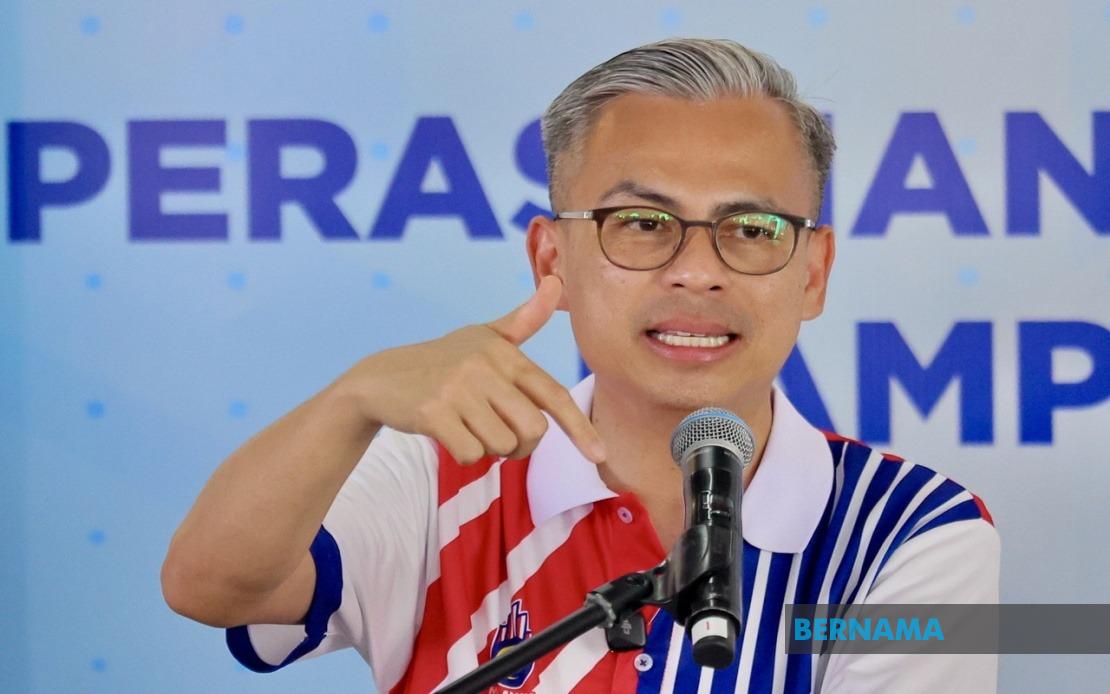
Communications Minister Datuk Fahmi Fadzil has publicly denounced the creation of a fake WhatsApp account masquerading as Pakatan Harapan (PH) candidate Saiful Nizam Samat in the Endau state seat race, characterising the deception as a reflection of political desperation. The minister's rebuke, posted directly beneath Saiful Nizam's Facebook announcement, underscores growing concerns about the integrity of campaign communications in the competitive Johor state election contest.
Saiful Nizam issued a formal denial that he operates the imposter account, clarifying that the fraudulent channel operates independently of both his official communications and his campaign machinery, Team SS. In a Facebook post released on polling day, the PH candidate explicitly distanced himself from the scheme, emphasising that members of the public should exercise caution when encountering unsolicited campaign messages purporting to come from him.
The fake account employed recognisable elements to increase its credibility, including Saiful Nizam's actual profile photograph and a message claiming "I am Saiful Samad, the future Endau assemblyman." The impersonator then attempted to leverage this false identity to conduct electoral outreach with voters. By screenshots shared publicly, the deceptive communications became evident to the candidate and his supporters, prompting swift action to alert the electorate.
Minister Fahmi's commentary captured a broader frustration with the lengths some political operatives will pursue to gain electoral advantage. His statement—"This is the act of irresponsible people. They will do anything to win!"—reflects the escalating tensions surrounding campaign ethics in Malaysia's state-level contests. The use of digital impersonation represents a particularly insidious form of political manipulation, potentially misleading voters about a candidate's positions or activities without accountability.
Saiful Nizam's campaign team has instructed supporters and constituents to verify all communications through official Team SS channels rather than trusting unsolicited messages on social media platforms. This defensive posture, while necessary to counter the fraud, also highlights a vulnerability in contemporary Malaysian political campaigns: the difficulty voters face distinguishing legitimate candidate outreach from sophisticated imposters in an increasingly crowded digital information environment.
The Endau constituency presents a notably fractious electoral landscape, with four distinct political forces competing for the seat. Barisan Nasional, Pakatan Harapan, Perikatan Nasional, and Parti Orang Asli Malaysia each fielded candidates, creating a competitive four-way split that may have incentivised more aggressive—and unethical—campaign tactics. In such crowded races, marginal gains through any available means, including digital trickery, might appear strategically valuable to some operatives.
The incident exemplifies a broader challenge confronting Malaysian electoral politics in the digital age. As political campaigns increasingly migrate toward WhatsApp, Facebook, and other messaging platforms, opportunities for impersonation multiply exponentially. Unlike traditional campaign channels, these digital spaces lack the institutional safeguards and verification mechanisms that might otherwise prevent such deception. A single bad actor equipped with basic technical knowledge can create chaos that ripples across voter perceptions of a candidate.
For voters and campaign observers across Johor and beyond, the fake account episode underscores the necessity of digital literacy and healthy scepticism toward unsolicited political messaging. Saiful Nizam's explicit advisory—requesting that citizens report suspicious communications and refrain from divulging personal information to unverified accounts—represents sensible guidance applicable far beyond this single race. In an environment where political operators demonstrate willingness to impersonate candidates, voters must cultivate defensive habits.
The incident also raises questions about accountability and enforcement. The source of the fake account remains unidentified, and it remains unclear whether any investigative or legal consequences will follow. If political impersonation schemes operate with relative impunity, they may proliferate in future Malaysian elections, further eroding public confidence in the integrity of campaign communications. Stronger digital authentication standards and clearer legal frameworks governing political messaging could help mitigate such problems.
Minister Fahmi's public condemnation, while symbolically important, also reflects the relative powerlessness of political figures to prevent such tactics absent formal enforcement mechanisms. His statement functions primarily as a warning to voters rather than as a deterrent to potential bad actors. Unless consequences materialise for those orchestrating fake accounts, moral exhortations alone may prove insufficient to discourage future attempts at digital campaign trickery.
The broader implications extend throughout Southeast Asia, where digital campaign manipulation has become increasingly sophisticated and prevalent. Malaysian politicians' willingness to call out such tactics publicly may establish useful precedents for regional electoral integrity, encouraging other nations to consider similar standards for campaign conduct in the digital sphere.
Moving forward, the Endau contest and similar races in future Malaysian elections will likely attract continued scrutiny regarding campaign authenticity and digital ethics. The incident involving Saiful Nizam's impersonator serves as a timely reminder that as political competition intensifies and digital tools proliferate, vigilance regarding electoral integrity becomes correspondingly more crucial for protecting democratic legitimacy.

