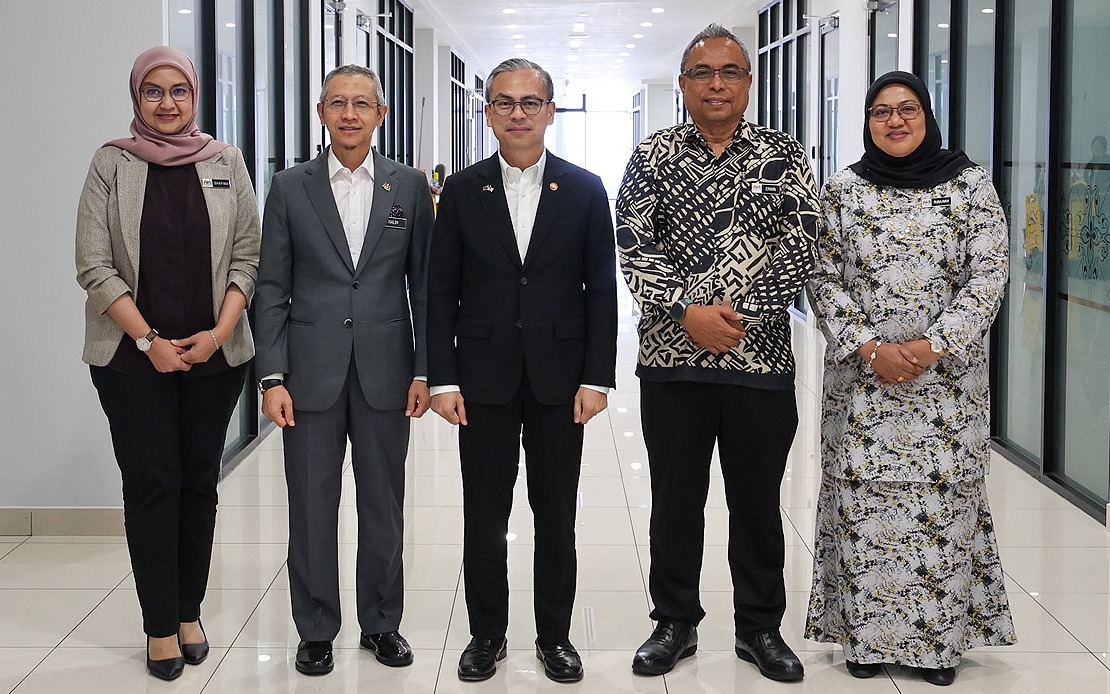
Communications Minister Datuk Fahmi Fadzil has extended his congratulations to the newly appointed leadership of the Information Department (JaPen), marking a significant transition in the nation's key information management institution. Erwin Khairul Ahmad assumes the role of director-general, while Wan Saidatul Shafina Mohd Amin takes on the position of deputy director-general overseeing digital content operations.
The appointments represent an important moment for Malaysia's information and communications infrastructure at a time when the government continues to navigate an increasingly complex media landscape. The Information Department serves as a critical bridge between government initiatives and public understanding, making the transition of leadership a matter of strategic importance for how official messaging reaches Malaysian citizens across multiple platforms.
In his statement, Fahmi emphasised the expected qualities for the incoming directors, calling on them to demonstrate dedication, wisdom, and strong commitment to their responsibilities. His remarks underscored the importance of the Information Department's role in functioning as an efficient and transparent channel for disseminating government information to the population. This articulation of expectations reflects broader ministerial priorities regarding how government communications should evolve in an era of rapid information consumption and digital media proliferation.
The minister also took the opportunity to acknowledge the contributions of the outgoing director-general Julina Johan, recognising her service and the institutional knowledge she accumulated during her tenure leading the department. Such gestures, while ceremonial in nature, serve to maintain continuity and respect within the civil service bureaucracy while signalling that transitions are orderly and purposeful rather than abrupt.
The Public Service Department (JPA) formally presented the appointment letters through Tan Sri Wan Ahmad Dahlan Abdul Aziz, the director-general of Public Service. This formal process demonstrates the structured nature of senior civil service appointments in Malaysia, where transitions in key positions follow established protocols and involve multiple layers of government oversight. The involvement of the JPA underscores that these appointments carry the weight of institutional approval and have undergone the appropriate evaluation mechanisms.
For Malaysian observers and international stakeholders, these appointments carry implications for how the government intends to manage information dissemination in the coming years. The specific designation of a deputy director-general for digital content signals an acknowledgement that the Information Department must maintain contemporary relevance by prioritising engagement through digital and social media channels where growing segments of the Malaysian population now consume news and information.
The timing of this leadership change positions JaPen to address ongoing challenges in managing government communications across traditional and digital platforms. As Malaysia continues to develop its digital economy and expand internet accessibility, the department's capacity to deliver consistent, clear, and credible information through diverse channels becomes increasingly vital. The new leadership will inherit an institution that must balance traditional press relations with the demands of viral information ecosystems and real-time communication expectations.
The appointment of Wan Saidatul Shafina to specifically oversee digital content operations reflects recognition that traditional information dissemination methods alone no longer suffice in reaching Malaysia's diverse population. Her role suggests a deliberate strategic emphasis on strengthening JaPen's presence and capability across digital platforms, including social media, government websites, and other online channels through which official information must flow to maintain public trust and counter misinformation.
Erwin Khairul Ahmad's appointment as director-general places him at the helm during a period when government information operations face increasing scrutiny from both international observers and domestic audiences. The role requires navigating complex questions about information accuracy, timely disclosure, and public accountability while maintaining the institutional interests of the government. His leadership will shape how JaPen responds to breaking news, manages crisis communications, and positions official narratives within increasingly crowded information spaces.
These transitions occur within the broader context of Malaysia's ongoing political evolution and shifting media environment. The Information Department remains a crucial institution for translating government policies and decisions into public understanding, making the competence and commitment of its leadership directly relevant to democratic governance and public discourse. The new directors will need to demonstrate responsiveness to contemporary communication practices while upholding professional standards of accuracy and transparency that underpin institutional credibility.
Moving forward, the performance and strategic direction established by the new leadership team will likely influence how effectively the government communicates with diverse stakeholder groups ranging from urban digital-native populations to rural communities with different media consumption patterns. The challenge before them involves modernising operations while maintaining the institutional gravitas and neutrality that citizens expect from official information sources.

