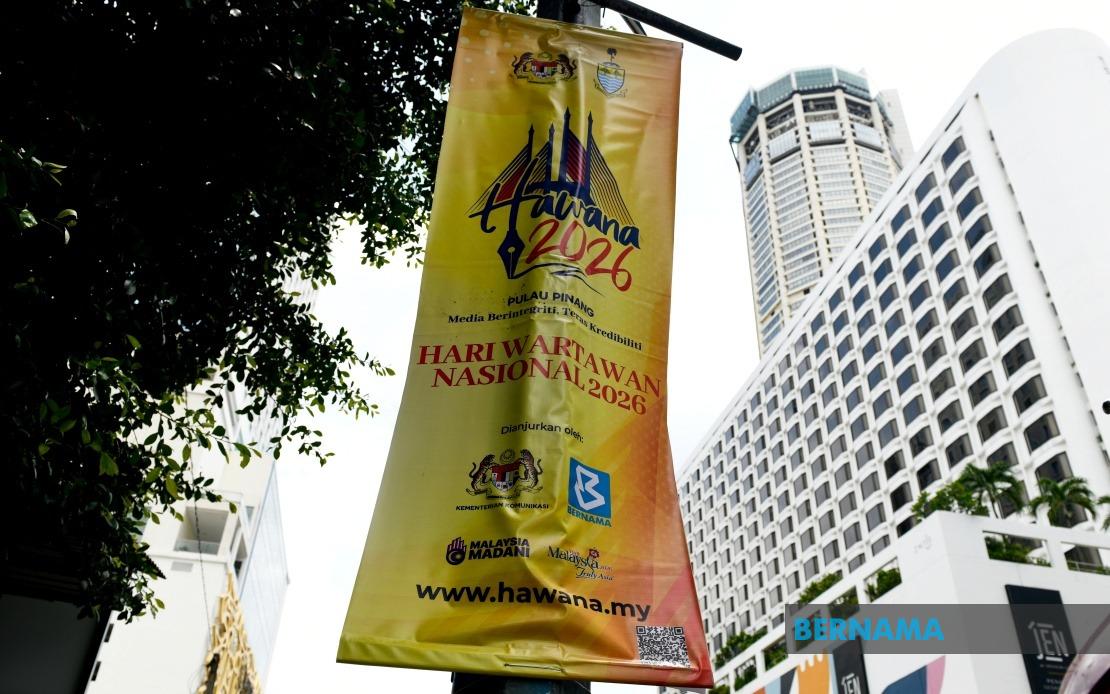
Communications Minister Datuk Fahmi Fadzil has arrived in Penang for a two-day working visit focused on celebrating Malaysia's media industry through the HAWANA 2026 grand finale, the flagship annual recognition programme for journalists and news organisations. The packed itinerary underscores the government's commitment to honouring the fourth estate's role in nation-building, while simultaneously creating spaces for dialogue between policymakers, media leaders and creative professionals across the region.
Fahmi's engagement began with the Malaysia Media Retreat Programme 2.0 in Seberang Jaya, followed by a formal dinner with Penang's Yang Dipertua Negeri Tun Ramli Ngah Talib. These initial events set the tone for a broader initiative aimed at fostering closer ties between government communications apparatus and news organisations operating in Malaysia. The retreat format allows senior figures in the industry to engage in substantive conversations about emerging challenges, editorial standards and the evolving relationship between state institutions and the press in an era of rapid digital transformation.
The evening continued with Fahmi's attendance at the RIUH Pi HAWANA Carnival at PICCA Convention Centre @ Butterworth Arena, a vibrant three-day event that deliberately blends journalism's concerns with the broader creative economy. This fusion reflects a strategic pivot in how authorities are positioning the media profession—not in isolation but as part of a larger ecosystem encompassing digital creators, small entrepreneurs and cultural practitioners. The carnival's free admission and diverse programming, featuring workshops in traditional printing techniques alongside performances by contemporary artists, signals an attempt to broaden public engagement with questions of media literacy and content creation.
The carnival itself serves multiple audiences. It hosts over 24 local creative product brands and 20 food and beverage vendors, drawing both industry professionals and casual visitors. Performances by acts including Sakura Band, Kaka Azraff, Budak Nakal Hujung Simpang and Chelsea Ng demonstrate an intentional effort to connect journalistic discourse with popular culture, potentially reaching younger demographics who might not otherwise engage with formal media discussions. This approach mirrors broader regional trends where governments seek to democratise conversations about press freedom and information integrity by situating them within accessible public spaces.
Fahmi's second day commenced with the Jiwa@Sembang Santai programme, a more intimate format emphasising casual dialogue, before moving to the Media Dialogue with the Communications Minister in Butterworth. These sessions create formal channels for practitioners to raise concerns, discuss regulatory frameworks and explore collaborative opportunities with government communicators. For Malaysian newsrooms, such dialogue occasions—while sometimes scrutinised by press freedom advocates—offer opportunities to clarify policy positions and influence government messaging strategies.
The centrepiece remains the HAWANA 2026 Grand Finale at PICCA Convention Centre @ Butterworth Arena, scheduled for 3 pm on the second day and themed "Media Integrity Strengthens Credibility". The thematic choice is significant, occurring against a global backdrop of declining trust in news institutions and rising misinformation. By anchoring HAWANA around integrity, Malaysian authorities are repositioning the industry's value proposition around trustworthiness rather than mere information delivery—a potentially more resilient framing in volatile information environments.
Prime Minister Datuk Seri Anwar Ibrahim will officiate the grand finale, lending executive weight to the proceedings and signalling high-level government investment in the occasion. The expected attendance of approximately 1,000 media practitioners from within Malaysia and beyond transforms the event into a significant regional gathering. For Southeast Asian news organisations and journalists monitoring best practices across the region, the Penang gathering offers insights into how Malaysia's institutional approach to media engagement compares with peer nations, particularly concerning the balance between state recognition and editorial independence.
The event itself is jointly administered by the Ministry of Communications and Bernama, the Malaysian National News Agency. This institutional pairing ensures alignment between government communications policy and the operational frameworks of Malaysia's official news agency, creating a coherent narrative around contemporary journalism's role and responsibilities. For international media observers assessing Malaysia's media environment, the composition of organising agencies matters in contextualising what the government seeks to emphasise or de-emphasise regarding press freedom and journalistic autonomy.
The programme's emphasis on "contemporary journalism" signals recognition that the profession faces unprecedented disruption from digital platforms, artificial intelligence and changing audience behaviours. By convening 1,000 practitioners to discuss these dynamics at the country level, Malaysia positions itself among nations actively grappling with journalism's future rather than treating it as a legacy institution beyond reformation. This framing carries implications for how younger journalists and news organisations approach their work—whether they perceive institutional support for adaptation or merely nostalgia for traditional gatekeeping.
For Malaysian and Southeast Asian media organisations, HAWANA events function as professional recognition ceremonies and implicit statements about acceptable journalistic conduct. The event's prominence in official calendars validates journalism as a profession worthy of celebration, yet simultaneously creates expectations about editorial behaviour and institutional relationships with government bodies. The balance struck in Penang between honouring journalistic contributions and the subtle expectations embedded in such state-sponsored recognition will likely shape how regional media outlets approach coverage of government initiatives and policy announcements in subsequent months.
The broader strategic context suggests Malaysia is investing in media engagement as part of a wider communications modernisation agenda. By combining formal dialogue, cultural programming and large-scale professional recognition, authorities demonstrate sophisticated understanding of contemporary media ecosystems. Rather than relying solely on regulatory frameworks or adversarial positioning, the approach emphasises collaborative problem-solving and shared investment in information quality—a strategy that may offer lessons or cautions for other Southeast Asian governments navigating press-state relations.

