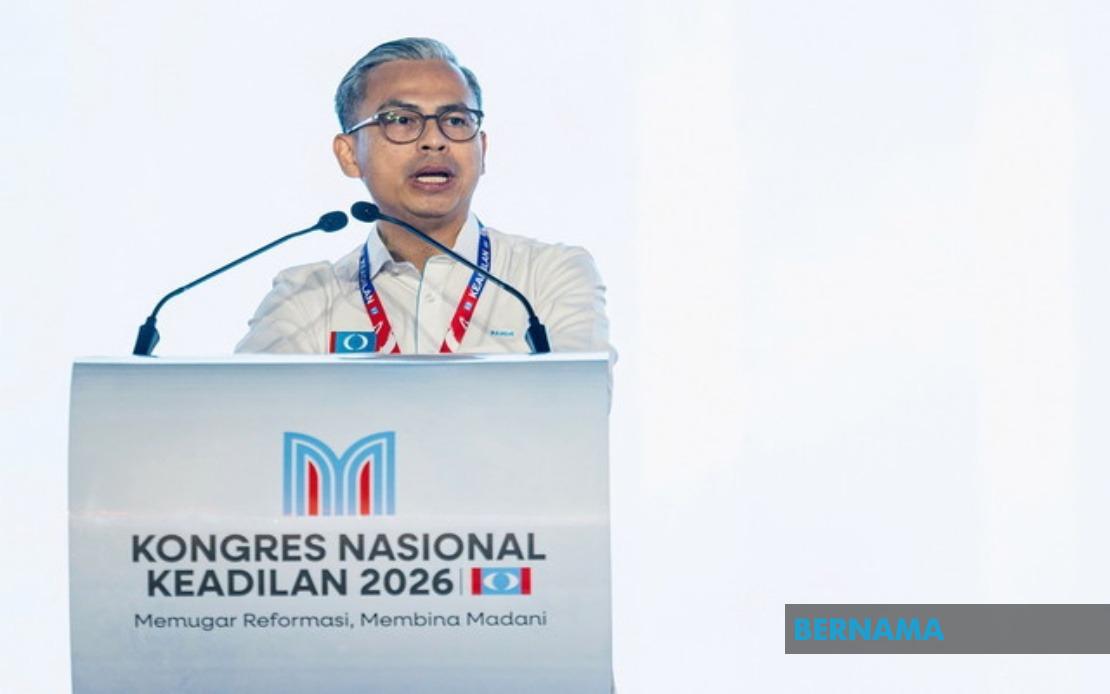
Malaysia's government faces a communication challenge that threatens to undermine public perception of its economic and policy achievements, according to PKR information chief Datuk Seri Fahmi Fadzil. Speaking at the party's 2026 National Congress in Melaka, the Communications Minister revealed that despite substantial progress in macroeconomic matters under Prime Minister Datuk Seri Anwar Ibrahim's administration, much of the population remains disconnected from these gains or struggles to understand their personal relevance. This disconnect represents a significant vulnerability for the ruling coalition, as policy success means little if citizens fail to recognise or experience its benefits.
Fahmi's candid assessment reflects a broader tension within Malaysian politics: the gap between technical achievement and public perception. While the government can point to various macroeconomic indicators and policy implementations, the electorate's lived experience tells a different story. Rising costs of living, stagnant wages, and concerns about access to services continue to dominate household conversations, suggesting that top-level economic management has not adequately translated into tangible improvements in everyday life. This perception problem becomes particularly acute in the context of upcoming elections and the government's need to maintain public confidence and political support.
To address this messaging deficit, the PKR leadership has outlined a multifaceted strategy centred on emotional connection rather than mere information dissemination. Fahmi emphasised that communicating government achievements requires more than simply broadcasting facts and figures; it demands an understanding of how Malaysians emotionally process information and what resonates with their immediate concerns. This approach acknowledges that public opinion is shaped not purely by rational assessment of data but by how citizens feel their circumstances have changed and whether they perceive the government as responsive to their needs.
A key element of the enhanced strategy involves expanding grassroots engagement through smaller-scale community talks and forums. Unlike mass media campaigns or formal announcements, these intimate settings allow government representatives to explain complex policies in accessible language while creating space for direct dialogue with ordinary Malaysians. The approach recognises that local leaders—division chiefs and ward representatives—often serve as more trusted sources of information within their communities than national media or official government channels. By strengthening the information pipeline through these grassroots networks, PKR hopes to ensure that policy benefits are not merely announced but actively championed by community figures.
The Wanita wing's involvement in this communication overhaul further indicates an understanding that women constitute both significant voters and influential community communicators. By working through women's organisations, the government can reach households and social networks that might otherwise remain disconnected from official messaging. Women frequently serve as primary decision-makers regarding family welfare and budgeting, making their understanding of government policies and programmes particularly consequential for household-level political assessment.
Simultaneously, Fahmi revealed that authorities have intensified efforts to combat disinformation and false narratives that exploit sensitive social divisions. The Malaysian Communications and Multimedia Commission (MCMC) identified more than 8,410 fake accounts exploiting religion, race, and royal institution issues—the so-called 3R concerns—between the Johor state election and the congress date. This surge reflects how rapidly false narratives can mobilise emotionally charged constituencies, potentially overwhelming accurate information. The government's focus on combating these accounts demonstrates recognition that controlling the information environment remains essential to shaping public understanding of policy outcomes.
The emphasis on addressing disinformation carries particular significance for Malaysia, where social divisions along religious and ethnic lines remain politically potent and easily weaponised. Disinformation campaigns targeting these sensitivities can rapidly erode public trust in institutions and government announcements, regardless of their actual merit or accuracy. By working with MCMC to identify and remove false accounts, the government aims to create clearer informational space where its own messaging can reach audiences without competing against organised disinformation campaigns.
Yet Fahmi's carefully calibrated language regarding media relations suggests sensitivity to accusations of censorship or authoritarian control. Rather than describing government action as media management or control, he framed the approach as cooperating with media outlets to correct factual inaccuracies through proper channels. This formulation attempts to distinguish between legitimate fact-checking and suppression, though critics may question whether such distinction remains meaningful when government and regulatory bodies jointly determine what constitutes false information requiring correction.
The broader context of this communication overhaul involves Malaysia's evolving political landscape and the government's precarious coalition dynamics. With various partners holding different political interests and constituencies, coherent messaging becomes essential for maintaining coalition cohesion and public support. If the government fails to convince Malaysians that its policies benefit them directly, coalition partners representing specific constituencies may face grassroots pressure to withdraw support or demand greater concessions. Fahmi's emphasis on translating macroeconomic success into felt benefits thus serves both immediate communication objectives and longer-term political maintenance.
For Southeast Asia more broadly, Malaysia's struggle with policy-perception gaps reflects common challenges facing governments across the region. Rising inequality, urban-rural divides, and competition from alternative information sources—including social media and informal networks—complicate efforts to shape public understanding of government achievements. Malaysia's response, combining grassroots engagement, disinformation combat, and emotional messaging, represents one regional approach to managing these complexities, though its effectiveness remains contingent on sustained implementation and genuine policy improvements that citizens can experience directly in their daily lives.

