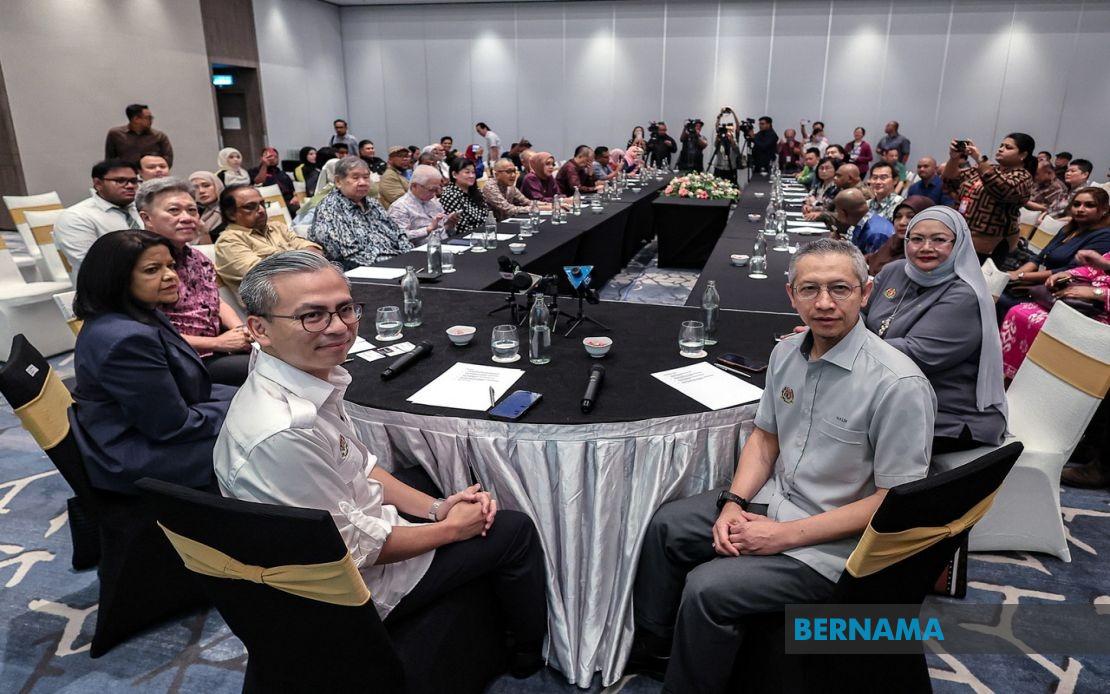
Communications Minister Datuk Fahmi Fadzil has unveiled an initiative to institutionalise dialogue between government and the media industry through structured retreat sessions at every future National Journalists' Day (HAWANA) celebration. The proposal emerged during a detailed engagement with media representatives held in Butterworth on June 20 in conjunction with HAWANA 2026, signalling the government's commitment to formalising channels for industry consultation beyond ad-hoc interactions.
The retreat framework aims to create a dedicated space where journalists, editors, and media executives can present substantive feedback, expert observations, and concrete recommendations directly to policymakers. This structured approach represents a significant shift towards systematic engagement, moving beyond traditional one-off press conferences or media briefings. By anchoring these sessions to HAWANA's annual calendar, the ministry seeks to embed industry consultation into regular government-media relations protocols.
Fahmi announced that the Communications Ministry would partner with the Malaysian Media Council (MMC) to oversee the logistical and organisational aspects of the retreat sessions. This delegation to the MMC demonstrates the government's intent to maintain institutional independence in facilitating dialogue, leveraging the council's standing as a self-regulatory body respected across the industry. The collaborative approach also signals recognition that effective media engagement requires intermediaries with credibility among practitioners rather than direct government control of the discussion framework.
The proposed retreat sessions would serve multiple strategic functions. Beyond mere information-gathering, they would create formal mechanisms for the industry to propose legislative amendments, suggest policy adjustments, and highlight sector-specific challenges. Journalists and media leaders could present recommendations on regulatory frameworks, licensing procedures, editorial standards, and matters affecting the financial sustainability of news organisations. This two-way communication model contrasts sharply with traditional top-down government directives and suggests a more consultative governing approach towards media regulation.
One central issue Fahmi explicitly identified during the dialogue concerns the economic viability of Malaysia's mainstream media sector. He highlighted the structural challenge facing traditional news organisations: they produce valuable journalism that circulates freely on social media platforms without generating revenue for content creators. This digital economy mismatch has devastated newsroom budgets nationwide, forcing redundancies and reduced investigative capacity. By bringing this issue to the forefront of government-media discussions, the minister acknowledged that commercial sustainability directly impacts journalism quality and editorial independence across the region.
The Communications Ministry has signalled its readiness to facilitate engagement between Malaysian media organisations and social media platforms, potentially leveraging government influence to negotiate fairer content-sharing arrangements. Such intermediation could prove crucial given the significant power asymmetry between individual news outlets and global technology companies. Government involvement might encompass discussing revenue-sharing models, licensing frameworks, or regulatory adjustments that acknowledge news organisations' intellectual property contributions to social platforms' profitability.
The participation of senior government officials underscored the retreat initiative's importance within the ministry's strategic priorities. Communications Ministry secretary-general Datuk Abdul Halim Hamzah and deputy secretary-general (Strategic Communications and Creative Industry) Datuk Bahria Mohd Tamil attended the Butterworth session, indicating that policy leadership, not merely administrative staff, would oversee retreat implementation. This high-level engagement suggests the government views structured media dialogue as central to communications policymaking rather than a peripheral public relations exercise.
The presence of Malaysian National News Agency (Bernama) leadership, including chairman Datuk Seri Wong Chun Wai and chief executive officer Datin Paduka Nur-ul Afida Kamaludin, reinforced the national significance of the initiative. As Malaysia's official news agency, Bernama's participation legitimises the retreat framework within government circles while its positioning as HAWANA 2026 working committee chair ensures institutional continuity. Representatives from local media organisations and the MMC chaired by Tan Sri Nallini Pathmanathan demonstrated broad industry buy-in for the proposal.
For Malaysian and Southeast Asian media practitioners, this development offers cautious optimism regarding formal avenues for advocating industry interests. Regular structured retreats could create precedent-setting opportunities to discuss challenges ranging from licensing procedures to advertising regulations to digital transformation funding. The retreat model, if implemented transparently and without political interference, might strengthen media-government relations across the region by establishing predictable consultation mechanisms.
However, the success of this initiative will ultimately depend on how seriously government implements retreat recommendations and whether participants perceive genuine receptiveness to criticism. Media practitioners will scrutinise whether proposals emerging from these sessions translate into concrete policy action or remain rhetorical gestures. The government's approach to controversial suggestions—particularly those challenging existing regulations or suggesting expanded editorial autonomy—will test the authenticity of this consultation framework and signal its commitment to substantive rather than superficial engagement.
The retreat proposal also reflects broader regional trends toward formalising dialogue between governments and media industries as digital disruption reshapes the journalism landscape. As Southeast Asian news organisations confront simultaneous challenges of technological disruption, audience fragmentation, and advertising revenue collapse, structured consultation mechanisms could provide platforms for discussing sector-wide solutions. Malaysia's initiative, if successful, might establish a model for other regional governments seeking to support media sustainability while maintaining constructive working relationships with news organisations.

