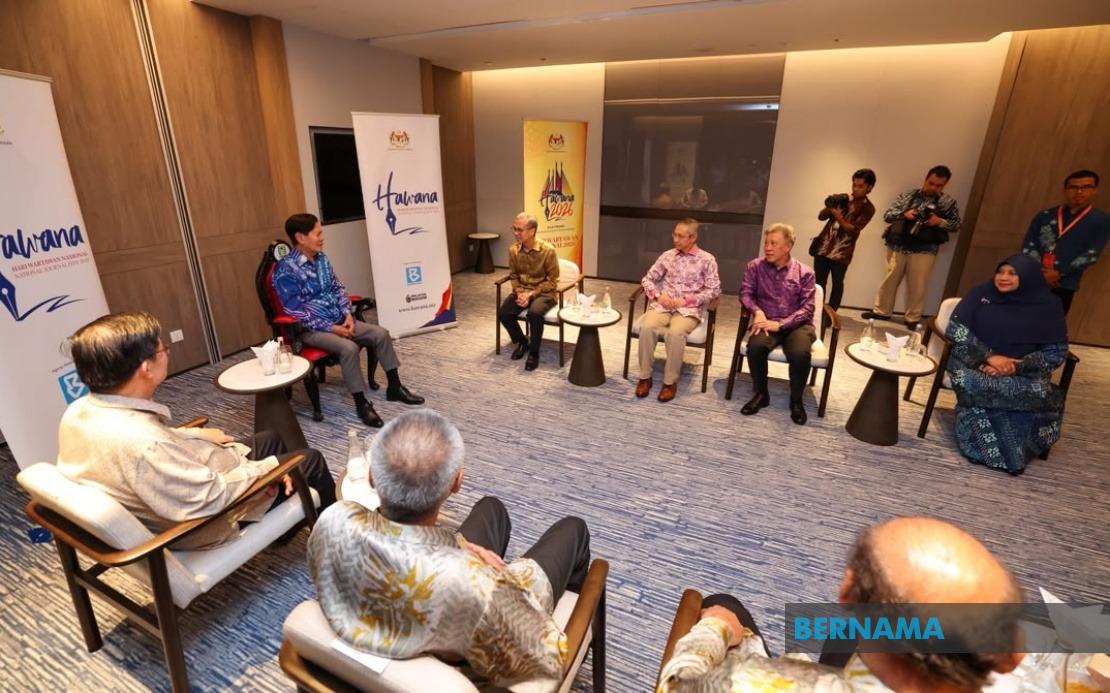
Malaysia's Communications Minister Datuk Fahmi Fadzil has issued a forceful appeal for media practitioners throughout the ASEAN region to forge stronger collaborative networks aimed at tackling the persistent challenge of misinformation whilst promoting journalism grounded in accuracy and truth. Speaking at a state government dinner in Butterworth on June 19 in conjunction with the National Journalists' Day (HAWANA) 2026 celebration, Fahmi outlined the pressing need for cross-border partnerships and systematic knowledge exchange within Southeast Asia's media landscape.
The minister framed journalism as a foundational pillar connecting citizens to verifiable information about the world around them. He emphasised that media institutions function as critical intermediaries, translating policy decisions into public understanding and translating events into meaningful narratives that shape societal discourse. In an era characterised by information saturation and competing claims for attention, Fahmi argued that principled reporting anchored in factual accuracy, editorial integrity and professional responsibility has become more indispensable than ever before.
Fahmi's remarks gain particular significance given Southeast Asia's ongoing struggles with coordinated disinformation campaigns and the rapid proliferation of false narratives across social media platforms. Malaysia itself has grappled with election-related misinformation, health-related falsehoods during public health crises, and politically motivated disinformation that has occasionally incited communal tensions. The region's shared vulnerabilities to these information threats create a compelling case for the kind of coordinated response Fahmi is advocating.
The HAWANA 2026 celebration, which Fahmi characterised as both a recognition of journalism's role in national development and a platform for reinforcing professional standards, reflects growing governmental acknowledgement that media sustainability directly impacts political stability and economic confidence. By positioning this event as a moment to recommit to elevating journalism standards during an exceptionally demanding period, Fahmi signalled that Malaysia views the professionalisation of the media sector as integral to regional development objectives.
The dinner brought together a substantial coalition of media, government and diplomatic stakeholders, including Penang Governor Tun Ramli Ngah Talib, Chief Minister Chow Kon Yeow, and representatives from ASEAN communications ministries. This convening of officials from across the region underscores the collective interest in developing coordinated approaches to media challenges that transcend national borders. The presence of Malaysian National News Agency (Bernama) leadership, headed by chairman Datuk Seri Wong Chun Wai and chief executive officer Datin Paduka Nur-ul Afida Kamaludin, highlighted the national news agency's pivotal role in advancing regional media standards.
The Penang State Government's willingness to host the HAWANA 2026 celebration demonstrates subnational commitment to supporting journalism and recognising its societal contributions. Fahmi commended this decision as evidence of the state's deep regard for the media profession and its understanding that journalistic output shapes public confidence in institutions and governance. This acknowledgement of media's role in building social capital extends beyond Malaysia's borders, resonating with policymakers throughout Southeast Asia who recognise that weakened or compromised media systems undermine democratic participation and economic development.
The push for stronger ASEAN media collaboration must contend with several practical challenges. Media markets across the region operate under varying regulatory frameworks, ownership structures and editorial policies. Some countries maintain tighter government oversight of news reporting, whilst others operate under more liberal press freedom arrangements. Constructing collaborative mechanisms that respect these differences whilst establishing common standards for accuracy and ethical reporting requires careful diplomatic navigation and professional consensus-building.
The exchange of best practices across ASEAN borders holds substantial potential for capacity-building. Regional media organisations could establish regular forums for discussing emerging disinformation tactics, sharing investigative methodologies and developing collective fact-checking resources. Joint training programmes addressing digital literacy, data journalism and online verification techniques could strengthen professional competencies throughout the region. Such initiatives would benefit smaller news organisations in less-resourced media markets whilst amplifying the impact of larger outlets' expertise.
Misinformation's corrosive effects on ASEAN societies extend beyond political discourse into public health, economic confidence and social cohesion. False information about vaccines circulating across the region has undermined vaccination campaigns. Fabricated stories about financial institutions have triggered real economic consequences. Ethnically or religiously charged false narratives have occasionally motivated real-world violence. These concrete harms demonstrate that collaborative media efforts represent not merely professional advancement but a genuine public interest.
The timing of Fahmi's appeal reflects accelerating technological changes in information distribution and consumption. The rise of artificial intelligence-generated synthetic media presents unprecedented challenges for fact-checkers and journalists. Deepfakes and manipulated video content require specialist technical expertise to debunk convincingly. No single national media institution possesses sufficient resources to combat these sophisticated threats alone. ASEAN-wide collaboration becomes not simply desirable but functionally necessary for combating information threats that operate at regional and transnational scales.
Building durable ASEAN media partnerships requires institutional commitment and resource allocation. Establishing a regional fact-checking network with representation from multiple countries could create a centralised hub for debunking circulating falsehoods. Creating professional development centres focused on digital verification and emerging disinformation techniques would strengthen practitioners' capabilities. Developing shared protocols for handling sensitive or potentially inflammatory stories could help prevent irresponsible reporting from escalating communal tensions.
For Malaysia specifically, positioning itself as an advocate for responsible regional journalism offers strategic advantages. By championing media collaboration centred on accuracy and integrity rather than state messaging, Malaysia can bolster its soft power influence within ASEAN. Strengthening the professional standards of regional media ultimately benefits all member states by ensuring that information flows more reliably across borders and that public understanding rests on more secure factual foundations.
Fahmi's call for deepened ASEAN media collaboration arrives at a moment when information integrity has become a foundational governance challenge throughout the region. The appeal transcends national borders because misinformation itself operates transnationally, spreading rapidly across social media platforms without regard for sovereignty. Regional media responses must match the scale and speed of these information threats, making the case for coordinated ASEAN action both intellectually compelling and practically urgent.

