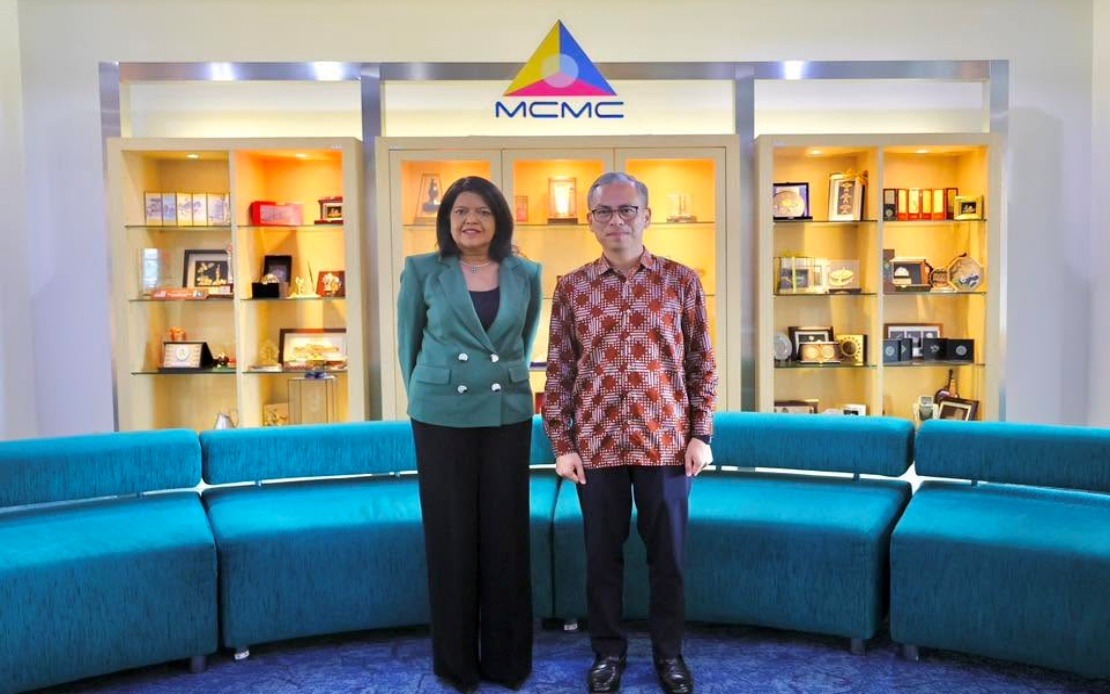
Communications Minister Datuk Fahmi Fadzil has publicly congratulated Tan Sri Nallini Pathmanathan on her appointment as chairman of the Malaysian Media Council, signalling strong governmental support for the media industry's newly strengthened self-regulatory framework. The appointment represents a significant institutional development in Malaysia's evolving media governance landscape, particularly as the country seeks to balance press freedom with responsible journalism standards.
In remarks shared on social media, Fahmi emphasized the importance of Nallini's distinguished judicial background in driving the council's mission. The minister expressed confidence that her tenure would reinvigorate the MMC's commitment to upholding responsible media freedom while simultaneously elevating journalistic ethics across the industry. His statement underscores the government's recognition that independent media oversight, when properly resourced and led by respected figures, can strengthen rather than constrain the media sector's long-term credibility and sustainability.
Nallini's appointment was formally endorsed by the MMC's board members during a meeting on May 26, with unanimous support from all attendees. This unanimous backing reflects broad consensus within the media industry about her suitability for the role, suggesting that her previous experience as a Federal Court judge has positioned her as an impartial and authoritative figure capable of navigating the complex intersection of press freedom, legal frameworks, and public interest considerations that define modern media regulation.
The Malaysian Media Council itself operates as a self-regulatory body established under the Malaysian Media Council Act 2025, placing it at the forefront of industry-led governance rather than state-mandated control. This institutional arrangement represents an important distinction for Malaysian media, as self-regulation theoretically allows the industry greater autonomy in setting professional standards while maintaining mechanisms to address public complaints and ethical violations. Nallini's appointment to lead this body thus carries implications for how Malaysia positions itself within regional and international conversations about media freedom and journalistic standards.
For Malaysian media organisations, Nallini's leadership offers both opportunities and expectations. Her judicial background suggests she will likely approach media regulation with careful attention to constitutional protections, precedent-based reasoning, and public interest balancing. However, media outlets will need to demonstrate commitment to the ethical frameworks and standards she is expected to champion, as her tenure will likely involve strengthening implementation of journalistic codes and enhancing accountability mechanisms that have previously been critiqued as inconsistently applied.
The timing of this appointment carries significance within Malaysia's broader policy environment. The government has increasingly emphasised the importance of combating misinformation and disinformation, particularly in the digital age where social media platforms and online news outlets operate with minimal oversight. By elevating the MMC's profile through leadership by a respected former judge, the government appears to be signalling that industry-led regulation, when properly structured, can address these contemporary challenges more effectively than traditional government censorship or heavy-handed regulatory approaches.
Regionally, Malaysia's emphasis on self-regulatory media governance distinguishes it from some neighbouring countries that maintain more centralised state control over news media. Nallini's appointment and the minister's public endorsement of her role suggest Malaysia's intention to project an image of media autonomy and professional standards, which may influence how international media freedom assessments evaluate the country. This positioning becomes particularly relevant as regional media landscapes become increasingly interconnected and cross-border reporting more common.
The appointment also reflects institutional maturation within Malaysia's media sector itself. Rather than relying solely on government appointed regulators or ad-hoc complaint mechanisms, the industry now has a structured body with clear governance procedures and leadership continuity. Nallini's role will likely involve developing clearer guidelines for emerging issues such as artificial intelligence generated content, social media coordination by news organisations, and the responsibilities of digital platforms that distribute journalistic content.
For journalists and media practitioners across Malaysia, Nallini's leadership of the MMC may prompt both reassurance and scrutiny. Her judicial temperament and respect for constitutional protections suggest she will not approach regulation with ideological bias, yet her appointment also signals that professional standards will be actively monitored and enforced. This development could encourage media organisations to invest more substantially in ethics training, editorial oversight, and complaint resolution mechanisms to demonstrate compliance with expected standards before such issues escalate to council involvement.
The broader context of media regulation in Malaysia involves balancing multiple competing interests: protecting press freedom, ensuring accuracy and responsible reporting, safeguarding public interest, and maintaining industry sustainability in an era of declining traditional media revenue. Nallini's appointment positions her at the centre of these tensions, and her decisions over the coming months and years will significantly shape how the MMC evolves as an institution and how effectively it can mediate between these competing demands while commanding respect from all stakeholders.