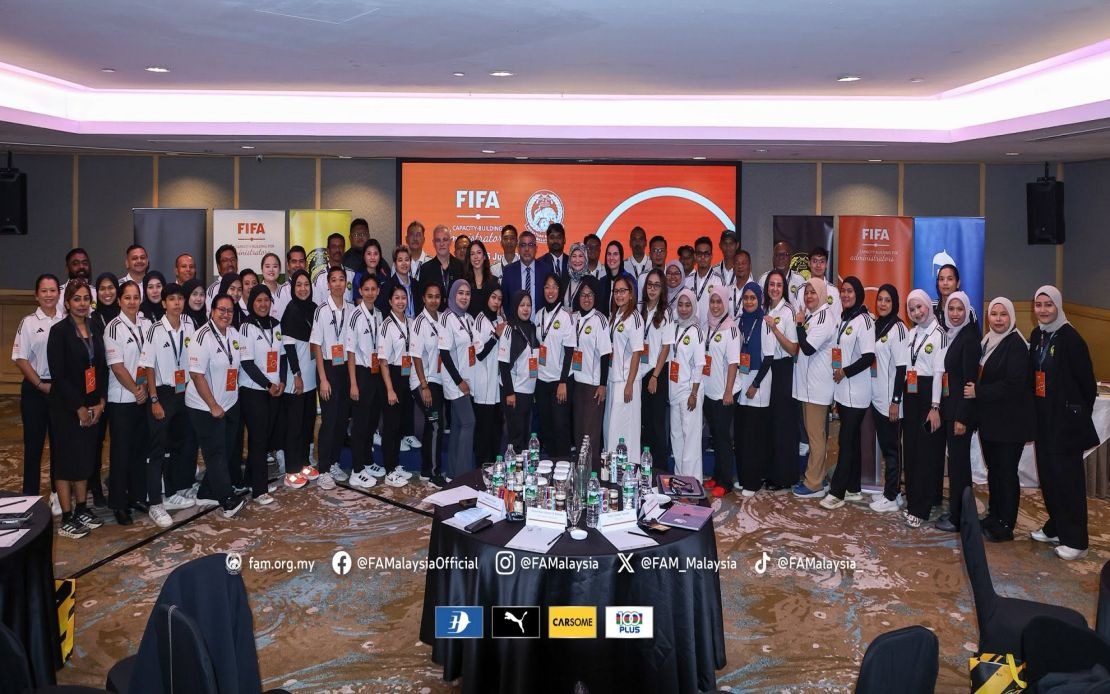
The Football Association of Malaysia is pursuing an ambitious agenda to fortify the institutional backbone of women's football through a specialised training initiative. The organisation has partnered with FIFA to deliver the Capacity-Building For Administrators 2026 programme, a four-day intensive course that commenced on June 23 in Kuala Lumpur. This endeavour represents a deliberate strategic shift toward investing in the administrative and managerial expertise that underpins professional sports operations, rather than relying solely on on-field talent development.
The programme draws on international expertise, with FIFA Women's Football Development Experts Safia Abdeldayem and Pema Choden Tshering leading the training sessions. Their involvement signals the calibre of instruction and the global standards being brought to Malaysia's women's football ecosystem. This international dimension is particularly significant for a developing football nation seeking to establish world-class infrastructure and governance practices at both grassroots and elite levels.
Participants are exposed to a comprehensive curriculum spanning multiple critical areas essential for modern sports management. The modules cover Women's Leadership, providing frameworks for advancing female representation in decision-making positions; Women's Competition, examining how tournaments and league structures are designed and executed; Club and Players' Rights, ensuring legal and contractual protections for athletes; and Strategic Planning, equipping administrators with tools to chart long-term growth trajectories for their organisations. This holistic approach recognises that sustainable development requires competence across technical, legal, and strategic domains.
FAM's initiative addresses a recognised gap in Malaysian football's infrastructure. Historically, many sports development programmes have concentrated on coaching, player selection, and match performance. However, without corresponding investments in administrative capacity, these technical efforts often fail to translate into institutional longevity and professional standards. By prioritising administrator training, FAM signals recognition that women's football requires robust management systems, transparent governance, and skilled personnel managing team logistics, compliance, and operational efficiency.
The timing of this programme reflects broader global momentum in women's football. Major tournaments, increasing broadcast revenues, and expanding sponsorship opportunities have elevated the professional expectations across the sport. Countries that fail to develop administrative expertise risk falling behind as the gap between elite and developing football nations widens. Malaysia, as a mid-tier Southeast Asian football nation, must position itself competitively to retain players, attract investment, and sustain quality competitions.
FAM secretary-general Datuk Noor Azman Rahman's participation alongside Datuk Suraya Yaacob, who holds positions within both FIFA's Women's National Team Competitions Committee and the Asian Football Confederation's Women's Football Committee, underscores institutional commitment at the highest levels. Soleen Al-Zoubi's attendance as FAM Women's Football Technical Director ensures continuity between administrative development and technical programming. This senior leadership presence elevates the programme's profile and sends clear signals that women's football development enjoys genuine organisational priority.
The programme's connection to international governance structures carries strategic importance for Malaysian football's regional standing. AFC involvement means successful outcomes contribute to Malaysia's reputation within Asian football bodies, potentially influencing tournament hosting opportunities, qualification pathways, and international cooperation agreements. Women's football development has become a metric through which AFC assesses member nations' commitment to the sport, affecting league rankings and competition invitations.
FAM's public articulation that women's football development extends beyond field performance represents important messaging for stakeholders. Frequently, women's sports receive inadequate institutional support because decision-makers view investment in infrastructure as secondary to player development. By emphasising that off-field structures directly enable on-field success, FAM creates stronger justification for sustained resource allocation. Clubs and teams with skilled administrators operate more professionally, manage budgets more efficiently, and provide athletes with superior support systems.
The emphasis on creating more women leaders within football administration addresses persistent gender imbalances in sports governance. Malaysian football, like most sporting hierarchies globally, has historically concentrated decision-making authority among men. By deliberately cultivating female administrators and managers, FAM contributes to broader societal shifts toward gender parity while strengthening women's football's internal advocacy. Women leaders understand the unique challenges female athletes face and advocate more effectively for equitable resource distribution and policy frameworks.
Regional context matters considerably here. Southeast Asian women's football remains relatively underdeveloped compared to men's competitions, with inconsistent investment and limited commercial engagement. Thailand's progressive approach to women's football development, manifested in stronger domestic leagues and international competitiveness, provides both a model and competitive pressure for other nations. Malaysia's commitment to administrative development positions it to improve its competitive standing within regional rankings and tournament placements.
The programme's sustainability messaging reflects FAM's appreciation that isolated training courses yield limited returns. True institutional development requires ongoing commitment, reinforcement of learned principles, and integration into organisational culture. By framing this as part of a broader women's football development strategy rather than a standalone event, FAM signals sustained investment intentions. This messaging matters for recruiting and retaining administrative talent, as professionals seek career progression within organisations demonstrating genuine commitment.
Looking forward, the programme's success will depend on participants translating knowledge into concrete operational improvements within their teams and clubs. FAM might consider establishing alumni networks, follow-up coaching sessions, and recognition mechanisms that incentivise implementation of learned practices. Measuring outcomes through metrics such as improved governance compliance, financial management efficiency, and athlete satisfaction would demonstrate tangible returns on investment and justify continued resources.
Ultimately, FAM's initiative reflects sophisticated understanding that women's football in Malaysia reaches its potential only when excellence exists at every organisational level. Skilled administrators, knowledgeable managers, and professional systems create conditions where talented players can flourish, competitions operate smoothly, and commercial sustainability becomes achievable. This investment in human capital represents the genuine long-term commitment that transforms women's football from aspirational rhetoric into institutional reality.

