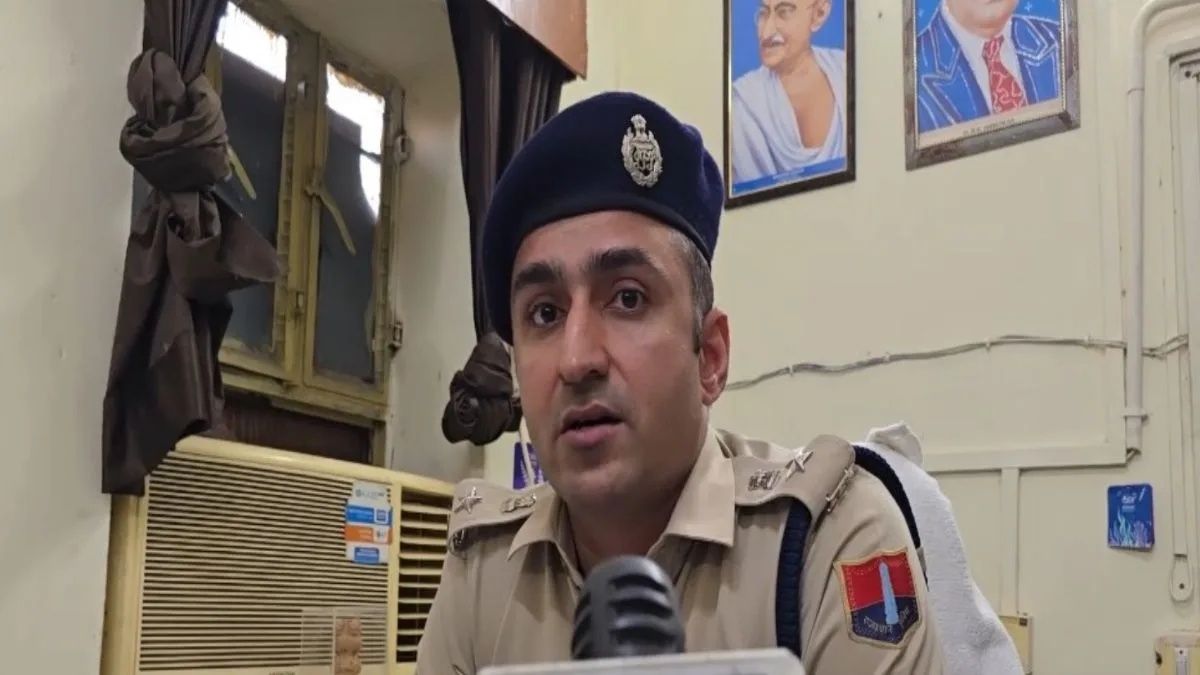
A disturbing case of suspected honour killing has emerged from Rajasthan's Dholpur district, where two young women are believed to have been killed by members of their own family and thrown into a river. Police have identified the girls' father, Bharat Lodha, a resident of Pharakpur village and father of four, along with several relatives as primary suspects in the deaths. The investigation, which began following a tip-off received by authorities on Friday, has opened a window into what investigators describe as a tragedy rooted in the family's rejection of the women's romantic choices.
The alleged incident unfolded on the night of June 11 near Sagarpada Bridge in the district, according to statements made by Superintendent of Police Vikas Sangwan. Officers arrived at the scene after receiving initial information about the deaths and immediately began examining the location and gathering preliminary evidence. The swift deployment of investigating teams helped preserve critical details at what authorities consider a crucial crime scene, though the full scope of the evidence and its implications are still being assessed.
Police suspect that the two women were forced from Sagarpada Bridge into the river below, though investigators have emphasized that key aspects of the case remain unverified as the probe deepens. The working theory, based on information gathered so far, points to a family dispute centred on matters of the heart. According to preliminary findings, the victims had entered into romantic relationships that their family considered unacceptable, creating the motive that investigators believe culminated in the fatal act. This pattern reflects a troubling reality in parts of rural India where so-called honour killings, though rare, continue to cast a shadow over communities resistant to changing social norms.
The specific timing of the alleged crime has been narrowed to between 9 and 10 in the evening on June 11, though police continue to verify this detail through witness statements and other evidence. Sangwan indicated that investigators are working methodically to reconstruct the sequence of events that preceded the deaths. This includes determining how the victims were transported to the bridge location, which individuals accompanied them, and what method of conveyance was used to move them to the site. Each of these details, police believe, will contribute to understanding the premeditation and planning that may have gone into the alleged act.
The investigative process currently underway involves a comprehensive examination of the modus operandi, the route taken by those involved, the specific timing of movements, and the roles played by each suspected perpetrator. Sangwan's comments suggest that police are treating this as a complex case requiring careful examination of multiple threads of evidence. Officers have continued to visit the scene, interview individuals connected to the case, and piece together the narrative that culminated in the deaths. The methodical approach reflects the seriousness with which authorities are treating both the crime itself and the possibility of additional involvement by family members.
For Malaysian and Southeast Asian readers, this case underscores a persistent challenge in parts of South Asia where traditional family structures and notions of honour can clash violently with individual autonomy and modern relationship norms. While Malaysia has made substantial progress in protecting women's rights and autonomy in matters of marriage and relationships through legal frameworks and social change, similar tensions simmer in other regional contexts. The case also highlights how remote rural areas in neighbouring countries may lack the institutional safeguards and social awareness that have become increasingly commonplace in more developed parts of the region.
The investigation has revealed that Bharat Lodha was a father of four, suggesting the tragedy claimed two of his children while two others survived. This detail raises questions about family dynamics, the presence or absence of protective structures within the household, and whether other family members were aware of or involved in the alleged crime. Police are pursuing these angles with the understanding that honour killings rarely occur in isolation; they typically involve multiple family members either as direct perpetrators or as passive enablers who remain silent.
As the investigation progresses, authorities have made clear that formal legal action will be pursued based on the evidence uncovered. The case will likely proceed under relevant sections of the Indian Penal Code addressing murder, conspiracy, and potentially provisions related to honour killings where applicable. The judicial process that follows will not only determine the guilt or innocence of the accused but may also serve as a test case for how seriously courts treat such crimes and what punishment is deemed appropriate for acts committed in the name of family honour.
The tragic deaths represent a stark reminder of the vulnerability faced by young women in communities where family control over personal choices remains deeply entrenched. Activists and legal experts across South Asia have long emphasized that prevention of such crimes requires not only effective law enforcement but also broader social change, education initiatives, and community engagement to challenge the ideologies that underpin honour-based violence. For now, police in Dholpur continue their methodical investigation, with officials promising that fuller details of the case will emerge as the probe unfolds and evidence is formally analyzed and documented.

