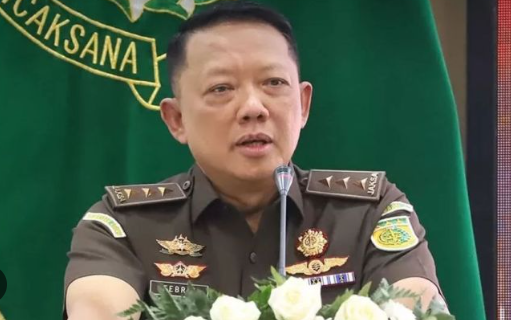
Indonesia's corruption investigation into Febrie Adriansyah, the nation's former deputy attorney general and most senior anti-corruption prosecutor, has become a critical test of President Prabowo Subianto's pledge to wage an uncompromising war against graft. Since assuming office, Prabowo has repeatedly warned officials to reform themselves or face prosecution, signalling an administration determined to hold powerful figures accountable. Yet the handling of Febrie's case—centred on allegations of money laundering following the seizure of US$26 million in cash and gold bars from a house he owned—has exposed uncomfortable questions about whether Indonesia's institutions can genuinely investigate their own without institutional bias.
The controversy hinges less on the allegations themselves than on procedural decisions that have sparked intense legal debate. Within days of police identifying Febrie as a suspect, they transferred the three related cases to the Attorney General's Office, the very institution where he spent the bulk of his career and wielded considerable influence. This manoeuvre, justified by officials as strengthening coordination between police and prosecutors, has drawn criticism from constitutional scholars and lawmakers who question its legal foundation and practical implications for investigative integrity.
Former Constitutional Court Chief Justice Mahfud MD has raised alarm that Indonesia's criminal procedure code contains no explicit authority for police to transfer active investigations to prosecutors mid-probe. Such a transfer, he warned, could expose the case to legal challenges before trial, potentially undermining years of investigative work. The concern reflects a deeper institutional anxiety: transferring the case to an office where Febrie was previously the most powerful figure creates an inherent conflict of interest that could compromise the investigation's credibility, regardless of prosecutorial intent.
The decision to keep Febrie free despite being named a suspect—while another suspect in the case faced immediate arrest—has intensified scrutiny. Although police have not publicly explained their reasoning, the institutional dynamics at play are evident. Officers have remained involved in evidence verification alongside prosecutors, including seeking FBI and US Secret Service assistance to authenticate seized currency and testing gold bars with international partners. This arrangement suggests the investigation remains fundamentally a police operation, merely supervised by prosecutors rather than independently conducted by them.
Anti-corruption scholars have characterised the case transfer as a political compromise rather than a lawful prosecutorial decision. Zaenur Rohman from Gadjah Mada University described it as an attempt to ease institutional tensions between police and the Attorney General's Office, yet one lacking legal grounding. He argues that Indonesia's Corruption Eradication Commission, a dedicated state agency, would be better positioned to investigate Febrie without the inherent conflicts that plague transfers between police and prosecutors. Lawmakers have responded by forming a working group to monitor the investigation, while others have called on the Attorney General's Office to establish an independent internal team specifically for the case.
Febrie's stature within Indonesia's legal establishment amplifies the sensitivity. As head of the Special Crimes Division at the Attorney General's Office, he oversaw some of the nation's highest-profile corruption investigations, including probes into state enterprises like Pertamina and Timah, as well as scrutiny of Prabowo's flagship free-meals programme and former Education Minister Nadiem Makarim. His position meant he possessed intimate knowledge of Indonesia's prosecutorial system, relationships with powerful figures, and access to sensitive investigation files. The prospect of that institutional knowledge being deployed to defend himself against colleagues he once supervised presents an obvious perception problem.
Official denials of institutional conflict have failed to allay concerns entirely. The National Police chief and Attorney General appeared together Monday to insist that coordination between their agencies remained intact. Coordinating Minister Yusril Ihza Mahendra defended the case transfer as an efficiency measure while acknowledging public anxiety about what Indonesians call "oranges eating oranges"—the colloquial expression for one institution protecting its own. Yusril's revelation that Prabowo had personally directed both the police chief and attorney general on handling the transfer suggests presidential-level concern about institutional friction.
The broader context reveals deeper structural vulnerabilities in Indonesia's anti-corruption architecture. Three separate agencies—the police, the Attorney General's Office, and the Corruption Eradication Commission—hold overlapping mandates in graft investigations, creating perpetual competition for influence and control over politically sensitive cases. This fragmented system has long generated turf wars, with successive presidents attempting to balance institutional power rather than consolidating authority. Under Prabowo, the dynamics have shifted following 2025 legal amendments that allowed active-duty military officers to serve in the Attorney General's Office without retiring, and expanded prosecutorial authority to request military protection previously monopolised by police.
The case has coincided with the Attorney General's Office abruptly halting regional data collection for Prabowo's free-meals programme, citing the completion of an initial investigation period. This move followed the police naming an active brigadier general a suspect in connection with the initiative. Aditya Perdana, a political lecturer at the University of Indonesia, observed that while individual actions may not explicitly prove institutional conflict, the sequence of events tells a revealing story about the underlying tensions within Indonesia's law-enforcement ecosystem.
Prabowo's intensified anti-corruption campaign has generated numerous high-profile investigations, with authorities regularly staging televised press conferences showcasing seized assets. Yet this visibility has also exposed institutional rivalries, with different agencies competing to claim credit for major cases while protecting their interests. Senior lecturer Jacqui Baker from Murdoch University notes that criminal investigation powers in corruption cases remain jealously contested among Indonesian institutions because they represent both political and economic leverage. The 2025 military law revision reflects Prabowo's apparent effort to strengthen security sector involvement in prosecutorial work, potentially shifting balance away from traditional law-enforcement agencies.
Febrie's continued freedom while investigation proceeds, combined with his restricted travel ban, reflects the provisional nature of the arrangement. His public silence except for pre-resignation denials that the seized assets belonged to him has deepened speculation about the investigation's trajectory. The case ultimately represents more than one official's predicament: it exemplifies the institutional design flaws that undermine Indonesia's broader anti-corruption mission. Without structural reform clarifying investigative jurisdiction and preventing conflicts of interest when officials investigate colleagues, high-profile cases will continue to generate public scepticism about whether the system can deliver genuine accountability or merely theatrical compliance with Prabowo's anti-graft rhetoric.
For regional observers, the Febrie case illuminates a challenge facing many Southeast Asian democracies: balancing institutional independence with effective coordination in corruption investigations. Indonesia's experience suggests that overlapping mandates and undefined procedural boundaries create opportunities for institutional interests to override investigative integrity. As pressure mounts for the Febrie investigation to produce credible results, the Attorney General's Office and police face mounting pressure to demonstrate that Indonesia's institutions can genuinely police their own without protecting institutional allies or personal interests.

