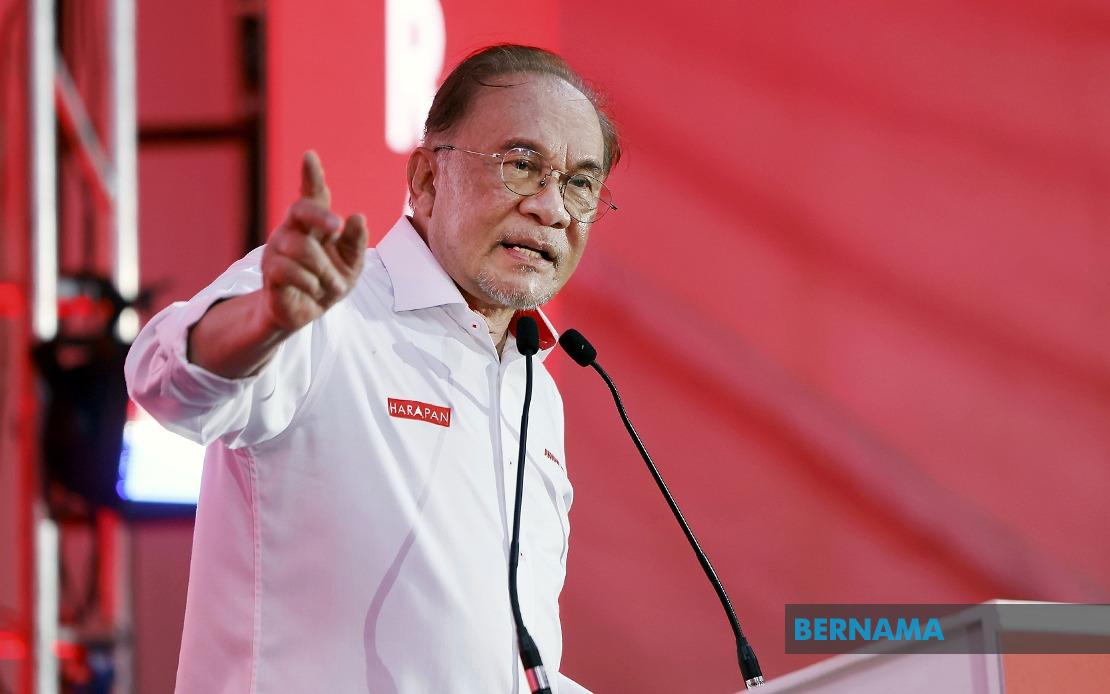
Prime Minister Datuk Seri Anwar Ibrahim has underscored the federal government's substantial financial commitment to Johor, stating that the state has received more in return allocations than it has contributed in tax revenue to federal coffers. Speaking at a Pakatan Harapan candidate announcement in Tangkak on June 22, Anwar presented financial data showing that whilst Johor generated approximately RM14 billion in federal revenue between 2023 and 2025, the government redirected RM16 billion back to the state through an array of development initiatives, operational funding and welfare programmes.
The Prime Minister, who also holds the Finance portfolio, stressed the importance of communicating this fiscal relationship to Johor residents in order to demonstrate Kuala Lumpur's sustained dedication to the state's advancement. By drawing attention to the positive net transfer of RM2 billion, Anwar sought to reframe the narrative around federal-state resource allocation ahead of the Johor State Election. This disclosure reflects broader political positioning within Peninsular Malaysia's most industrialised state, where ensuring adequate development funding remains a critical electoral concern.
Under the previous administration, Johor's annual operating expenditure allocations ranged from RM6 billion to RM7 billion annually. The MADANI Government has substantially increased this figure to RM8.7 billion in recent fiscal years, representing a meaningful expansion of the state's recurrent budget. This progression demonstrates a deliberate policy shift toward enhanced resource distribution to one of Malaysia's economically significant states, signalling that fiscal prioritisation has shifted under the current federal leadership.
Johor's standing within the national allocation hierarchy has also improved markedly. According to 2026 budget projections presented by Anwar, the state ranks third nationally in combined Operating Expenditure and Development Expenditure allocations, positioned behind only Sabah and Sarawak. This positioning reflects both the state's economic importance and the government's determination to maintain competitive funding levels across major peninsular states. Operating expenditure increased from RM7 billion in 2022 to RM8.7 billion in 2026, whilst developmental expenditure rose more sharply from RM2.3 billion to RM4.8 billion across the same period—a doubling that underscores accelerated capital investment.
The expansion of welfare allocations represents another dimension of increased federal support. Johor ranks as the second-largest beneficiary of both the Sumbangan Tunai Rahmah and Sumbangan Asas Rahmah schemes, trailing only Selangor in aggregate disbursements. These cash assistance programmes, targeted at lower-income households, have become increasingly significant social safety nets within Malaysia's economic landscape. The prominence of Johor's allocation reflects both its substantial population and the government's emphasis on broad-based social protection in major developed states.
For Malaysian readers, particularly those in Johor, these figures carry substantial implications for state development trajectories and living standards. The increased capital expenditure allocation of RM4.8 billion annually potentially translates into enhanced infrastructure projects, from transportation networks to utility systems and public facilities. The magnitude of this investment cycle suggests that visible development projects may become more prevalent throughout the state's districts, affecting everything from traffic flows to economic opportunities in smaller towns.
The financial comparison Anwar presented also addresses persistent questions about federal-state fiscal relationships within Malaysia's federal system. Many state governments have historically expressed concerns about inadequate resource transfers relative to state contributions to national revenue. By demonstrating a net positive flow toward Johor, the federal government attempts to counter claims of fiscal imbalance, though such calculations remain contested terrain in Malaysian political discourse. The RM2 billion differential, whilst favourable to Johor on this accounting, represents relatively modest proportions of overall federal and state budgets.
Regionally, Johor's enhanced allocation reflects its economic significance within Southeast Asia. As the gateway to Singapore and a hub for petrochemical, manufacturing and port-related activities, the state generates substantial federal revenue. Maintaining competitive development funding helps ensure continued economic dynamism and prevents the perception that successful states are systematically disadvantaged within the federal transfer system. This becomes increasingly important as economic competition intensifies between Malaysian states and neighbouring economies.
The timing of these disclosures, made during the Pakatan Harapan campaign for the state election, indicates their political salience. Voters contemplating their electoral choices naturally weigh how effectively their state governments secure federal support. By personalising the financial narrative through his dual role as Prime Minister and Finance Minister, Anwar positioned himself as the architect of Johor's improved fiscal allocation, directly linking federal policy outcomes to individual state welfare.
The distinction between operating and development expenditure carries practical significance for state administration. Operating expenditure covers ongoing government services, salaries and maintenance, ensuring continuity of essential functions. Developmental expenditure targets new infrastructure and capital projects that enhance long-term economic capacity. The more rapid growth in development expenditure suggests the government is prioritising long-term transformation of Johor's economic infrastructure over expanding recurrent spending, a strategic choice reflecting broader emphasis on productivity and competitiveness enhancement.
Moving forward, these allocation patterns establish benchmarks against which future federal-state fiscal relationships will be evaluated. Should development expenditure to Johor decline in subsequent budget cycles, political opponents may utilise such reductions as evidence of shifting priorities. Conversely, sustained or increased allocations would provide continued ammunition for government claims of commitment to peninsular development beyond the traditional focus on Sabah and Sarawak.
The broader context of Malaysia's federal finances remains constrained by persistent budget deficits and competing demands from all states and federal departments. The generous allocation to Johor necessarily reflects choices to distribute resources differently to other regions. Understanding these trade-offs becomes essential for informed public discourse about development priorities, equity, and the fiscal sustainability of Malaysia's federal system as it navigates economic challenges and demographic shifts in coming years.

