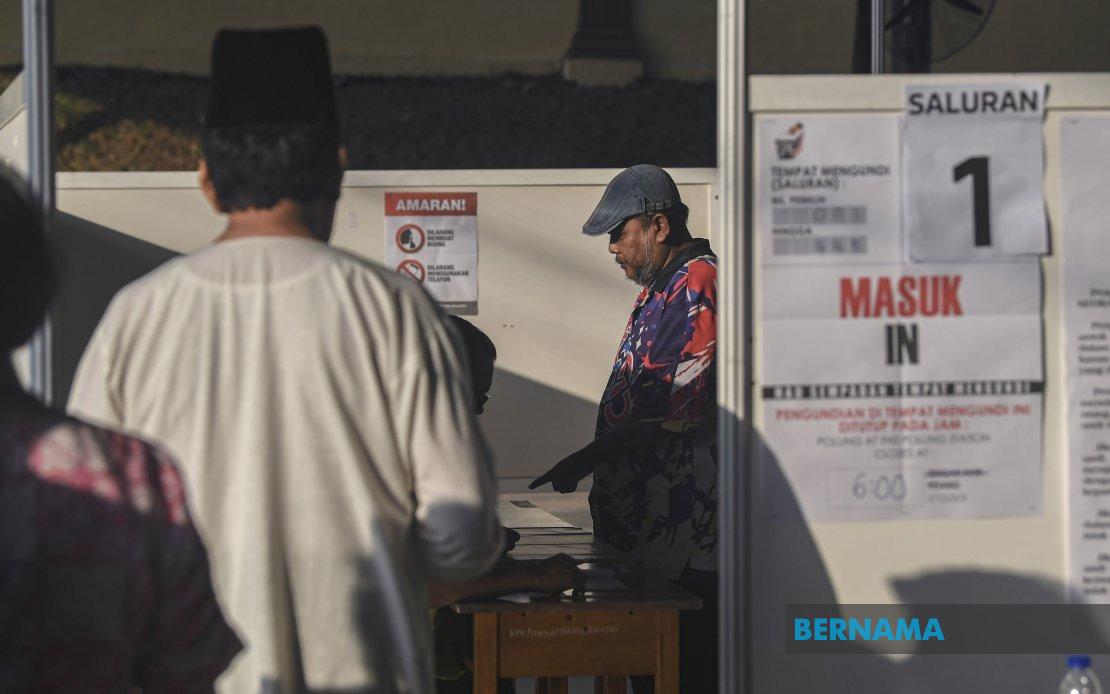
Johor's 16th state election proceeded smoothly on July 11 as federal government leaders joined millions of constituents in fulfilling their civic duty at the ballot box. The participation of cabinet-level officials underscored the electoral process's significance for the nation's second-largest state by population, with voting beginning at 8 am across all 1,076 polling centres operated by 4,889 individual polling streams. The simultaneous opening of these facilities ensured equitable access for all 2.7 million registered voters eligible to determine the state's political direction for the coming term.
Datak Seri Azalina Othman Said, the Minister in the Prime Minister's Department responsible for Law and Institutional Reform, was among the first national leaders to cast her ballot, arriving at Sekolah Kebangsaan Bandar Penawar in Pengerang at 8.15 am. Her early participation reflected the importance placed by senior government figures on setting an example for voter engagement. Ministers casting ballots during election day serves multiple purposes, demonstrating transparency and commitment to democratic processes while fulfilling their ordinary rights as citizens residing in their respective constituencies.
Defence Minister Datuk Seri Mohamed Khaled Nordin voted at 8.30 am at Sekolah Kebangsaan Rinting 1 in Masai, continuing the parade of high-ranking officials exercising their franchise during the morning polling hours. The concentration of ministerial voting early in the day aligned with typical patterns in Malaysian elections, where senior figures often cast ballots before proceeding to official duties or campaign activities. His participation was particularly notable given the Defence Ministry's significant stakeholder interest in stable state governance and the security implications flowing from electoral transitions.
Plantation and Commodities Minister Datuk Seri Dr Noraini Ahmad cast her vote at 8.50 am at Sekolah Menengah Kebangsaan Dato' Onn in Batu Pahat, demonstrating representation from the economic ministries in the voting process. As the minister overseeing sectors fundamental to Johor's economy, her participation highlighted how state elections extend beyond purely political considerations to affect governance of industries essential to the region's prosperity. The commodities and plantation sector remains critical to Johor's economic base, making the outcome of state electoral contests relevant to policy direction affecting these domains.
Deputy Works Minister Datuk Seri Dr Ahmad Maslan cast his ballot at 8.40 am at Sekolah Kebangsaan Seri Bahagia in Benut. The Deputy Communications Minister Teo Nie Ching voted at 9.30 am at Sekolah Jenis Kebangsaan Cina (SJKC) Kulai Besar, arriving just ten minutes before casting her vote. The involvement of these deputy-level ministers, often representing specific portfolios and communities within the government apparatus, further illustrated how Johor elections engaged federal representatives across multiple demographic and administrative segments.
The electoral framework accommodated this massive voter participation through carefully orchestrated logistical arrangements. A total of 4,889 polling streams distributed across 1,076 centres throughout the state ensured manageable queues and efficient ballot processing. This infrastructure reflected lessons learned from previous Malaysian elections and international best practices, enabling smooth voter flow despite the substantial electorate size. The geographic spread of facilities across Johor's multiple districts—from urban Johor Bahru to rural constituencies—recognised the state's economic and demographic diversity.
The 16th Johor State Election concluded a 14-day campaign period that ended at midnight the previous evening, allowing political parties and candidates two weeks to present their platforms to voters. This timeframe represents the standard duration for state election campaigns in Malaysia, balancing the need for adequate public discourse against electoral fatigue. The campaign's conclusion followed extensive candidate touring, rallies, and media engagement across the state's constituencies, with numerous promises addressing local infrastructure, economic development, and social services.
Voting was scheduled to continue throughout the day until 6 pm, providing a ten-hour window for the electorate to cast their ballots. This extended polling period accommodates working voters and those with mobility constraints, reflecting democratic design principles emphasising accessibility. The staggered participation across morning and afternoon hours also prevented congestion at polling centres while allowing election officials to monitor proceedings and address any procedural irregularities.
For Malaysian and Southeast Asian observers, the Johor election represented more than a routine state electoral contest. As Malaysia's economic engine and a strategically significant state bordering Singapore, Johor's governance trajectory influences broader regional dynamics. The electoral outcome affects economic policies, infrastructure investment, cross-border cooperation frameworks, and the federal government's political stability. The participation of multiple federal ministers underscored how state elections carry implications transcending local boundaries, affecting national coalition dynamics and the balance of power within Malaysia's federal system.
The successful execution of voting logistics across such scale demonstrates institutional capacity within Malaysia's electoral commission and state administration. However, the true measure of the 16th Johor State Election's success would emerge in subsequent tallying and the democratic acceptance of results by all competing parties. The high-profile participation by federal leaders, combined with the substantial voter turnout, reinforced Malaysia's ongoing commitment to electoral democracy as a mechanism for determining state leadership and holding representatives accountable for their stewardship of public resources and constituent interests.

