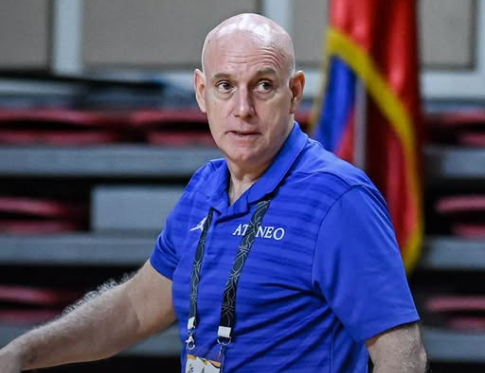
The Philippine National Police Criminal Investigation and Detection Group has recommended charges against former Ateneo de Manila University men's basketball coach Thomas Anthony 'Tab' Baldwin and 10 staff members over the deaths of players Rene Baterbonia and Divine Adili, who drowned during a team activity in Dipaculao, Aurora on June 8. The recommendation centres on violations of Republic Act No. 11053, the country's Anti-Hazing Act, marking a significant shift in how Philippine authorities interpret training-related fatalities within sports organisations.
Accused alongside Baldwin are strength and conditioning coaches Grant Dearns and Ceasar Vicent Javellana Elumba, assistant coaches Dean Caesar B. Castaño, Sandro Nicholas Romero Soriano, and Reynaldo Jacinto, two student managers Paolo Manuel Maceda Adevoso and Andrew Lorenzo 'Drew' Bondoc Salud, physical therapist John Eric Quiambao Rueca, and utility personnel Aris Ramos Pronce and Joel 'Boy' Palmiano Rapa. According to investigating authorities, all 11 individuals were present on the beach during the fateful activity and each bore responsibility for allowing the exercise to proceed in dangerous conditions.
The prosecution's case rests on a broadened interpretation of hazing that extends beyond traditional initiation rituals. Officials emphasised that the definition under Republic Act No. 11053 encompasses "forced calisthenics and exposure to the weather," challenging the conventional understanding many sports programmes hold regarding legitimate training methods. This expansion of the hazing statute's application represents a watershed moment for Philippine sports organisations, signalling that even team-building activities designed by coaching staff can cross into prohibited conduct when they subject athletes to unnecessary physical and environmental hazards without appropriate safeguards.
The sequence of events on June 8 painted a picture of relentless physical stress placed upon the athletes. Players were awakened at 4am and instructed to run four kilometres, followed by intense physical games with punishments assigned to losing participants. The beach training in seawater commenced between 2 and 2.30pm—a critical detail made more troubling by the fact that high tide conditions were predicted to peak at 2.27pm that same afternoon. This timing placed the athletes in an open-sea environment characterised by dangerous rip currents, powerful wave action, and unstable seabed terrain, conditions that exponentially increased drowning risk particularly for athletes already fatigued from hours of demanding exercise.
Investigators highlighted a structural concern underlying the activity's justification: the Aurora exercise functioned as a mechanism to determine which of the 20 athletes present would make the final roster submitted to the University Athletics Association of the Philippines. This selection process embedded within the activity created perverse incentives for players to push beyond their limits, fearing that reluctance to participate in dangerous conditions might result in exclusion from competition. The absence of any legitimate competitive rationale—since all participants were already associated with the programme—underscored that the hazing element was designed primarily as a display of obedience and tolerance for discomfort rather than skill development.
Baldwin had previously released a lengthy video apology addressing the deaths, attempting to express remorse through Ateneo's official channels. However, authorities argued that individual expressions of regret, however sincere, could not absolve the systemic failures in judgment and safety protocols that characterised the training exercise. The breadth of the charges against an entire support staff rather than a single individual reflected the investigation's conclusion that responsibility was distributed throughout the programme's leadership hierarchy.
A particularly notable finding involved the absence of external objects on the recovered bodies of both drowning victims. Investigators confirmed that neither Baterbonia nor Adili had weights or anchors attached to their persons, eliminating speculation that the deaths resulted from unusually extreme forms of punishment. This detail, while seemingly contradicting some traditional narratives about hazing-related fatalities, actually strengthened the prosecution's argument that even standard athletic training conducted under hazardous environmental conditions without appropriate protective measures could prove fatal when athletes are already severely fatigued.
The case carries implications extending well beyond the immediate institutions and individuals involved. Philippine universities and sports organisations nationwide are now receiving clear signals that the nation's anti-hazing legislation will be applied expansively to any activity involving physical stress, environmental hazard, and hierarchical coercion—irrespective of coaching staff intention or programme traditions. The involvement of multiple coaching tiers, from the head coach through assistant coaches to support personnel, suggests that institutional liability may attach to anyone occupying a supervisory role during a dangerous activity, whether or not they personally inflicted harm.
For Malaysian and broader Southeast Asian sports administrators, the Philippine case demonstrates the growing legal vulnerability of coaching methodologies that rely on physical punishment, environmental exposure, or selective participation as motivational tools. As neighbouring jurisdictions examine or strengthen their own anti-hazing and athlete protection frameworks, the successful prosecution of institutional leadership in the Baldwin case may influence how regional sports bodies approach duty of care obligations. The expansion of hazing definitions to encompass ordinary training activities conducted in hazardous conditions represents an important precedent in holding sports organisations legally accountable for athlete safety in ways that transcend traditional understanding of initiation-based misconduct.
The Department of Justice will conduct the preliminary investigation and case evaluation to determine whether sufficient evidence exists to proceed with formal charges. The outcome will likely establish binding precedent regarding how Philippine institutions interpret athlete protection obligations and the scope of supervisory responsibility for coaching staff. Whether other nations in the region adopt similar interpretive approaches to existing athlete protection legislation remains to be seen, but the Baldwin case signals a definitive shift toward prioritising athlete safety over traditional training methodologies in national legal frameworks.

