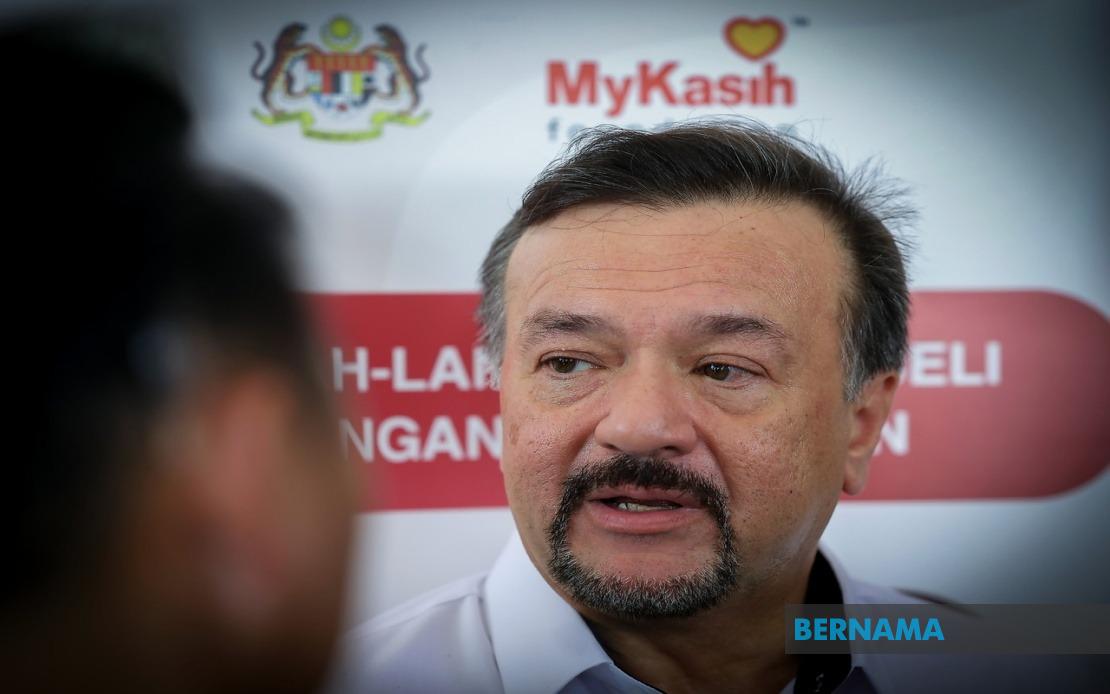
The Ministry of Finance has signalled flexibility in managing the BUDI MADANI Diesel subsidy scheme, indicating that policymakers remain receptive to feedback and potential modifications designed to strengthen the programme's effectiveness. Finance Minister II Datuk Seri Amir Hamzah Azizan stressed this adaptive approach during a media briefing in Kuching, emphasising that any adjustments—including potential quota increases—would rest on empirical evidence from consumer consumption patterns rather than preliminary projections.
The government's willingness to reconsider programme parameters reflects lessons learned from earlier subsidy initiatives. When Malaysia first introduced the targeted RON95 fuel subsidy, stakeholders raised concerns that purchasing limits were too restrictive to meet genuine demand. However, upon reviewing actual usage data from January through May this year, the Finance Ministry discovered that only 0.76 per cent of eligible consumers exceeded the 200-litre threshold, suggesting the initial quota levels were appropriately calibrated. This real-world insight directly informed the ministry's current stance: allow programmes sufficient time to operate, monitor performance metrics closely, and intervene only when evidence demonstrates material shortcomings.
The diesel subsidy programme represents a continuation of Malaysia's evolution toward targeted rather than universal fuel subsidies. This shift fundamentally restructures how government supports consumers, moving away from blanket price controls that drain the fiscal budget regardless of actual need. Instead, the BUDI Diesel approach concentrates assistance on those sectors and population groups where subsidies deliver maximum social benefit while containing expenditure. The framework requires building robust data systems to track consumption, identify patterns, and distinguish between ordinary usage and potential misuse or quota circumvention.
Amir Hamzah drew parallels with the e-hailing sector's subsidy arrangement, where the government previously adjusted quotas following industry feedback. When ride-sharing drivers initially reported that their allocated fuel allowances proved inadequate for daily operations, the ministry examined consumption records from participating companies rather than simply accepting claims at face value. This scrutiny revealed meaningful variation in driver fuel needs, prompting the introduction of tiered quotas—600 and 800 litres monthly—calibrated to actual usage tiers. The willingness to implement such differentiation demonstrates that Malaysian policymakers view subsidies as dynamic rather than static instruments, responsive to operational realities.
The BUDI Diesel programme sits within a broader Southeast Asian context of subsidy reform. Across the region, governments wrestle with balancing fiscal sustainability against social welfare objectives and inflation concerns. Thailand, Indonesia, and Vietnam have all experimented with targeted subsidies after discovering that universal fuel price controls proved economically unsustainable and often benefited higher-income households disproportionately. Malaysia's approach of collecting usage data before making programme-altering decisions reflects international best practice, where evidence-based policy design replaces ideological assumptions.
For consumers and businesses relying on the BUDI Diesel scheme, the ministry's declared openness offers some reassurance. The explicit commitment to reviewing the programme based on documented consumption patterns suggests that genuine hardship caused by inadequate quotas will not be ignored indefinitely. Trucking companies, delivery services, agricultural operations, and other diesel-dependent sectors can factor this responsiveness into their planning, knowing that acute shortfalls will likely prompt government action rather than indifference.
Yet the ministry's cautious, data-driven approach also contains implicit messaging about expectations. By stressing that early usage figures show low incidence of quota exhaustion, Finance Ministry officials appear to be managing expectations around quota increases. The emphasis on allowing systems time to mature before considering major revisions suggests the government will not rush to expand allocations in response to the first complaints. This measured stance aims to prevent quota gaming, where consumers or businesses might hoard fuel allocations based on temporary shortages, creating artificial demand spikes that obscure true consumption requirements.
The participation of Works Minister Datuk Seri Alexander Nanta Linggi in the briefing underscores the cross-ministry dimension of subsidy administration. Road infrastructure, transportation planning, and fuel distribution logistics all intersect with subsidy policy. Coordinated government messaging, with finance and public works portfolios aligned, strengthens programme credibility and demonstrates institutional coherence to stakeholders implementing the scheme at ground level.
Looking forward, the diesel subsidy programme will likely operate in phases. An initial observation period, where consumption data accumulates and programme mechanics are validated, will precede any substantial policy adjustments. During this window, the government will monitor not only aggregate consumption but also regional variations, sectoral demand patterns, and potential abuse indicators. Should evidence mount that particular groups face systematic quota insufficiency, the ministry has already indicated its readiness to revisit design elements rather than defending flawed initial parameters through bureaucratic rigidity.
For Malaysian businesses and consumers, this adaptive governance model offers both opportunity and responsibility. Those experiencing genuine hardship from quota constraints are encouraged to document consumption patterns and submit formal feedback through appropriate channels. Conversely, the ministry's commitment to data-driven decision-making means anecdotal complaints without supporting evidence are unlikely to trigger policy changes. This encourages stakeholders to engage constructively with the programme, gathering documentation and presenting cases grounded in operational facts rather than assertions.
The broader policy significance extends beyond fuel subsidies. Malaysia's approach to the BUDI Diesel programme—emphasising evidence gathering, iterative refinement, and sectoral consultation—positions the country as a comparatively sophisticated subsidy manager within the Southeast Asian region. As global energy markets remain volatile and fiscal pressures persist across governments, the ability to design sustainable, responsive subsidy mechanisms becomes increasingly valuable. The Finance Ministry's declared flexibility thus represents not merely administrative pragmatism but a deliberate governance strategy recognising that durable policy requires continuous calibration against lived reality.

