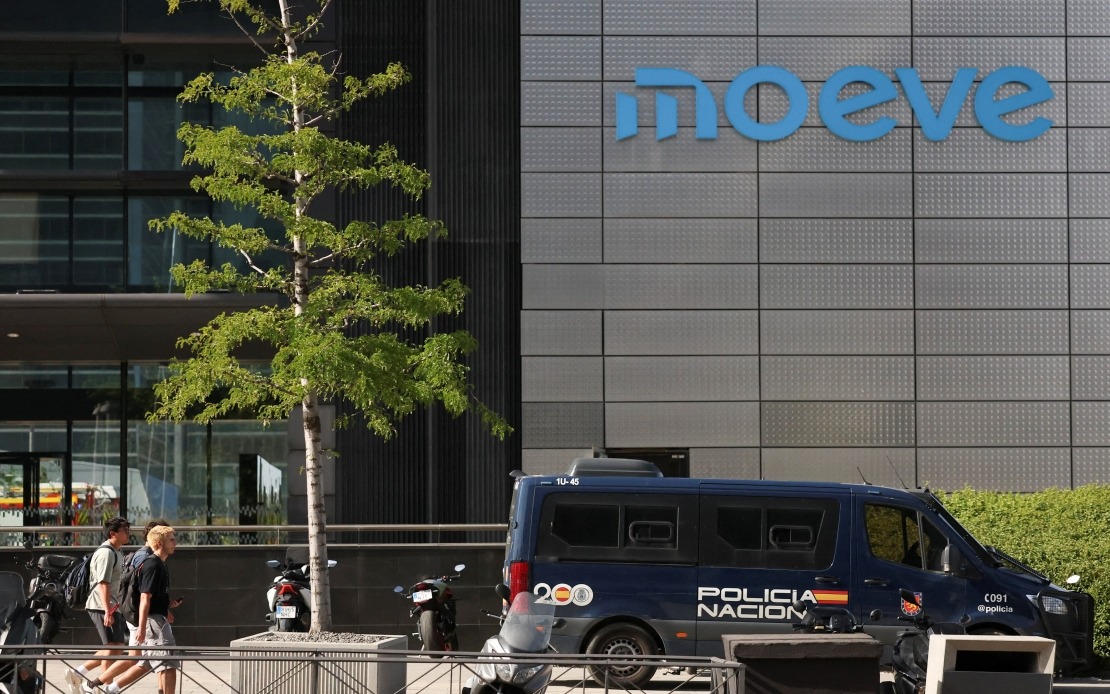
Spain's second-tallest skyscraper, Torre Moeve in Madrid, became the site of a major incident on Tuesday when a fire erupted within its structure, drawing the attention of emergency services and residents across the capital. Thick plumes of smoke rose visibly above the cityscape, creating a dramatic scene that could be observed from multiple vantage points throughout Madrid. The incident prompted swift action from local authorities, who initiated a complete evacuation of the tower as a precautionary measure to ensure the safety of all occupants within the building.
The fire was preceded by an explosion inside the building around 5.00 pm local time, according to information released by Spain's National Police and reported by the national broadcaster RTVE. This initial blast appears to have triggered the subsequent fire that spread through the structure. The Spanish government delegation in Madrid provided crucial details about the location of the outbreak, identifying the 25th floor as the origin point. This particular level contains technical rooms—mechanical spaces housing critical building systems—which may have contributed to both the initial explosion and the rapid spread of flames through the structure.
Emergency response teams mobilised quickly to contain the threat. Firefighters deployed by the Madrid City Council worked methodically through the afternoon and into the evening hours to combat the blaze. Their efforts proved effective, as the fire was declared extinguished within a reasonable timeframe. Following the suppression of flames, firefighting personnel remained on-site to conduct thorough inspections of the building's interior, checking for any residual hazards or structural damage that might pose risks to eventual re-entry and resumption of normal operations.
What could have been a catastrophic incident with far-reaching consequences instead resulted in minimal personal injury, a testament to the swift evacuation procedures and emergency protocols in place. According to reports from local media outlets, only three individuals required medical attention. Two of these were workers within the building who experienced mild smoke inhalation, a common consequence of exposure to combustion byproducts in such incidents. A third person, a passerby outside the building, suffered an anxiety attack triggered by witnessing the dramatic emergency unfolding. Remarkably, all three individuals were treated and discharged at the scene without requiring transport to medical facilities, indicating the injuries were relatively minor in nature.
The incident at Torre Moeve represents the type of high-rise emergency that can quickly escalate into a major disaster if not handled with precision and speed. Large commercial and office towers present unique challenges for emergency responders due to their height, complex internal systems, and the concentration of occupants they may house. The presence of technical rooms on the 25th floor—spaces where HVAC systems, electrical equipment, and other essential infrastructure converge—suggests that the fire originated in an area where multiple potential ignition sources and fuel sources could interact dangerously.
Madrid's emergency preparedness infrastructure proved effective in containing the situation and preventing the spread beyond the affected floor. The building's design and safety systems, combined with the rapid response of municipal firefighting teams, ensured that what began as an explosion and subsequent fire did not escalate into a tragedy. For a city of Madrid's size and importance, such incidents serve as regular tests of urban emergency response capabilities and building safety compliance.
The incident carries broader implications for European cities with aging infrastructure and tall buildings constructed under varying safety standards from different eras. Torre Moeve, as Spain's second-tallest structure, represents the type of landmark building that combines iconic status with the practical challenges of maintaining safety systems across numerous floors and complex technical spaces. Regular maintenance and inspection of mechanical systems in such buildings become critical preventive measures against future incidents.
For Malaysia and other Southeast Asian nations with rapidly growing skylines and expanding high-rise development, incidents like the Torre Moeve fire offer important lessons regarding building safety protocols and emergency preparedness. As cities throughout the region construct increasingly taller structures to accommodate growing urban populations, ensuring robust safety systems and regular maintenance becomes essential. The fact that Torre Moeve's incident resulted in no fatalities demonstrates the importance of both preventive design features and effective emergency response procedures.
The cause of the initial explosion that preceded the fire remains under investigation by Spanish authorities. Understanding what triggered the blast will be important not only for Torre Moeve itself but for building managers and safety officials across Europe and beyond who oversee similar structures. Whether the incident stemmed from equipment failure, maintenance issues, or another source, the investigation findings will likely inform future safety standards and inspection protocols for high-rise buildings.

