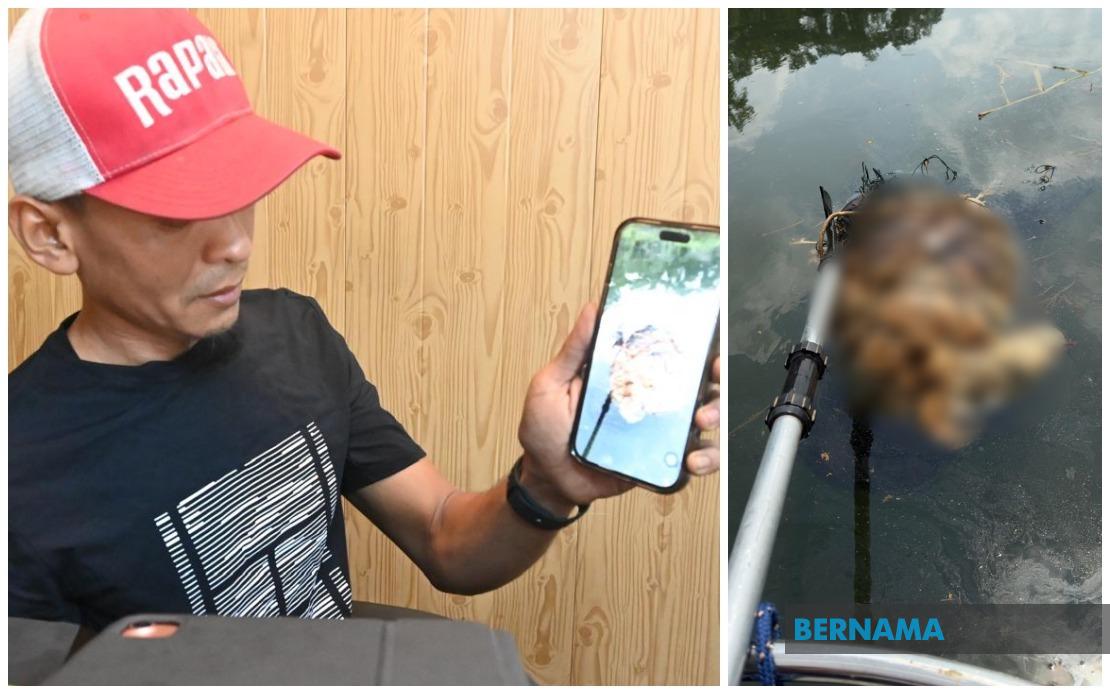
A routine fishing trip turned into a crime scene discovery yesterday when a 33-year-old angler spotted a body wrapped in netting in waters near Parit Raja, Batu Pahat. Muhamad Zul Fikri Borhanodin was attempting to capture content for social media around 11 am when he encountered what initially appeared to be animal remains floating in Sungai Tanjung Sembrong. His two decades of experience at the waterway made him accustomed to finding discarded carcasses, a frequent occurrence in the area that would normally warrant little investigation.
The discovery took a darker turn when Muhamad Zul Fikri detected an overwhelming stench emanating from the object, a signal that prompted closer examination. What he initially mistook for animal debris revealed itself as something far more sinister when he observed a pair of jeans visible through the netting. The combination of the putrid smell and the presence of clothing left no doubt that authorities needed to be contacted immediately. Rather than investigate further himself, Muhamad Zul Fikri reached out to a companion who was operating another boat nearby, ensuring that the proper authorities would handle the grim discovery.
Police received notification of the find at approximately 12.30 pm the same day, initiating what would become a significant criminal investigation. According to Johor's deputy police chief DCP Hoo Chuan Huat, three men aged between 26 and 40 were apprehended in the Batu Pahat area on the same date to assist with inquiries. The swift arrests suggested that police possessed information linking the suspects to the discovery, though the exact nature of their involvement remained under investigation.
The victim's identity became clearer when investigators connected the discovery to a missing person report filed on July 29. The victim's wife had reported her husband missing from Mutiara Rini, Iskandar Puteri, suggesting a potential timeframe for when the tragedy occurred. The gap between the missing person report and the body's discovery indicated that the remains had been in the water for several days, subject to decomposition that would have accelerated the foul odour Muhamad Zul Fikri detected.
Muhamad Zul Fikri's calm response to the discovery reflected both his maturity and his prior exposure to trauma in the location. He revealed that this constituted his second encounter with a body at Sungai Tanjung Sembrong, having previously witnessed a case where someone had fallen into the river several years earlier. His familiarity with death at the location, while tragic, meant he recognized the significance of his observation immediately and acted responsibly by alerting authorities rather than attempting intervention.
The incident highlights how ordinary citizens engaged in recreational activities continue to stumble upon serious crimes, often becoming crucial witnesses in investigations. Muhamad Zul Fikri's decision to document his fishing hobby through social media, while perhaps trivial in his estimation, ultimately served a greater purpose by placing him at the right location to identify the body. Had he not been recording content that particular morning, the victim's remains might have drifted further downstream or remained undiscovered for considerably longer.
For residents of Johor and beyond, the case underscores the ongoing challenges law enforcement faces in addressing serious crimes, including potential foul play involving multiple suspects. The involvement of three individuals suggests circumstances beyond a simple accident or suicide, indicating a more complex criminal scenario that police are now investigating. The fact that arrests occurred so quickly after the discovery suggests that intelligence or tip-offs directed authorities toward specific individuals.
The discovery also raises questions about river safety and monitoring in residential and recreational areas. Sungai Tanjung Sembrong, despite its accessibility to fishermen and other water users, may lack adequate oversight to prevent or deter criminal activity. The frequency with which animal carcasses appear in the waters, according to Muhamad Zul Fikri's observations, suggests that the river may be used as a disposal site more often than authorities acknowledge. This pattern warrants examination of whether additional patrols or surveillance could help prevent future incidents.
As investigations proceed, the case will likely reveal details about the victim's relationship to the three arrested men and the circumstances that led to the body being weighted and disposed of in the river. The missing person report filed by the victim's wife provided a starting point for investigators to establish identity and timeline, crucial elements in building a case against the suspects. The swift police response and arrests demonstrate coordination between different divisions and the rapid mobilization of resources when a significant crime is identified.
For Malaysian readers, this incident serves as a reminder of how quickly ordinary circumstances can transform into serious criminal matters. The involvement of someone simply trying to enjoy a hobby and earn social media engagement underscores that crime does not discriminate regarding when or where it may be encountered. As authorities continue their investigation in Johor, the case will likely proceed through the justice system with careful examination of evidence linking the three suspects to the victim's death.

