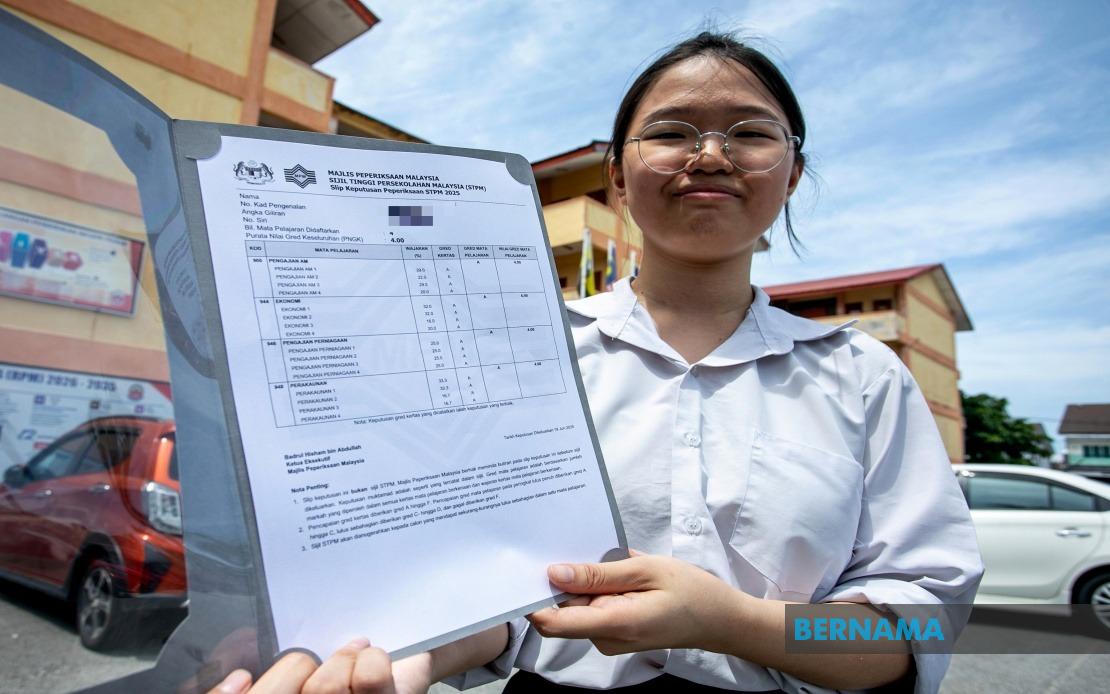
Yong Xin Yi, a 20-year-old student from Sekolah Menengah Kebangsaan Jalan Tasek in Ipoh, has emerged as one of the top performers in this year's Sijil Tinggi Persekolahan Malaysia examination, securing four A grades across all subjects with a perfect Cumulative Grade Point Average of 4.00. Her achievement places her among five students from her institution who attained the same distinction, underlining the effectiveness of her methodical approach to examination preparation.
The foundation of Xin Yi's academic success rests on a carefully structured timetable that allocates precisely five hours each evening to reviewing course material. Her routine begins at 5:00 pm and continues until 10:00 pm on a daily basis, creating a consistent pattern that extends beyond regular school hours. This disciplined approach reflects a broader understanding that examination excellence requires sustained effort and unwavering commitment over an extended period, rather than sporadic intensive cramming sessions before assessment dates.
However, Xin Yi emphasises that her revision schedule represents only one component of a comprehensive study strategy. Equally crucial to her performance has been maintaining concentrated attention during classroom instruction. She notes that active engagement with teachers' explanations during lessons substantially reduces subsequent confusion when working through material independently at home. This insight highlights an often underestimated dimension of academic success: the quality of learning that occurs within formal classroom settings can dramatically influence how efficiently students process information during private study sessions.
Complementing her attentiveness in class and evening revision work is Xin Yi's meticulous approach to completing all assigned homework. She views these tasks not as bureaucratic obligations but as essential opportunities to consolidate understanding and develop mastery of academic content. This comprehensive strategy demonstrates that high achievement typically emerges from the accumulation of consistent, purposeful effort across multiple dimensions of the learning process rather than excelling in any single area.
Among her four subjects—General Studies, Principles of Accounting, General Studies, and Economics—the first proved most demanding. Xin Yi identifies the subject's requirement for sophisticated writing ability, combined with the need to understand specific answer formats and marking criteria, as sources of substantial challenge. Rather than avoiding this weakness, she deliberately invested additional attention in General Studies beyond the time she allocated to other subjects. This adaptive strategy, whereby students identify their areas of greatest difficulty and respond by concentrating supplementary effort there, exemplifies the kind of metacognitive awareness that distinguishes high achievers from average performers.
The path to academic excellence rarely unfolds in isolation, and Xin Yi readily acknowledges the instrumental role played by her family in facilitating her success. Both parents provided consistent encouragement and psychological support throughout her secondary education, creating an environment conducive to sustained academic effort. Her mother works as a clerk while her father is employed in mobile phone sales—occupational backgrounds that reflect the aspirations of working Malaysian families and their commitment to supporting their children's educational advancement.
As an only child, Xin Yi carries particular responsibility for honouring her parents' sacrifices and investments in her education. She articulates a clear intention to leverage her examination success toward improving her family's economic circumstances and generating future achievements that will bring her parents enduring pride. This motivation extends beyond personal ambition, demonstrating how family relationships and obligations can powerfully reinforce academic discipline and drive.
Xin Yi's chosen field of study reflects careful consideration of both her personal aptitudes and career trajectories. Having identified economics as an area combining her genuine intellectual interests with substantial professional prospects, she has secured admission to pursue undergraduate studies in economics at Universiti Putra Malaysia. This decision follows deliberate assessment of where her strengths lie and where viable career pathways exist within Malaysia's evolving economic landscape. The choice of institution and discipline suggests she has invested time in understanding the connection between academic qualifications and future employment possibilities.
Her aspiration to become an economist positions Xin Yi within a professional sector that Malaysia requires as the nation pursues increasingly sophisticated economic policies and development strategies. The combination of her STPM results, academic discipline, and strategic career planning exemplifies the kind of structured approach to tertiary education that contributes to developing Malaysia's professional workforce. Her trajectory from disciplined secondary student to university economics student represents a pathway increasingly followed by high-achieving Malaysians seeking to contribute expertise to national development objectives.
The broader context of Xin Yi's achievement illuminates wider lessons for Malaysian secondary education. Her success demonstrates that systematic study routines, sustained classroom engagement, and comprehensive completion of academic requirements collectively produce measurable results. For students throughout the country preparing for STPM or equivalent qualifications, her experience offers a replicable model: structured daily revision conducted in dedicated time blocks, complemented by active participation in formal instruction and diligent homework completion, addresses the comprehensive demands of advanced secondary examinations. Equally significant is her acknowledgment that family support and personal motivation substantially influence whether students maintain the discipline necessary to execute such demanding academic schedules over extended periods.

