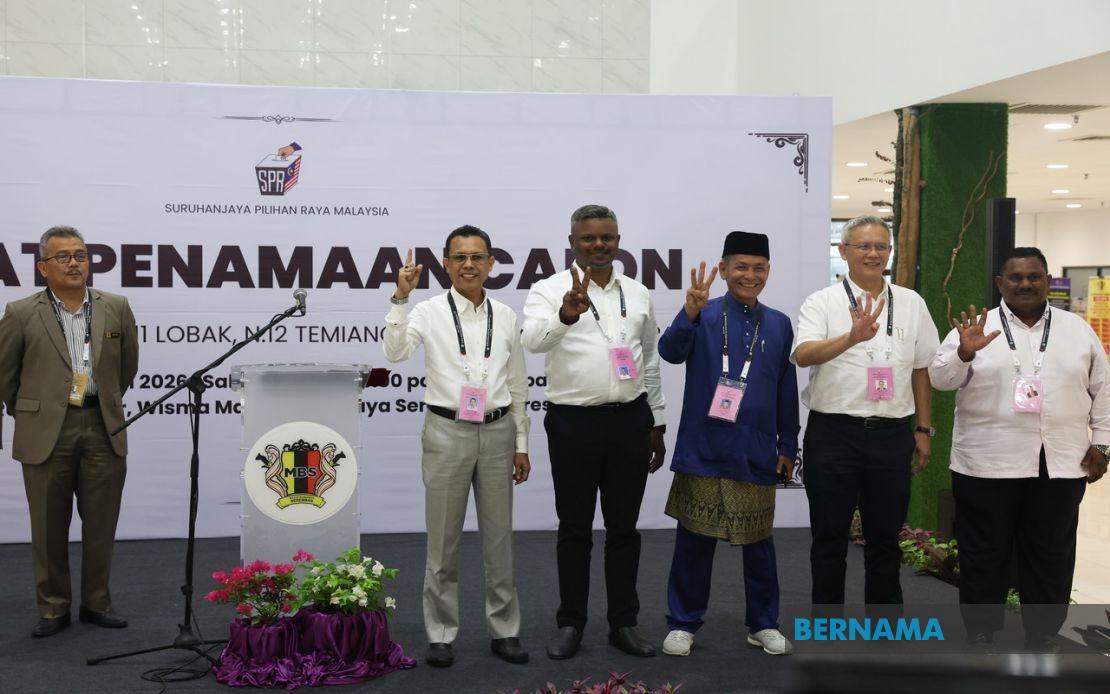
The Nilai state assembly seat in Negeri Sembilan has become the flashpoint of the upcoming 16th state election, with incumbent DAP assemblyman and national vice chairman J. Arul Kumar confronting an unexpectedly crowded field that will test even an entrenched legislator's grip on power. The confirmation of five candidates contesting in Nilai—announced after the nomination deadline on July 18—signals the fractured nature of electoral competition in a state where Pakatan Harapan's dominance can no longer be taken for granted.
Arul Kumar's challenge comes from four separate quarters. Zamani Ibrahim represents Berjasa, a smaller component of the federal coalition government, while the Barisan Nasional camp is represented by Datuk Lai Chien Kong, signalling BN's determination to reclaim ground lost in recent electoral cycles. Perhaps more significantly, Datuk V. Saravana Kumar stands as Bersatu's candidate, underscoring the Mahathir-aligned party's continued efforts to carve space away from both PH and PN despite its fractious status. An independent candidate, Omar Mohd Isa, completes the quintet, reflecting growing voter experimentation with candidates outside formal party structures.
The Nilai contest reflects broader dynamics unfolding across Negeri Sembilan's 36-seat assembly. When the state dissolved its legislature on June 5, observers anticipated a relatively straightforward contest between incumbent coalitions. Instead, nomination day has revealed a landscape fractured across multiple fault lines. The presence of independent candidates and the strategic positioning of Bersatu—ostensibly a PN ally but increasingly acting as a spoiler force—suggests calculation by various actors that direct confrontation offers better prospects than coalition discipline.
In Sikamat, another crucial battleground, the ruling Pakatan camp has fielded Nor Azman Mohamad, who currently serves as political secretary to the Menteri Besar, against a field that includes both PN incumbent Datuk Razali Abu Samah and Bersatu's Datuk Tun Faisal Ismail Aziz. An initially independent challenge from Bujang Abu evaporated at the last moment, suggesting either negotiation or recognition of an unwinnable position. The Sikamat contest illustrates how incumbency advantages operate unevenly across different power brokers: while the Menteri Besar's office retains organisational muscle, that advantage competes directly against the PN's experience holding the seat.
Three other constituencies have attracted three-way contests that will significantly complicate vote calculations. In Temiang, PH's Ho Weng Wah, who holds a political secretary position at the Transport Ministry, must fend off Datuk Leaw Kok Chan from BN and Bersatu's Fazly Hamid. Ampangan presents a similar configuration, with Yayasan Negeri Sembilan director Muhammad Nazri Kassim from PH squaring off against PN's Datuk Dr Mohamad Rafie Malek and Bersatu's Noor'azah Harun. These three-way contests create conditions where second or even third-place finishers could win through vote splitting, a scenario that typically favours challengers over incumbents.
Linggeng and Lobak offer contrasting dynamics. In Lenggeng, PH's Zarinna Abu Zarin attempts to overturn BN incumbent Datuk Mohd Asna Amin, with Bersatu's Zool Amali Hussin making a three-way contest. Lobak, by contrast, has shaped up as a direct two-candidate duel between PH incumbent Chew Seh Yong and PN challenger Dr P. Kumar. Straight fights typically advantage better-organised parties with clearer ground organisation, suggesting that if PH maintains its machinery, Lobak should remain relatively secure.
The electoral calendar compressed significantly after the dissolution. The Election Commission set July 28 for early voting, with polling day scheduled for August 1, providing candidates merely a fortnight for campaigning. This compressed timeframe particularly disadvantages new candidates or challengers lacking established ground networks, though it can equally frustrate incumbents unable to capitalise on incumbency advantage through prolonged exposure. For Arul Kumar and other PH incumbents, the fast timeline means relying almost entirely on existing party machinery rather than time-intensive personal campaigning.
The nomination of multiple candidates across constituencies reflects deeper fractures within Malaysia's coalition system. Bersatu's continued presence—running candidates against PN allies and sometimes against PH—suggests the party calculates that independent positioning offers better long-term prospects than coalition loyalty. Berjasa's participation in Nilai similarly indicates smaller parties see real openings in state elections that might not exist at federal level, where coalition discipline operates more strictly. These dynamics suggest that state elections now function as testing grounds where coalition partners probe their relative strength.
For Malaysian readers following Negeri Sembilan politics, these contests carry implications beyond the state boundary. As a relatively balanced battleground between PH and PN—unlike Selangor or Terengganu, where single coalitions dominate—Negeri Sembilan elections often foreshadow broader trends in voter sentiment. The appearance of multiple candidates across constituencies might indicate voter appetite for choice, or alternatively, reflect coalition tensions that could reverberate into federal politics. The outcome in Nilai particularly will be scrutinised, given Arul Kumar's national profile and the unexpectedly competitive field facing him.
The five-cornered contest in Nilai ultimately epitomises how electoral competition in Malaysia has become increasingly unpredictable in state contests. With the field divided among four challengers plus the incumbent, none holding overwhelming advantages, the outcome may turn on marginal factors—tactical voting by specific communities, turnout variations between campaign zones, or last-minute tactical calculations by voters. For PH, retaining Nilai would affirm the coalition's continued capacity to hold ground; for the opposition quarters, even an Arul Kumar victory would represent a narrower margin than previous elections suggested the seat should offer.

