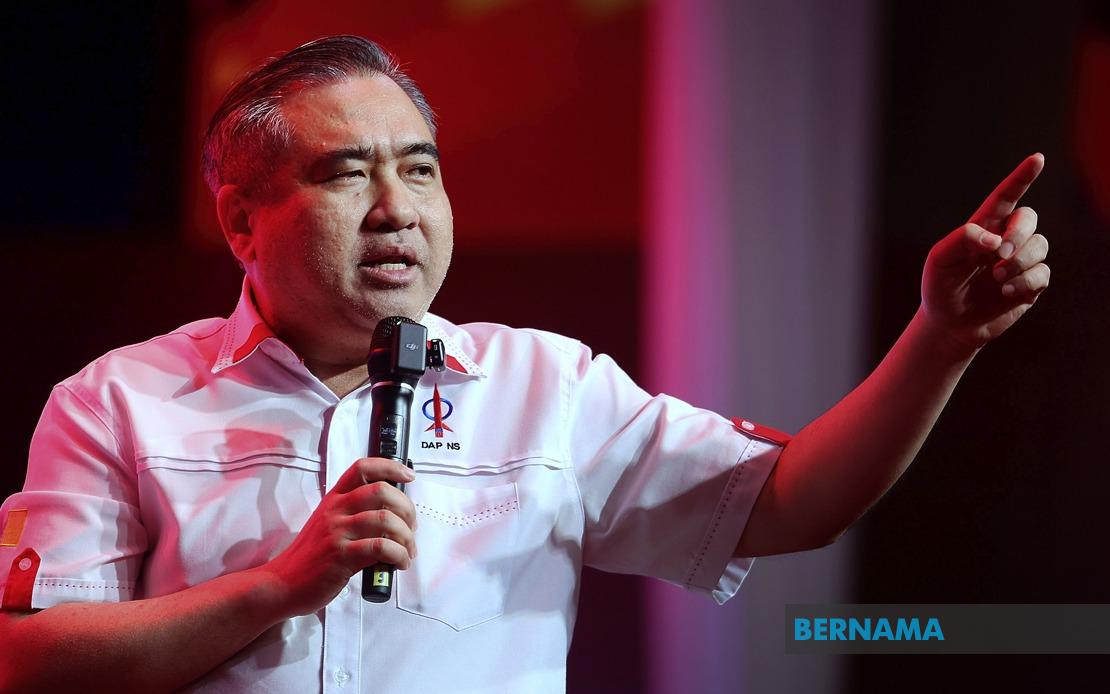
DAP secretary-general Anthony Loke has committed to steering clear of personal attacks during the 16th Negeri Sembilan state election campaign, instead prioritising discussion of concrete policy offerings and party positions. Speaking after a Pakatan Harapan dinner in Seremban on July 19, Loke underscored the importance of campaigns that centre on what political parties can deliver to constituents, rather than engaging in character-based criticism. His stance reflects a broader disciplinary approach within government ranks, particularly given the delicate balance required to maintain coalition stability in Malaysia's current political landscape.
The Transport Minister and Chennah state assemblyman has deliberately chosen not to launch attacks against any Cabinet member throughout the campaign period. This self-imposed restraint stems from his recognition that Cabinet colleagues meet weekly to coordinate on shared national responsibilities, making adversarial campaigning against them fundamentally incompatible with effective governance. Loke's decision to maintain professional decorum with fellow government officials signals an understanding that electoral competition need not translate into personal animosity within a coalition framework.
Loke's approach aligns closely with recent guidance from Prime Minister Datuk Seri Anwar Ibrahim, who has advised government officeholders to exercise discipline and refrain from criticising the Federal Government whilst campaigning in state elections. This directive reflects concerns about maintaining coherence and public confidence in the Unity Government, which represents an unprecedented political arrangement in Malaysia combining Pakatan Harapan and Barisan Nasional components. The emphasis on restraint underscores the fragility of such arrangements and the need for all participants to demonstrate commitment to the coalition's survival.
In a gesture clearly aimed at preserving internal harmony, Loke has also avoided campaigning in the Rantau state constituency, despite it being contested by Foreign Minister Datuk Seri Mohamad Hasan, the Barisan Nasional deputy chairman. This choice demonstrates a willingness to subordinate competitive instincts to coalition cohesion. Instead, Loke has concentrated his campaign efforts on his own Chennah seat and on supporting DAP candidates contesting other constituencies, whilst simultaneously assisting Menteri Besar Datuk Seri Aminuddin Harun's campaign for the Linggi seat.
Loke has also addressed suggestions that his ministerial position has caused him to neglect Chennah, arguing instead that his Cabinet role provides distinct advantages for his constituents. As Transport Minister, he has been able to secure greater resource allocations for the constituency, including funds for Kampung MADANI project implementation. This framing converts a potential vulnerability—accusations of divided attention—into an asset, positioning his national role as enhancing rather than detracting from his constituency service.
Beyond funding mechanisms, Loke emphasises that he has established a dedicated full-time constituency management team capable of addressing residents' concerns independently of his own schedule. This institutional approach to constituent service acknowledges the legitimate demands on any Cabinet minister's time whilst demonstrating that ministerial status need not equate to constituency abandonment. The arrangement reflects modern parliamentary practice where elected representatives increasingly operate through professional support structures rather than relying solely on personal availability.
The Negeri Sembilan state election represents a significant test case for the Unity Government's operational mechanics. The election sees Pakatan Harapan and Barisan Nasional, long-standing adversaries, campaigning within the same government framework. Such an arrangement requires extraordinary discipline from politicians accustomed to zero-sum competition. The decisions made by senior figures like Loke during this campaign will establish precedents for how coalition members can compete electorally whilst maintaining working relationships at state and federal levels.
The timing of Loke's statements also matters given the relatively tight election schedule. Early voting is scheduled for July 28, with polling day on August 1, providing a compressed campaign period. Within this narrow window, Loke's emphasis on policy substance rather than personality-based attacks forces his campaign to establish clear policy differentiators between Pakatan Harapan and opposition parties. This requirement may actually strengthen substantive political debate by eliminating the shortcut of personal criticism.
For Malaysian voters in Negeri Sembilan and beyond, Loke's approach raises broader questions about the future of political discourse under the Unity Government framework. If senior politicians systematically avoid attacking coalition partners, it becomes necessary for electoral competition to crystallise around genuine policy differences. This potentially elevates public discourse by forcing parties to articulate distinct visions rather than relying on character assassination. Conversely, some voters may perceive muted criticism of coalition partners as reducing meaningful electoral choice.
The Negeri Sembilan election also carries significance for regional politics in Southeast Asia, where coalition governments have become increasingly common. Malaysia's experiment with encompassing coalitions that cross traditional partisan lines offers both instructive successes and cautionary tales for other democracies attempting similar arrangements. The willingness of senior politicians to impose campaign discipline on themselves demonstrates whether such coalitions can function coherently despite containing ideologically divergent components.
Looking forward, Loke's position on campaign conduct may influence how other Pakatan Harapan and Barisan Nasional politicians conduct themselves in subsequent state and federal elections. If his restraint proves electorally viable and strengthens rather than weakens campaign messaging, it could establish new norms for coalition politics in Malaysia. Conversely, if opponents exploit Pakatan Harapan's self-imposed restrictions by launching aggressive attacks, voters may perceive the constraint as strategically disadvantageous, potentially reversing the approach in future contests.
The Negeri Sembilan contest ultimately represents more than a state-level election. It functions as a laboratory for testing whether Malaysia's coalition government can sustain itself through election cycles, and whether political competitors can maintain professional relationships whilst pursuing electoral victory. Loke's principled stance contributes to this broader experiment, demonstrating that party ambition need not entirely displace collegial governance. The results of the August 1 polling will provide the first significant feedback on whether voters reward or punish this approach.

