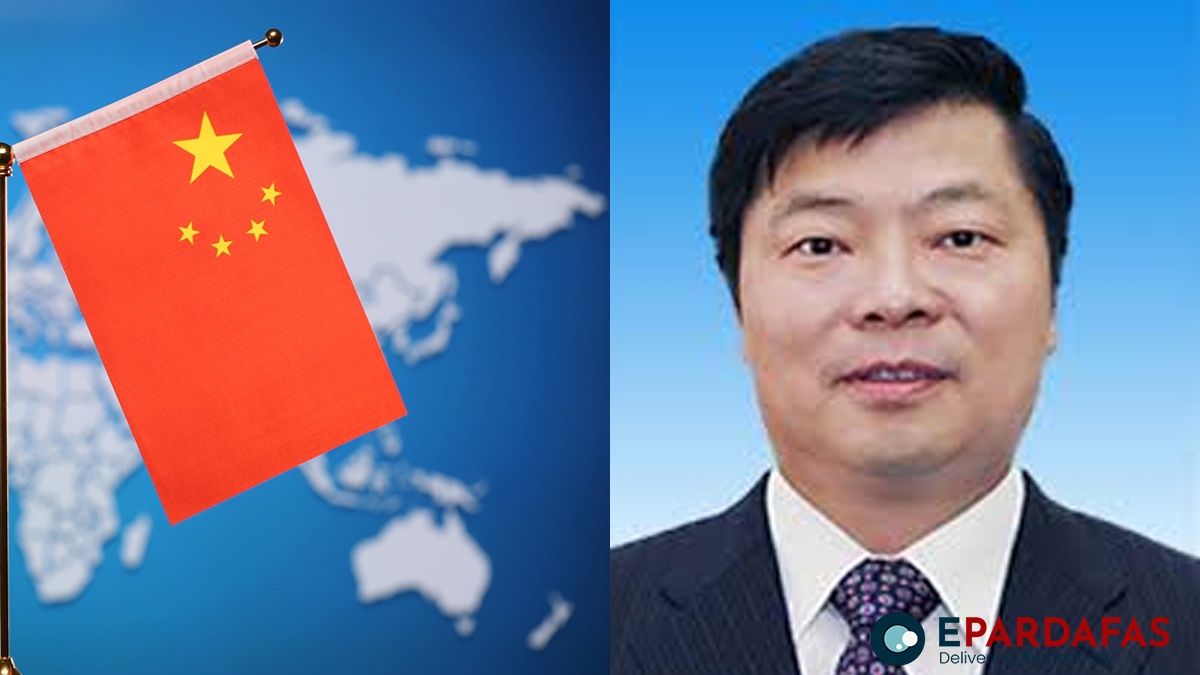
Beijing's top anti-graft authority announced on Sunday that Ouyang Weimin, who previously headed the China Development Bank, is facing investigation for alleged serious violations of party discipline and the law. The Central Commission for Discipline Inspection disclosed the matter through a terse statement, revealing only that both it and the National Commission of Supervision would be handling the case, without elaborating on the specific allegations or nature of the suspected infractions.
Ouyang's career trajectory reflects the corridors of China's financial establishment. He first joined the Communist Party in 1986, building his professional foundation over several decades in the state banking system. Much of his early working life was spent at the People's Bank of China, where he developed expertise in the nation's monetary policy and banking operations before transitioning to broader governmental roles.
His ascent through the ranks extended beyond the banking sector into provincial administration. Before his appointment to the development bank, Ouyang served as vice-governor of Guangdong province, the economically dynamic region bordering Hong Kong that has historically been a testing ground for China's economic reforms. This role signalled his elevation to the upper echelons of China's governmental hierarchy and demonstrated confidence in his administrative capabilities at a crucial economic centre.
In 2019, Ouyang was appointed president of the China Development Bank alongside the position of deputy party secretary, marking the pinnacle of his professional career. This dual leadership role at one of China's most strategically important financial institutions underscored his standing within the Communist Party's inner circles. However, his tenure in this prominent position proved finite. He relinquished the presidency in 2023, stepping down from what should have been a position of considerable influence and authority.
The China Development Bank itself occupies a distinctive place in China's financial architecture. Established in 1994, the institution operates as a state-funded and state-owned development finance entity with a mandate extending far beyond conventional banking. Reporting directly to the State Council—the country's highest executive body—the bank functions as a critical instrument for implementing national economic strategy. Its mandate explicitly focuses on financing development initiatives across key industrial sectors and economically disadvantaged regions that might not attract conventional commercial lending.
Ouyang's investigation arrives during a period of intensified anti-corruption activity across Beijing's power structures. Under President Xi Jinping's tenure, the Communist Party has launched sweeping campaigns targeting officials at various government levels, military commanders, and business executives on graft charges. These drives have dismantled substantial numbers of entrenched power networks and removed numerous figures from positions of influence. The scale and scope of these investigations have fundamentally reshaped China's political and institutional landscape over the past decade.
Critical observers and international analysts have frequently noted that China's anti-corruption campaigns, while ostensibly focused on administrative cleanliness, have simultaneously served factional interests within the party hierarchy. Some of the highest-profile cases have coincided with significant shifts in political alignment, suggesting that corruption investigations function as a mechanism for consolidating power and neutralizing potential rivals. This pattern has raised questions about whether the anti-graft drive represents purely impartial law enforcement or operates as an instrument for political advancement within the party's upper ranks.
For Malaysia and Southeast Asia, developments within China's high-level institutions carry substantial implications. The China Development Bank maintains extensive financing relationships throughout the region, including significant infrastructure and energy projects. Leadership changes and investigations into bank presidents can signal shifts in Beijing's economic priorities and investment strategies. When corruption allegations touch the apex of such consequential financial institutions, they may presage adjustments in how Chinese development finance flows to neighbouring countries and how project negotiations might evolve.
Ouyang's case also illustrates the precarious position occupied by senior state officials in contemporary China, regardless of their technical competence or prior achievements. The absence of transparent institutional safeguards or established procedures governing such investigations, combined with the discretionary power wielded by anti-graft authorities, creates an environment where career security remains contingent on maintaining political backing. The speed with which a prominent official can transition from senior leadership to investigation reflects the concentrated nature of power in the Chinese system and the vulnerability of individuals to sudden reversals of fortune based on shifting political alignments.

