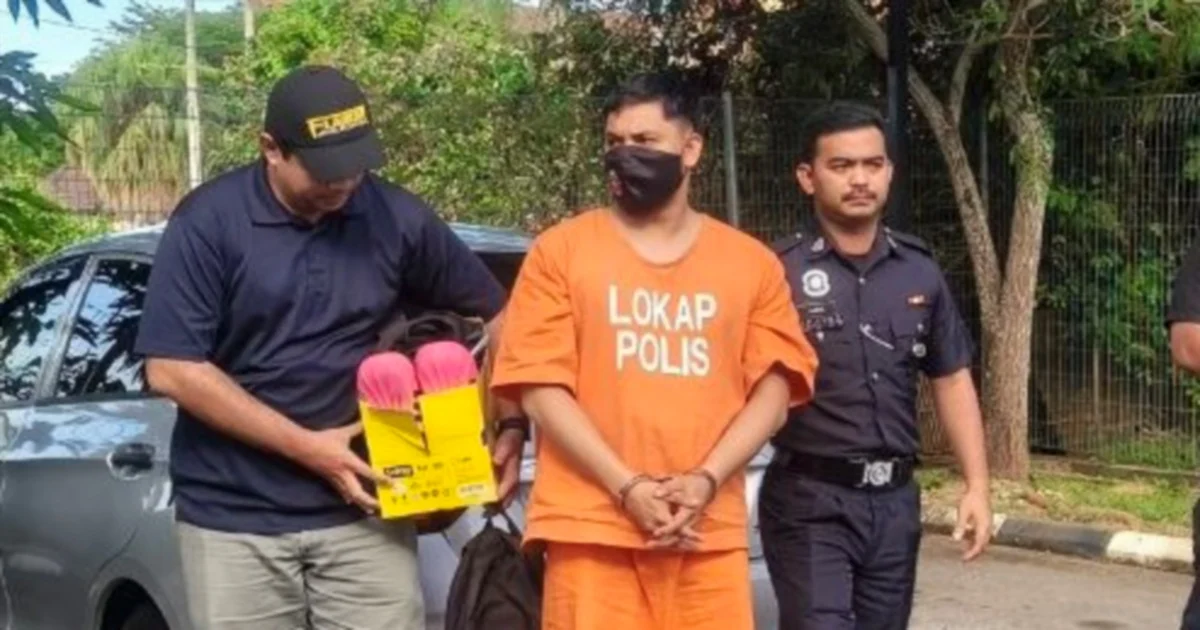
A former information technology engineer in Besut faced the full force of Malaysian law this week after the court found him guilty of fraudulently obtaining government subsidies by impersonating multiple individuals. The Besut Magistrate's Court imposed a substantial fine of RM18,000 on the convicted man, with a secondary punishment of 18 months' imprisonment should he fail to settle the financial penalty. His guilty plea to three separate charges of illegally using other people's identity cards underscores a troubling trend of subsidy fraud that has become increasingly prevalent across the country.
The case draws attention to vulnerabilities within Malaysia's subsidy distribution mechanisms, particularly the Budi95 programme, which was designed to provide affordable essential goods to lower-income households. Rather than benefiting genuine recipients, the system was exploited through identity theft and document fraud. The defendant's technical background in information technology likely gave him sophisticated knowledge of digital systems and potential security gaps, raising questions about how such individuals manage to circumvent safeguards that ought to protect public resources from misappropriation.
Identity card fraud has become a persistent concern for enforcement agencies across Malaysia. The ease with which a single individual can obtain multiple identity cards or duplicate documents through lost-and-found channels, corrupt officials, or forgery operations creates systemic vulnerabilities that criminals routinely exploit. In this instance, the defendant leveraged these weaknesses to falsely claim subsidies on behalf of unwitting individuals, effectively stealing from both the government budget and legitimate subsidy beneficiaries who might otherwise have received greater assistance.
The Budi95 programme, designed as a social safety net, fundamentally depends on accurate identity verification and honest claim submission. When sophisticated users manipulate the system, the integrity of the entire welfare structure suffers. Resources intended for genuinely disadvantaged Malaysians end up enriching those committing fraud, while the government bears mounting losses that ultimately impact broader fiscal stability and the ability to fund other essential services.
The three-count conviction represents what authorities believe was a deliberate, premeditated scheme rather than isolated incidents. The decision to press multiple charges indicates that the defendant engaged in systematic abuse rather than a single lapse in judgment. This pattern suggests a calculated approach to subsidy extraction, with the defendant likely exploiting different identity cards across multiple transactions to avoid detection, at least temporarily.
From an enforcement perspective, this conviction represents a rare successful prosecution in subsidy fraud cases, many of which languish in investigation due to resource constraints and evidentiary complexity. The guilty plea expedited proceedings and avoided prolonged litigation, yet raises questions about whether the penalty sufficiently deters similar conduct. An RM18,000 fine, while substantial for an individual, may prove insufficient to meaningfully discourage white-collar subsidy fraud given the potentially larger sums fraudsters extract from the system over extended periods.
The case also illuminates potential links between professional expertise and fraud capability. Individuals with information technology backgrounds possess knowledge that ordinary fraudsters lack, enabling them to identify system vulnerabilities, navigate digital barriers, and potentially operate more effectively within bureaucratic environments. This suggests that authorities should pay particular attention to insider threats and individuals with technical knowledge attempting to exploit government programmes.
Geographically, Besut's location in Terengganu places the case within a state that, like others across Malaysia, has experienced documented subsidy-related fraud. The problem is not isolated to any single region but represents a nationwide challenge requiring coordinated responses involving digital security improvements, staff training, verification procedures, and enforcement capacity.
Moving forward, relevant authorities must strengthen identity verification protocols to prevent single individuals from accessing subsidies through multiple fraudulent applications. Modern technology, including biometric verification and cross-database checking, offers potential solutions, though implementation requires investment and institutional commitment. Additionally, public awareness campaigns about subsidy fraud consequences might deter would-be offenders, particularly those with professional standings to protect.
The convicted engineer now joins a growing roster of Malaysians prosecuted for subsidy-related offences, though many cases remain unprosecuted or undetected. His conviction, while legally sound, represents merely a visible portion of an iceberg of fraud that likely drains millions from public coffers annually. Unless systemic vulnerabilities receive urgent attention and enforcement capacity expands significantly, similar cases will continue surfacing as Malaysians seek to exploit bureaucratic gaps for personal enrichment.
For ordinary Malaysians dependent on genuine subsidy support, such fraud represents a direct threat to programme sustainability and benefit adequacy. When resources leak through fraudulent channels, legitimate recipients receive diminished assistance, and public support for welfare programmes erodes when fraud becomes widely known. The Besut case thus carries implications extending far beyond one individual's criminal conduct, touching fundamental questions about programme design, enforcement effectiveness, and public trust in government systems meant to serve the vulnerable.

