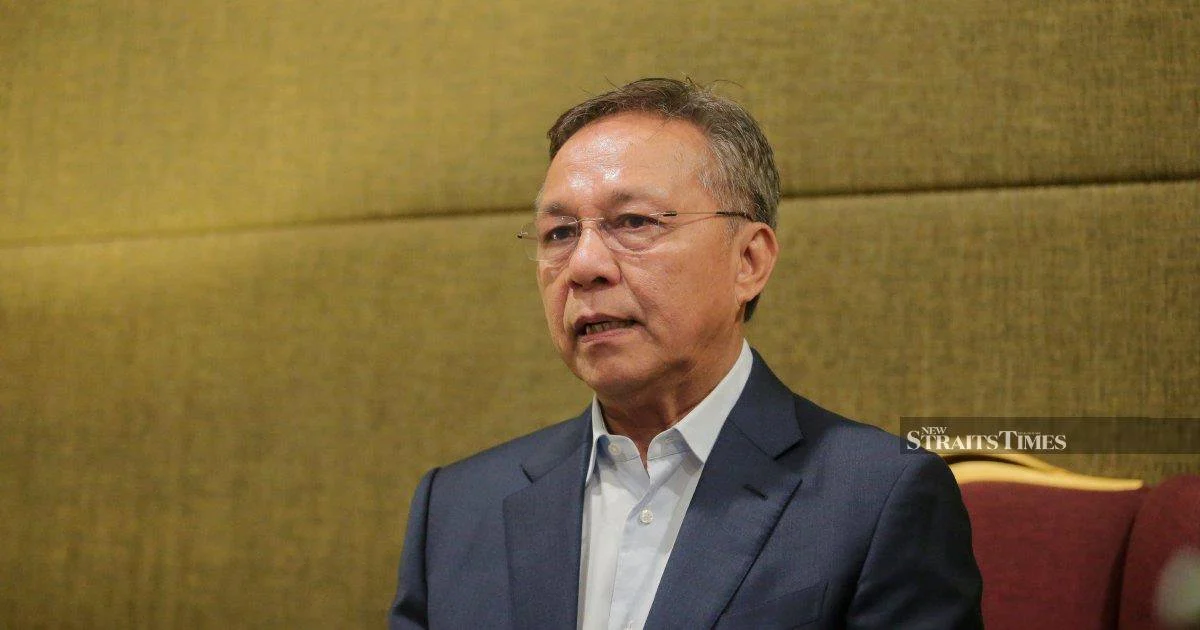
Datuk Seri Hasni Mohammad, the former menteri besar of Johor, has been notably absent from the Barisan Nasional candidate roster for the impending state election, a development that has set tongues wagging across Malaysian political circles about his future trajectory. The removal of such a seasoned figure from the regional lineup raises questions about both his standing within the coalition and the broader direction of Johor politics as the state prepares for its electoral contest.
Hasni Mohammad's exclusion from the state candidate list marks a significant shift in his political fortunes. His tenure as Johor's chief executive was marked by considerable influence within the state administration and the broader Barisan apparatus, yet his absence from this critical electoral exercise suggests a fundamental recalibration of either his role or his ambitions. The decision has not been formally explained in detail, leaving room for multiple interpretations within party circles and among analysts tracking developments in Malaysian politics.
The timing of this move is particularly noteworthy given Malaysia's current political cycle. With the next general election drawing closer, many political observers have begun connecting dots between the exclusion of established figures from state contests and potential repositioning for federal-level campaigns. Hasni Mohammad's considerable experience at the state level, combined with his historical standing within Barisan Nasional, would theoretically make him a competitive candidate for parliamentary representation. The arithmetic of electoral strategy often requires parties to allocate experienced politicians to contests where they can deliver maximum impact, and federal seats frequently demand such calibration.
Within Johor's political establishment, the removal signals that party leadership has prioritised other candidates for the state election while potentially reserving Hasni Mohammad's political capital for a different arena. This type of strategic deployment is not uncommon in Malaysian politics, where leaders with substantial track records and name recognition may be held back from state elections in favour of contests where their experience carries greater weight or where their presence could shift outcomes in strategically important constituencies.
The speculation regarding Hasni Mohammad's parliamentary ambitions has gained momentum precisely because his profile fits the template of candidates parties typically field for federal seats. His previous administrative experience, established network, and seniority within Barisan Nasional all position him as a credible candidate for a Dewan Rakyat seat. Whether he ultimately pursues such a path depends on various factors, including party leadership's confidence in his electoral viability, the availability of suitable constituencies, and his own willingness to contest at the federal level.
From a Johor perspective, the decision reflects broader considerations about which candidates can best represent the state's constituencies in the upcoming state election. The replacement of established figures with newer candidates sometimes indicates a party's strategic belief that fresh faces can energise the campaign or connect more effectively with evolving voter demographics. It may also reflect internal dynamics within the state party machinery, where alliances and factional considerations shape candidate selection processes.
For Malaysian political observers, the episode underscores how electoral strategy operates at multiple levels simultaneously. Parties must balance the imperatives of state-level contests with preparations for federal campaigns, often requiring difficult choices about where to deploy their most experienced politicians. Such decisions are rarely made in isolation; they reflect calculations about overall electoral prospects, resource allocation, and the most efficient use of political talent across different contest tiers.
The broader implications for Johor's political landscape should not be overlooked. The state has long been a powerhouse within Barisan Nasional, and decisions about its election roster carry significance beyond mere candidate selection. They signal confidence levels, reflect internal party consensus, and indicate where leadership believes electoral battles will be won or lost. The removal of a former chief minister sends particular messages about how the party is repositioning itself and what role experienced figures are expected to play going forward.
Looking ahead, the next general election will likely clarify whether Hasni Mohammad does indeed pivot toward parliamentary politics or whether other opportunities materialise. His exclusion from the state candidate list certainly opens the door for such a transition, and political observers will be watching closely to see whether he formally announces parliamentary candidacy in due course. Until then, the decision remains a study in the subtle mechanics of Malaysian political strategy, where moves that appear straightforward at surface level often conceal more complex calculations about competition, resources, and the optimal deployment of political assets across overlapping electoral cycles.
For Malaysian voters and political analysts, this development serves as a reminder that candidate selection in major parties involves sophisticated strategic thinking that extends well beyond individual electoral contests. The removal of seasoned figures from state races may indicate preparation for higher-stakes federal campaigns, reflecting how national parties must juggle multiple electoral priorities while maximising their competitive advantage across different levels of government. As the political calendar advances, the true significance of Hasni Mohammad's exclusion from the Johor slate will become clearer.

