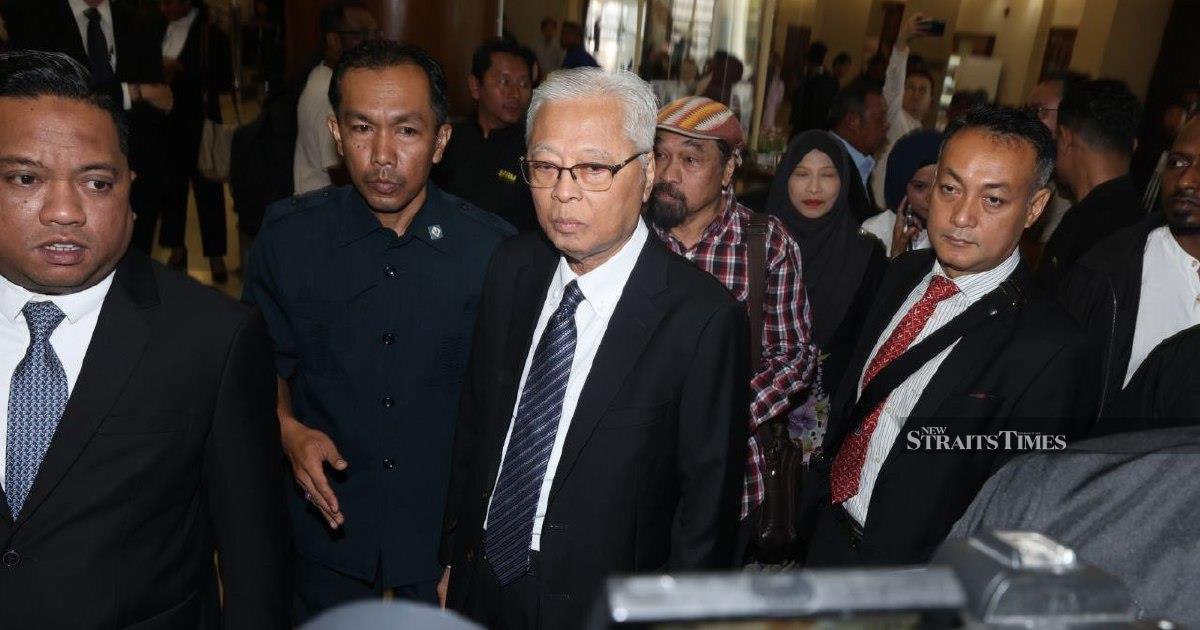
Datuk Seri Ismail Sabri Yaakob, who served as Malaysia's prime minister until August 2022, has walked free from the Kuala Lumpur court complex after his son secured his release through bail. The amount set by the court stands at RM300,000, which the former leader's family moved swiftly to arrange.
The bail arrangement represents a significant procedural step in what has become an increasingly complex legal situation for the former prime minister. The posting of bail enables Ismail Sabri to be released from custody pending further court proceedings, though it comes with conditions that typically require the defendant to remain available for questioning and subsequent hearings.
Ismail Sabri's tenure as prime minister, which lasted roughly twenty months from August 2021 to August 2022, followed a period of significant political instability in Malaysia. His appointment came after the collapse of the Perikatan Nasional coalition government, and his premiership itself concluded when Prime Minister Anwar Ibrahim assumed office following the 15th General Election.
For Malaysian observers of political and legal developments, the sight of a former head of government navigating the judicial system carries considerable symbolic weight. The incident underscores how Malaysia's legal framework applies uniformly across political hierarchies, though questions persist about the consistency and timeliness with which various political figures face accountability.
Family involvement in posting bail is not unusual in Malaysian legal practice, though having immediate relatives arrange such substantial sums often reflects confidence in the accused's ties to the community and reduced flight risk—factors courts consider when setting bail conditions. The fact that Ismail Sabri's son took this action promptly suggests the family's determination to maintain normalcy in their lives amid legal uncertainty.
The court's acceptance of the RM300,000 bail also indicates that judicial authorities considered this amount proportionate to the circumstances of the case, whatever charges or allegations have prompted the proceedings. Malaysian bail procedures typically require the court to balance public interest, the severity of allegations, and the defendant's personal circumstances when determining appropriate amounts.
Since leaving office, Ismail Sabri has maintained a relatively low public profile, though he retained his parliamentary seat representing Bera in Pahang. Political observers have noted the contrast between his position as a sitting Member of Parliament and his involvement in legal matters—a situation that raises questions about how elected representatives manage governance responsibilities during active legal proceedings.
The bail release does not conclude Ismail Sabri's legal engagement but rather allows him continued freedom pending the next phases of judicial process. Typically, such releases come with conditions including regular reporting to authorities, restrictions on travel, or requirements to surrender travel documents, though specific conditions in this case have not been detailed publicly.
From a broader Southeast Asian perspective, Malaysia's willingness to subject former heads of government to judicial scrutiny reflects institutional strength, even as it invites scrutiny about whether such proceedings follow consistent patterns or respond to political pressures. The region has witnessed varying approaches to post-tenure accountability, from relatively permissive frameworks in some countries to more rigorous systems elsewhere.
The legal proceedings involving the former prime minister occur against a backdrop of ongoing Malaysian concerns about governance, transparency, and the proper exercise of executive power. These developments feed into broader public discourse about political accountability and whether institutional mechanisms function effectively across different social and political strata.
As Ismail Sabri navigates his legal obligations, attention will likely focus on subsequent court dates and the substantive merits of cases before the judiciary. The bail arrangement provides temporary relief from custody but leaves fundamental questions about the allegations and their eventual resolution hanging in suspension.
For Malaysian politics more broadly, the situation serves as a reminder that transitions from high office do not insulate former leaders from judicial processes. Whether viewed as evidence of institutional independence or as the outcome of political calculations, the court proceedings demonstrate that Malaysia's legal system continues to engage with figures across the full spectrum of political hierarchy.

