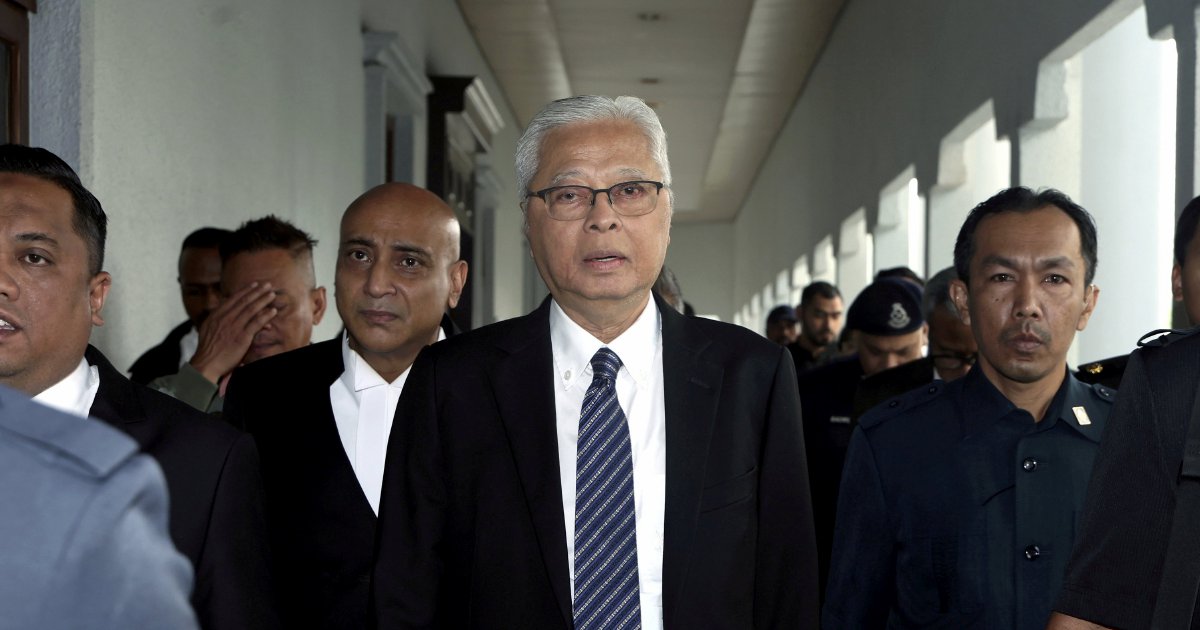
The legal defence team for former prime minister Datuk Seri Ismail Sabri Yaakob has mounted a challenge to his graft charge, characterizing the prosecution as out of the ordinary and potentially flawed in its construction. The defence argues that the charge conflates legal ground already covered elsewhere in the Malaysian Anti-Corruption Commission Act framework, raising questions about the prosecutorial approach.
This objection strikes at a fundamental tension in Malaysian law: the principle against double jeopardy and overlapping legal liability. When prosecutors bring charges that appear to cover identical conduct under different statutory provisions, they risk creating confusion about legislative intent and the scope of individual offences. Ismail Sabri's lawyers have seized on this apparent redundancy, suggesting that the manner in which the charge has been formulated represents a departure from conventional prosecutorial practice.
The Malaysian Anti-Corruption Commission Act contains multiple provisions addressing corrupt conduct, each with distinct elements and potentially different sentencing frameworks. Some provisions are broad and catch-all, while others target specific categories of misconduct. The defence position suggests that whatever conduct is being prosecuted could have been—and perhaps should have been—addressed under a different section that was previously invoked or considered. This distinction carries weight because it affects how courts evaluate the evidence and what legal precedent applies.
For Malaysian observers following high-profile corruption cases, the charge itself becomes a point of contention rather than merely an allegation to be contested on factual grounds. When a defence team can successfully argue that the charge itself is structural flawed or redundantly formulated, it creates an opening to challenge the prosecution's authority or wisdom in bringing the matter. Courts must then decide whether to sustain the charge as drafted or require prosecutors to elect which provision they wish to pursue.
Ismail Sabri's position reflects a broader legal strategy common in white-collar defence: scrutinizing the technical construction of charges rather than immediately addressing the underlying facts. This approach is particularly effective when prosecutors have options in how they frame charges and when earlier proceedings have already touched upon related matters. The defence is essentially arguing that the prosecution lacks clarity about which specific legal rule has allegedly been breached and why a second approach was necessary.
The characterization of the charge as peculiar also carries subtle political undertones in Malaysia's context. Former prime ministers facing prosecution attract significant public attention, and any indication that their treatment diverges from standard practice can fuel perceptions of selective or erratic enforcement. Whether or not the legal argument succeeds, the framing sends a message that the prosecution's approach warrants judicial scrutiny rather than proceeding as routine business.
For the Malaysian courts, this kind of technical objection presents a procedural crossroads. Judges must balance deference to prosecutorial discretion—permitting authorities broad latitude in how they frame charges—against maintaining clarity and consistency in the law. If prosecutors are allowed to pursue the same underlying conduct under multiple provisions simultaneously or sequentially, without clear justification for why different legal theories apply, it could create confusion and uncertainty for defendants and courts alike.
The broader implications for Malaysia's anti-corruption ecosystem are significant. The MACC has faced periodic criticism regarding consistency and selectivity in investigations and prosecutions. Technical challenges to charging decisions, if successful, reinforce the importance of rigorous internal review and clear decision-making about which statutory provisions best fit particular misconduct. This accountability operates through the courts rather than through legislative amendment or agency policy alone.
From a Southeast Asian perspective, Malaysia's corruption prosecution frameworks are observed closely by neighbouring jurisdictions also grappling with high-profile cases involving senior political figures. How Malaysian courts handle technical defences in such cases influences international perceptions of rule of law and prosecutorial discipline. If charges are permitted to stand despite appearing redundant or poorly formulated, it signals that form matters less than outcome. Conversely, rigorous scrutiny of charge construction demonstrates commitment to procedural fairness and legal coherence.
The defence strategy also highlights an enduring tension in Malaysia's political-legal landscape: the treatment of former prime ministers within the criminal justice system. Previous administrations brought charges against predecessors, creating precedent and political expectations. Each case contributes to whether the country is perceived as applying consistent standards or accommodating political cycles in enforcement. Ismail Sabri's lawyers are implicitly making this case by emphasizing procedural irregularity rather than mere factual dispute.
As this matter proceeds through Malaysian courts, the outcome of the charge-construction objection will help clarify whether prosecutors possess flexibility in framing allegations or face constraints on how they can pursue related conduct. A successful technical challenge would require the prosecution to reconsider its approach, potentially recharging under a different provision or withdrawing the charge entirely. An unsuccessful challenge would permit proceedings to continue but would have established that courts scrutinize charging decisions seriously.
The case underscores that in Malaysia, as in other common-law jurisdictions, criminal procedure and substantive law operate together to shape how justice unfolds. Form and substance cannot be cleanly separated, and technical objections to charges deserve serious judicial attention. For former prime minister Ismail Sabri Yaakob and the broader Malaysian polity watching his prosecution, these procedural developments will influence perceptions of whether the system treats all individuals fairly or operates with political bias.

