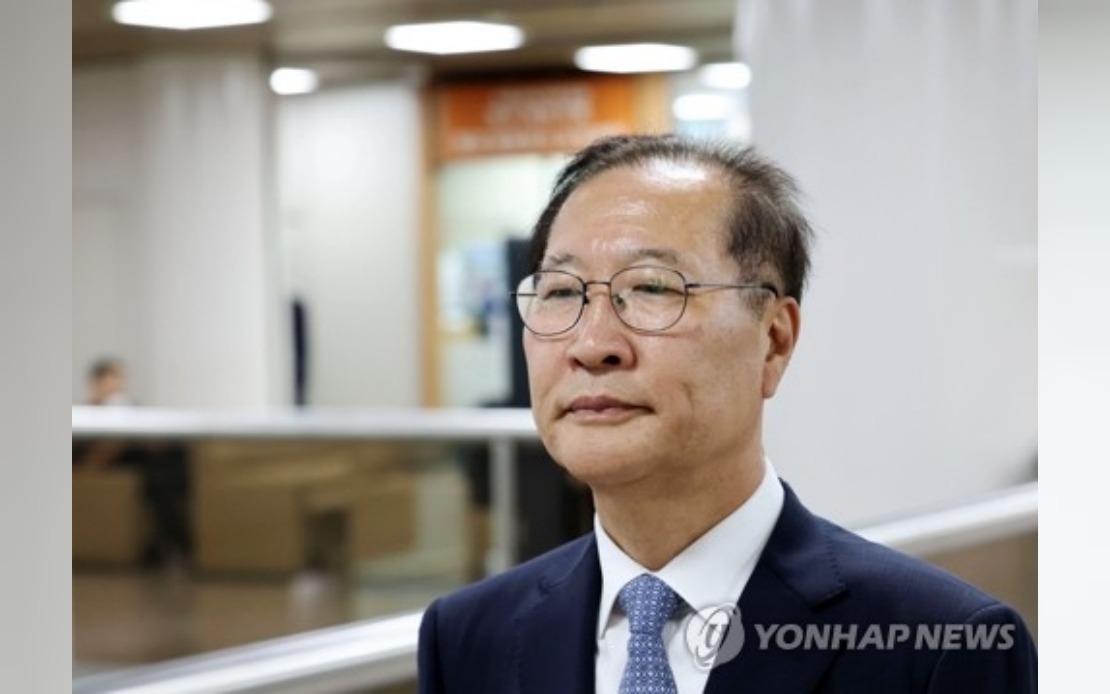
South Korea's judicial system has delivered another significant verdict in the fallout from the country's December 2024 martial law crisis, with the Seoul Central District Court sentencing former Justice Minister Park Sung-jae to 25 years in prison for his role in supporting the failed insurrection. The sentence, handed down on June 23, exceeded the 20-year term recommended by the special counsel's investigation team, signalling the court's grave assessment of Park's culpability in one of the nation's most serious constitutional challenges in recent decades.
Park's conviction marks the continuation of a sweeping legal reckoning through South Korea's political establishment following President Yoon Suk Yeol's abrupt declaration of martial law on December 3, 2024. The court accepted comprehensive evidence that Park, rather than standing as a restraining voice within the justice apparatus, actively facilitated the attempt to impose military rule. The special counsel team that prosecuted the case demonstrated that Park convened a senior ministry meeting specifically to coordinate the dispatch of prosecutors to martial law-supporting bodies, review detention facility capacities ostensibly in preparation for mass arrests of political opponents, and mobilise officials to implement travel restrictions on targeted individuals.
The judicial reasoning articulated in the verdict provides crucial insight into the court's understanding of ministerial responsibility during constitutional crises. The bench stated that Park had fundamentally abandoned his constitutional duty to protect democratic governance, instead choosing to participate in the insurrection upon calculating that it might succeed. This language represents a deliberate rejection of any argument that Park acted under coercion or ministerial compulsion, instead positioning his actions as a calculated choice to support what the court framed as an illegal attempt to overturn constitutional order.
The dismissal of additional anti-corruption charges against Park reflects an important jurisdictional boundary in South Korea's special counsel system. Park had been accused of improperly directing subordinates to investigate corruption allegations against President Yoon's wife, Kim Keon Hee, following her request in May 2024. However, the court ruled that these charges fell outside the special counsel's investigative mandate, a decision that suggests the scope of the insurrection investigation, while broad, retains formal limits.
Park now joins a cohort of senior government figures convicted in connection with the martial law attempt. Former Prime Minister Han Duck-soo and former Defence Minister Kim Yong-hyun have both faced convictions for playing key roles in the insurrection, creating a pattern of accountability that extends through multiple cabinet-level positions. This judicial consistency signals that South Korea's courts view the crisis as a systemic failure of constitutional guardianship across the executive branch rather than isolated misconduct by individual actors.
The case carries particular significance for regional observers and neighbouring countries assessing South Korea's institutional resilience. Malaysia and other Southeast Asian democracies have watched closely as South Korea's constitutional courts, legislative body, and criminal justice system responded to an unprecedented challenge to civilian governance. The thoroughness of prosecutions and the severity of sentences demonstrate that even high-ranking government officials face meaningful legal consequences for undermining democratic order, a principle with implications for governance standards across the region.
President Yoon himself received a life sentence in February for his role in orchestrating the martial law declaration, though he has appealed the conviction. The progression from the president's conviction through successive convictions of cabinet members illustrates how the legal system is methodically establishing the scope and chain of responsibility for the failed insurrection. Yoon's sentence particularly resonates across Asia, where questions about executive accountability and the reach of judicial review remain contested in several major democracies.
Park's legal team has announced immediate plans to appeal the 25-year sentence, characterising it as unsupported by factual evidence or legal principle. This procedural move will test whether appellate courts in South Korea regard the sentencing level as proportionate or excessive, and whether additional legal arguments might succeed where the trial court rejected them. The appeal will likely proceed through multiple levels before reaching potential final resolution.
Meanwhile, the special counsel team indicated that it does not intend to appeal Park's conviction, satisfied that the ruling adequately articulated the fundamental duty of justice ministers to resist unconstitutional measures and preserve the constitutional order. This prosecutorial posture suggests confidence in the verdict's legal foundation and a judgment that further litigation would yield diminishing returns relative to the principle already established through the court's judgment.
For Malaysia and Southeast Asian observers, the Park case exemplifies how established democracies manage accountability for constitutional violations by senior executives. The independence of South Korea's judiciary in prosecuting government officials, the willingness of courts to hand down substantial sentences against former ministers, and the special counsel mechanism for investigating high-level misconduct represent institutional features that several ASEAN nations have examined as potential models for strengthening their own governance frameworks and anti-corruption architecture.
The broader context of South Korea's martial law crisis reflects broader regional tensions around executive power, constitutional limits, and the balance between security imperatives and democratic constraints. The consistent convictions of Yoon administration figures suggest that South Korean institutions—despite the severity of the constitutional challenge—have functioned to contain and prosecute the attempted power grab rather than allowing it to fundamentally destabilise the political system. This outcome provides some reassurance to observers concerned about democratic fragility in advanced Asian nations facing internal polarisation.

