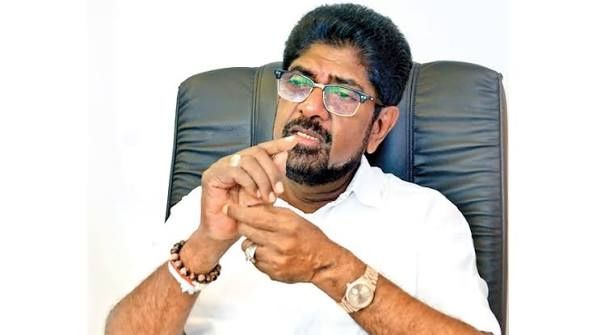
A prominent former minister in Sri Lanka has been taken into custody following allegations that he orchestrated the theft of a priceless historical artefact from a centuries-old royal residence. Keheliya Rambukwella was detained by authorities on Tuesday, 18 August, on suspicion of involvement in the removal of a heavily carved circular granite rock known as a moonstone, which formed part of the ornamental entrance to the palace belonging to Veera Parakrama Narendrasinghe, the last Sinhala monarch to rule the island before 1739.
The Commission to Investigate Allegations of Bribery or Corruption (CIABOC) has alleged that Rambukwella played an active role in the conspiracy to remove the culturally significant object in December 2022. Investigators contend that beyond merely participating in the theft, the former official actively hindered police inquiries into the incident at the time it occurred. According to CIABOC's statement, he conspired, facilitated and supported the removal of this valuable historic artefact while holding ministerial office, a position of public trust that made his alleged involvement particularly serious.
The moonstone represents far more than a simple carved stone to Sri Lankans; such artefacts are integral components of traditional royal architecture and carry deep symbolic significance within Sinhala culture. These threshold stones, with their intricate carvings and ceremonial function, have adorned palace entrances for centuries and stand as testaments to the island's pre-colonial heritage. The theft thus extends beyond mere property crime into the realm of cultural patrimony loss, affecting not only the historical record but also national pride in preserving architectural legacy.
Rambukwella now faces multiple serious accusations in addition to the theft charge. Investigators have also indicted him for allegedly misappropriating government funds to hire six individuals for his personal business interests, representing a straightforward abuse of state resources for private gain. These parallel allegations paint a picture of systemic corruption spanning both cultural heritage crimes and financial impropriety during his tenure in public office.
The minister's legal troubles extend well beyond the moonstone incident. He is simultaneously contending with a separate court case concerning his tenure as health minister, during which he allegedly authorised the procurement of counterfeit pharmaceutical products destined for state hospital systems. Most alarmingly, one such purchase involved a supposed life-saving cancer medication that authorities determined was merely water, putting vulnerable patients' lives at serious risk. This fraud represents not merely corruption but a betrayal of the sick and dying who depended on legitimate treatments.
The counterfeit drug scandal has ensnared multiple senior health ministry officials alongside Rambukwella, indicating a broader institutional failure rather than isolated misconduct by one individual. Several colleagues have similarly been indicted, suggesting systematic problems in procurement oversight and quality assurance processes within the health sector during this period. This multi-layered institutional corruption raises serious questions about governance standards and accountability mechanisms within Sri Lanka's public health system.
Context surrounding Rambukwella's tenure as health minister proves particularly damaging to his defence. Sri Lanka was grappling with a severe medicines shortage beginning in April 2022, when the nation defaulted on its $46 billion foreign debt and formally declared bankruptcy. During this acute crisis, when pharmaceutical supplies were desperately needed, Rambukwella's ministry apparently approved purchases of fake and useless products rather than securing legitimate treatments. The convergence of national financial catastrophe and ministerial negligence created conditions where critically ill patients suffered compounded harm.
The bankruptcy declaration stemmed from years of economic mismanagement and had cascading consequences throughout the island's public services. Hospital systems ground toward collapse as genuine medicines disappeared from shelves, forcing patients and their families to seek expensive private alternatives or, tragically, forgo treatment entirely. Against this backdrop of genuine national suffering, the revelation that ministry officials were authorising fraudulent pharmaceutical purchases adds insult to injury and amplifies public anger over state institution failures.
For regional observers, particularly in Southeast Asia, the Rambukwella case illustrates ongoing governance challenges facing countries in the broader region. Sri Lanka's crisis management exposed how quickly institutional safeguards can fail when multiple stressors converge—economic collapse, political instability, and inadequate oversight mechanisms. The ease with which counterfeit products apparently entered government supply chains despite an acute shortage suggests that desperation and institutional weakness create openings for corruption rather than motivating greater vigilance.
The anti-corruption investigations proceeding against Rambukwella represent important efforts by Sri Lankan institutions to hold officials accountable, though critics note that enforcement has often appeared selective or delayed. The CIABOC's action sends signals about consequences for high-ranking figures, yet the persistence of such high-profile cases suggests systemic problems require more comprehensive institutional reform beyond investigating individual wrongdoers. Malaysia and other ASEAN nations watching these developments may recognise familiar patterns regarding the gap between formal accountability mechanisms and their effective implementation.
The convergence of cultural heritage theft, pharmaceutical fraud, and financial misconduct in charges against a single former minister encapsulates broader governance failures that demand scrutiny. As Sri Lanka gradually emerges from its economic crisis and attempts to restore international credibility, such prosecutions become symbolic of institutional reckoning and renewal. However, the wider systemic failures that permitted such extensive corruption to occur suggest that sustained institutional reform, rather than individual prosecutions alone, will ultimately determine whether genuine governance improvement takes root.

