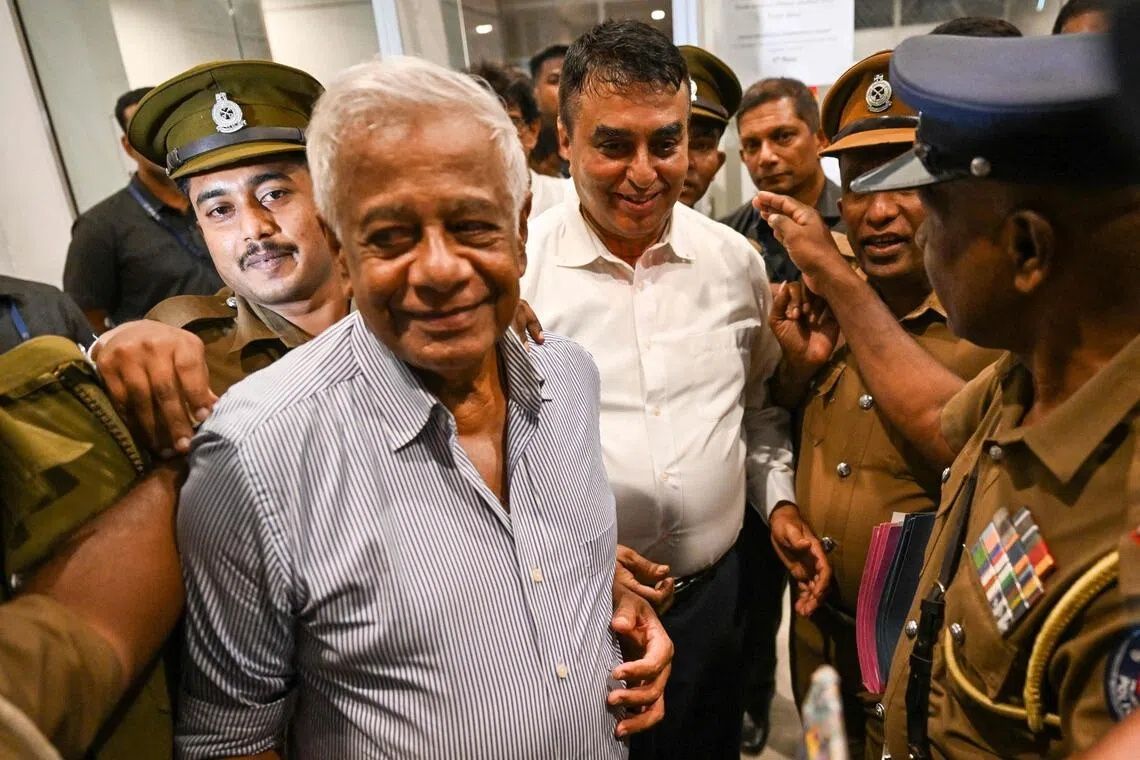
Two of Sri Lanka's most senior former security officials have been handed death sentences for their failure to prevent one of South Asia's deadliest terror attacks, though their legal team has signalled an immediate challenge to the controversial verdicts. The Colombo High Court imposed capital punishment on former defence ministry secretary Hemasiri Fernando and ex-police inspector-general Pujith Jayasundara in a closely divided 2-1 judgment, marking a rare instance of such severe penalties handed down for administrative negligence rather than direct involvement in violence. Their lawyer, Chaminda Athukorale, confirmed they will pursue an appeal in the Supreme Court, with formal proceedings expected to commence within a fortnight.
The coordinated bombings of April 21, 2019, represent one of the deadliest terrorist incidents in the Indian subcontinent's recent history. A network of homegrown Islamist extremists orchestrated nearly simultaneous attacks on three churches and three luxury hotels across the country, resulting in 279 deaths—including 45 foreign nationals—and leaving more than 500 others injured. The scale of the carnage shocked the island nation and reverberated across the region, raising difficult questions about intelligence failures and institutional preparedness. For Malaysian readers, the incident carries particular resonance given the presence of regional Islamist networks and the shared vulnerabilities of multiethnic, multireligious societies in managing security threats.
The case against the two security chiefs centres on a critical intelligence failure that preceded the attacks. According to evidence presented during the trial, India's intelligence apparatus had specifically warned Sri Lanka on April 4, 2019—seventeen days before the bombings—of an impending suicide attack planned by extremist elements. Despite receiving this actionable intelligence through diplomatic channels, the Sri Lankan authorities appear to have failed to implement adequate preventive measures or even disseminate the warning sufficiently through their security apparatus. The prosecution argued that Fernando and Jayasundara, occupying the highest positions in Sri Lanka's defence and law enforcement hierarchies, bore personal responsibility for this systemic failure to protect civilians.
However, the dissenting judgment in the case offers a counterargument that resonates with broader questions about criminal accountability in governance. The single dissenting judge argued that the two former officials lacked both motive and any demonstrable connection to the perpetrators themselves, suggesting that convicting them under existing legal frameworks stretches the boundaries of culpability. Athukorale seized on this reasoning, emphasising to international media that the dissenting opinion provides substantial grounds for appeal, implying that the majority verdict may not survive scrutiny in Sri Lanka's higher courts where judicial review typically applies stricter standards of evidence and legal reasoning.
The sentencing itself marks an extraordinary intervention in Sri Lanka's criminal justice history, as the nation has maintained an effective moratorium on capital punishment for nearly five decades. No death sentence has been carried out since 1976, despite the current legal code retaining capital punishment as a potential sentence for the gravest crimes. Government records indicate that 817 individuals languish on death row across the country, yet virtually all of these sentences have been commuted to life imprisonment through administrative processes. This longstanding practice reflects both evolving international human rights norms and the practical reluctance of successive Sri Lankan governments to execute even convicted murderers, let alone officials convicted for administrative lapses.
Fernando, aged seventy-six, and Jayasundara, sixty-six, currently remain incarcerated in a maximum-security facility in Colombo while their legal challenges proceed. The pair occupy a unique position in Sri Lankan jurisprudence—neither can be characterised as ordinary criminals nor as political prisoners, but rather as senior state functionaries accused of dereliction of duty during a national catastrophe. Their detention conditions and the trajectory of their case will likely influence public discourse regarding accountability for institutional failures and the appropriate mechanisms for holding powerful officials answerable when their decisions or inactions result in mass casualties.
The judicial path that led to the current verdicts reveals the complex intersection of law, politics, and institutional power in post-conflict Sri Lanka. In February 2022, a different High Court bench had effectively exonerated both men, finding insufficient evidence to proceed with charges of murder or complicity in the bombings themselves. This prior acquittal might ordinarily have provided double jeopardy protections, yet the state pursued an appeal that ultimately succeeded. The Supreme Court ordered a retrial under a special fast-track court mechanism established ostensibly to accelerate justice for terrorism-related offences. This procedural reversal demonstrates how legal mechanisms designed for efficiency can intersect with political imperatives in ways that complicate traditional protections against repeated prosecution.
Beyond the immediate legal dimensions, the case raises substantive questions about the standards of accountability appropriate for security officials in democratic societies facing terrorism threats. Should government leaders bear criminal liability for intelligence failures despite acting within existing protocols? How much prescience should be expected when receiving warnings about potential attacks? These questions carry particular weight for Southeast Asian nations confronting similar security challenges, where the balance between effective counterterrorism and institutional accountability remains contested. The region has witnessed various approaches—some emphasising executive discretion in security matters, others imposing stricter oversight mechanisms.
The financial dimension of accountability has already been addressed through separate proceedings. In a previous civil action, both Fernando and Jayasundara were ordered to compensate survivors with 125 million Sri Lankan rupees, equivalent to approximately US$372,464, acknowledging the state's liability for the security breach without necessarily establishing criminal culpability. This bifurcated approach—civil compensation alongside criminal proceedings—reflects efforts to provide redress to victims whilst grappling with thornier questions of individual criminal responsibility for systemic failures.
As the appeal process unfolds, the case will likely consume considerable judicial resources and public attention in Sri Lanka. The Supreme Court's ultimate decision will carry implications extending beyond the two defendants, potentially establishing precedents for how future administrations might be held accountable for security negligence. For the families of the 279 victims, the conviction of senior officials represents at least symbolic vindication, though the likelihood of actual execution remains vanishingly small given the country's established practices. The two-to-one verdict also suggests that judicial opinion remains divided on the appropriate legal framework for such cases, a division that the appellate process will necessarily confront.

