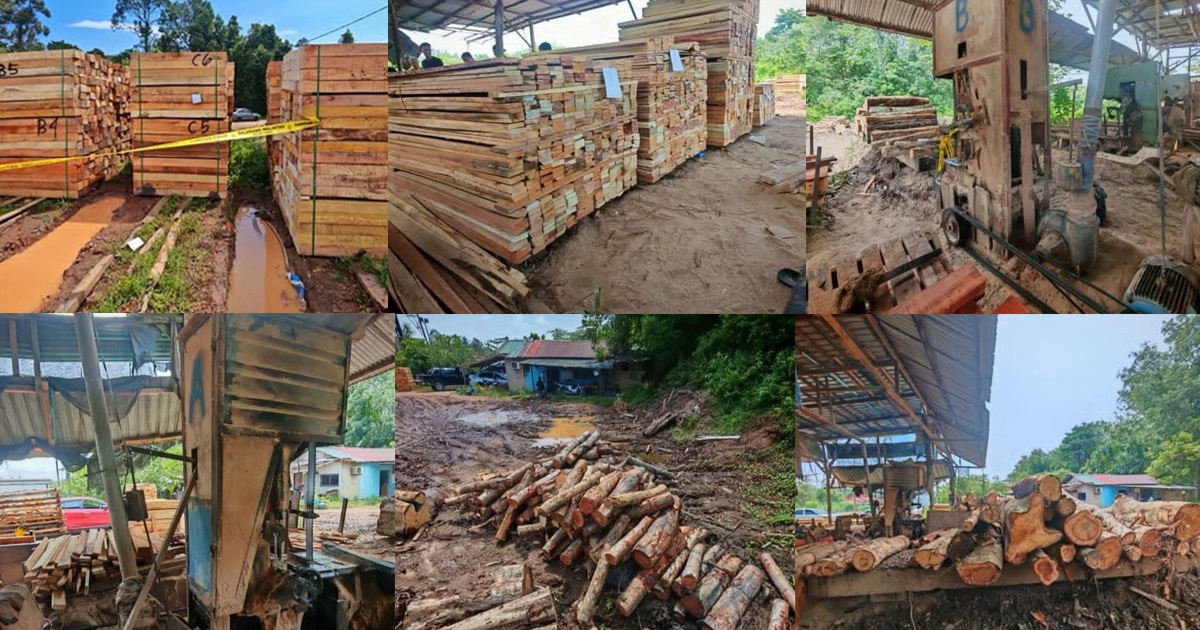
Authorities in Kelantan have intensified crackdowns on illegal timber operations, with a significant enforcement action resulting in four arrests and the seizure of substantial assets valued at RM600,000. The operation targeted an unlicensed sawmill in Kampung Bukit Kechik, demonstrating renewed efforts to combat unauthorised wood processing activities across the state. The arrests included the sawmill operator and three workers found on the premises at the time of inspection.
The raid in Tanah Merah represents part of a broader regulatory push to curb timber processing outside formal licensing frameworks. Unlicensed sawmill operations have long posed challenges for forestry management across Malaysia, as they frequently operate without adherence to environmental standards, safety protocols, and proper timber sourcing verification. Such facilities often process timber from questionable supply chains, raising concerns about potential illegal logging and forest degradation in the region.
The RM600,000 valuation encompasses both the timber stockpile discovered at the premises and machinery used in the processing operation. Enforcement teams conducted a thorough inventory of equipment and wood products, documenting the scale of the undeclared operation. The substantial asset seizure underscores the economic dimensions of illicit timber activities, which generate significant value through unregulated channels while bypassing legitimate taxation and regulatory oversight.
Kelantan's forest resources have faced mounting pressure from both legal and illegal exploitation, making compliance enforcement increasingly critical. The state contains significant timber reserves that support both licensed commercial operations and communities dependent on forest products. Distinguishing between authorised processing and illegal ventures requires consistent vigilance and coordinated action between state forestry departments, environmental agencies, and law enforcement bodies.
The detention of the four individuals triggers both criminal investigations and administrative proceedings regarding the unlicensed operation. Authorities must establish the source of timber processed at the facility, determining whether logs derived from legal concessions or unauthorised felling. Tracing timber provenance represents one of the most challenging aspects of combating illegal logging networks, particularly when materials pass through multiple intermediaries before reaching processing facilities.
Workers employed at unlicensed sawmills often face exploitation, lacking formal employment protections, workplace safety standards, and documented wages. Their involvement in unregulated operations frequently results from limited job opportunities or vulnerability to recruitment into informal sectors. The arrest of the three workers raises questions about their role in the operation and whether they faced coercion or had knowledge of the facility's illegal status.
Regional timber trafficking networks increasingly concern Southeast Asian governments, as cross-border movement of logs complicates enforcement efforts. Kelantan's geographic position near the Thai border makes it particularly vulnerable to timber smuggling routes. Intelligence suggests coordination between sawmill operators and transportation networks to move processed wood products across jurisdictions, obscuring the chain of custody and enabling materials of questionable origin to enter broader supply chains.
The seizure operation highlights technological advances in enforcement, with authorities employing inspection techniques and documentation systems to identify unlicensed facilities. Satellite monitoring, ground surveys, and intelligence gathering enable agencies to pinpoint unauthorised processing sites operating in remote areas. However, the scale of unlicensed timber operations across Malaysia suggests that many facilities escape detection, continuing activities despite regulatory pressure.
Legitimately licensed timber processors face competitive disadvantages against operations avoiding compliance costs, licensing fees, and environmental mitigation expenses. Effective enforcement protects the viability of formal sector operators while establishing level playing fields for commercial activity. The sustained removal of illegal operations therefore supports both regulatory integrity and legitimate business interests within timber industries.
Environmental considerations extend beyond timber species depletion to broader forest ecosystem disruption. Unlicensed sawmill operations typically lack reforestation commitments and environmental management protocols required of licensed operators. The cumulative impact of many small illegal facilities can rival licensed concession impacts on forest cover and biodiversity, making containment essential for long-term forest sustainability across Kelantan.
Following the Tanah Merah raid, authorities indicated continued monitoring of suspicious timber processing activities throughout the state. Enhanced intelligence sharing between federal and state agencies aims to identify additional unlicensed operations and disrupt supply chains feeding illegal sawmills. Community reporting mechanisms and industry whistleblowing provisions provide additional information sources for enforcement teams.
The investigation into timber sourcing for the seized operation will determine prosecutorial strategy and penalties for the arrested individuals. Convictions for operating unlicensed facilities carry fines and imprisonment terms, with aggravating circumstances such as environmental violations potentially increasing sentencing. The outcome will signal enforcement commitment and may influence deterrence calculations among operators considering illegal establishment.
For Malaysian readers concerned with environmental governance and resource management, the Kelantan operation exemplifies both achievements and ongoing challenges in combating illegal timber processing. While successful raids demonstrate enforcement capacity, the continued operation of unlicensed facilities suggests limitations in prevention and detection systems. Sustainable forest management ultimately requires not only tactical enforcement actions but systemic strengthening of monitoring capabilities, incentive structures favouring compliance, and regional cooperation addressing transnational timber trafficking.

