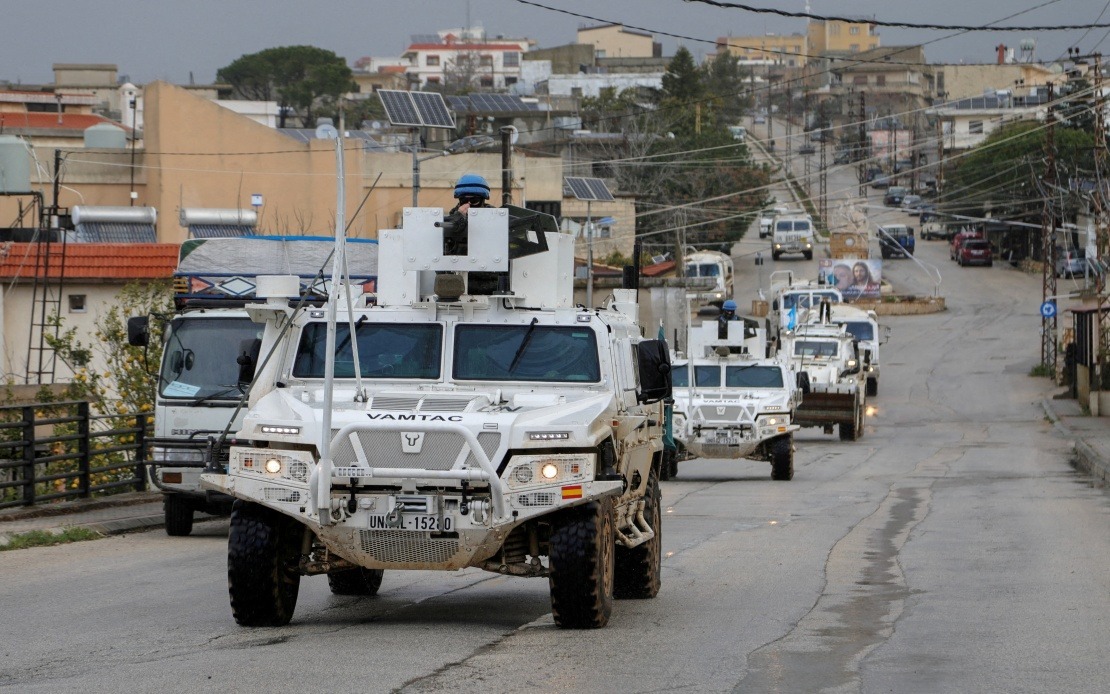
France and Italy have committed to establishing a multinational coalition designed to stabilise Lebanon once the United Nations Interim Force in Lebanon concludes its three-decade presence at year-end, French President Emmanuel Macron announced during talks with Italian Prime Minister Giorgia Meloni in Antibes on Thursday. The initiative represents a coordinated European response to one of the Middle East's most volatile security transitions, with both nations seeking to prevent the North African country from descending into chaos as international oversight diminishes.
Macron framed the coalition as essential infrastructure for safeguarding Lebanese sovereignty and bolstering its capacity to govern independently. The partnership explicitly aims to coordinate with both the European Union and United Nations bodies, signalling that the arrangement will operate within established multilateral frameworks rather than as an unilateral intervention. This multilayered approach reflects lessons learned from previous Middle Eastern engagements, where purely bilateral or ad-hoc interventions often produced mixed results and encountered legitimacy questions from regional actors.
The strategic rationale underpinning the coalition centres on preventing Lebanon from becoming a flashpoint for wider regional confrontation. With multiple armed groups, competing state and non-state actors, and geopolitical rivalries—including influences from Iran, Syria, and various Gulf states—the country represents a genuine flashpoint where local instability could rapidly metastasise into broader conflict. By maintaining a credible international presence, France and Italy believe they can discourage adventurism and stabilise the balance of power that has prevented full-scale civil conflict.
Meloni's framing of the security situation as "extremely dangerous" underscored Italian concerns about the vacuum that will emerge when UNIFIL personnel depart. Her emphasis on preventing instability resonated with European interests in maintaining maritime security in the eastern Mediterranean and preventing refugee flows that could affect southern European states. Italy's position as a Mediterranean power with strategic interests throughout the region makes Lebanese stability directly relevant to Italian national security calculations.
The UNIFIL withdrawal itself represents a significant diplomatic moment, mandated by UN Security Council Resolution 2790, which specifies that operations must cease on December 31 with full personnel withdrawal completed within twelve months thereafter. This timeline creates a defined window during which the international community must organise successor arrangements, lest the security architecture built over decades collapse entirely. The resolution effectively places responsibility on capable member states to ensure continuity of effort, a responsibility France and Italy have explicitly accepted.
For Southeast Asian observers, the Franco-Italian initiative carries important implications regarding how developed democracies approach multilateral security challenges beyond their immediate regions. The emphasis on coordination through established international bodies rather than going it alone provides a template that could inform approaches to regional stability mechanisms elsewhere. Malaysia and other ASEAN states that have historically valued non-interference principles may nevertheless find value in studying how external powers can support local institutions without assuming colonial-style administrative roles.
The coalition also reflects European recognition that military withdrawal need not entail political disengagement. Rather than simply departing and hoping for the best, France and Italy propose remaining present through reformed structures explicitly designed to support Lebanese capacity-building. This approach implicitly acknowledges that external validation and security guarantees matter for fragile state contexts, a principle that extends beyond Lebanon to other transitional environments globally.
Lebanese authorities will face pressure to demonstrate readiness for genuine sovereignty during this transition. The international coalition's success will depend substantially on whether Lebanese institutions can consolidate authority and demonstrate inclusive governance that addresses grievances of the country's various religious and political communities. Without parallel progress on internal Lebanese reform, external military presence alone will prove insufficient to prevent deterioration.
The timing of the announcement, occurring months before UNIFIL's scheduled departure, allows diplomatic channels to develop successor arrangements methodically. Establishing coalition protocols, determining troop contributions, defining mandates, and securing necessary domestic parliamentary approvals require extended preparation periods. France and Italy's early commitment provides other potential coalition members with concrete evidence that major powers view the transition seriously enough to commit resources and political capital.
Regional Arab states will scrutinise the coalition's composition and objectives carefully. Any perception that the arrangement serves as cover for Western hegemonic ambitions could provoke resistance from both Lebanese factions and neighbouring governments. The coalition's emphasis on supporting Lebanese sovereignty rather than imposing external solutions, and its coordination with UN mechanisms, aims to address these sensitivities, though scepticism from various quarters remains likely.
The broader European Union interest in the coalition extends beyond humanitarian concerns or security guarantees. Lebanon's stability affects European energy security insofar as the eastern Mediterranean remains geopolitically contested and economically significant. It also influences the trajectory of Syria's reconstruction and normalisation, both matters of acute interest to European governments seeking to reduce displacement and manage regional rehabilitation challenges.
Implementing the coalition will demand sustained political commitment from participating nations, particularly during difficult periods when crises or setbacks might tempt withdrawal. France and Italy's early alignment suggests they recognise this challenge and intend to establish coalition structures with sufficient institutional weight to persist beyond immediate headlines. Whether other major powers—including the United States and Gulf states—will join remains an open question with substantial implications for the coalition's effectiveness and legitimacy within Lebanon itself.

