France is substantially reinforcing border security operations along its boundary with Spain as the Spanish enclave of Ceuta in North Africa experiences a surge in migrant arrivals. The French government's response underscores the broader migration pressures affecting Europe's southern regions and the ripple effects these challenges create across the continent's open borders.
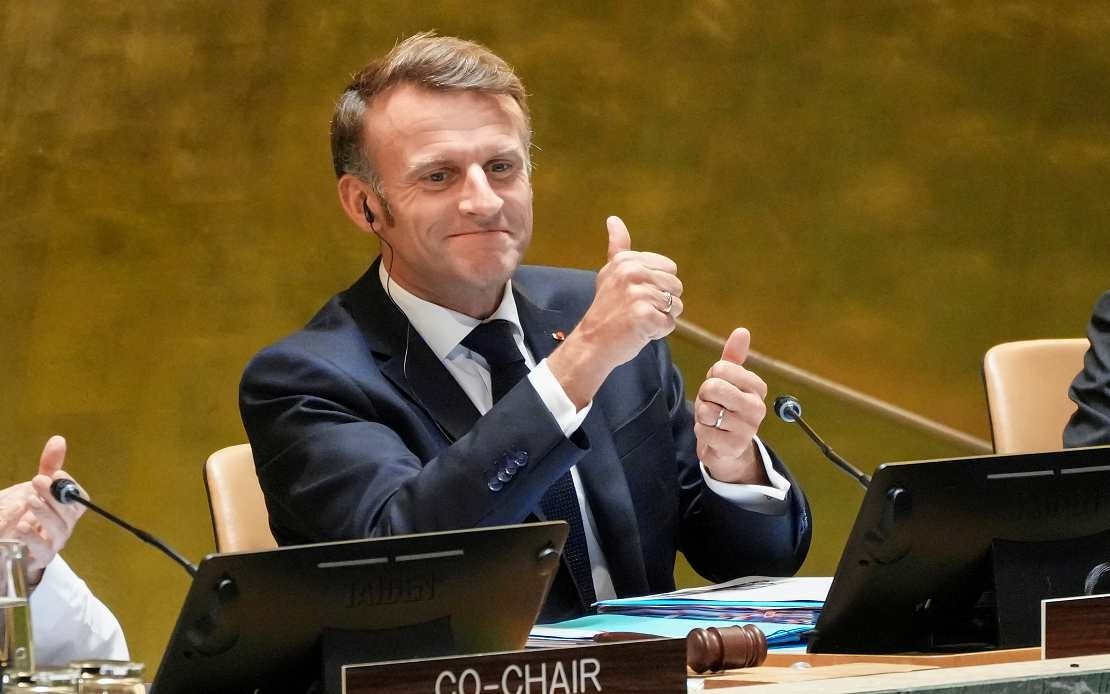
President Emmanuel Macron has directed his interior minister to immediately intensify inspections at crossing points along the Spanish frontier, according to statements released by the Élysée Palace on Friday. The directive reflects France's concern that the migration situation unfolding in Ceuta could create secondary movements of migrants attempting to cross into French territory, a pattern occasionally observed when entry opportunities narrow in one location. Macron also pledged France's support to Spain, signalling European solidarity during the crisis while simultaneously ensuring France protects its own border integrity.
Interior Minister Laurent Nuñez has already begun implementing these enhanced measures, with instructions distributed to border authorities on Thursday evening. The deployment strategy represents a comprehensive security posture rather than a purely defensive checkpoint approach, involving multiple agencies and technological assets. Beginning Saturday, 334 police officers and gendarmes will be stationed across Spanish border crossing points to conduct more thorough passenger and vehicle screening. This personnel commitment reflects the seriousness with which French authorities view the situation.
Beyond traditional ground-based inspections, France is deploying sophisticated surveillance capabilities to monitor the broader border region. Three aircraft have been mobilised for aerial reconnaissance missions, supplemented by drone operations that can identify and track movement patterns across remote areas. These airborne assets allow authorities to detect irregular crossing attempts that bypass official checkpoints, addressing a vulnerability in land-based inspection alone. The aerial component represents a modern approach to border management that combines human officers with technology.
The rapid reaction force traditionally stationed at France's border with Italy will be relocated to the Spanish frontier, bringing institutional experience in managing migration flows to this critical area. This unit comprises a multidisciplinary composition including police, gendarmes, customs personnel, and soldiers from the Sentinelle anti-terrorism unit. The presence of military-trained officers reflects France's characterisation of the border situation as requiring heightened security protocols. Such redeployment also suggests that Italy's migration situation may have temporarily stabilised or that France considers the Spanish border the more pressing priority at present.
Railway security has also been targeted for enhancement, with French authorities increasing patrols along trains operating the transnational routes connecting France and Spain. Migrants sometimes attempt to board freight or passenger trains as a means of crossing borders undetected. By augmenting patrol frequencies, France seeks to close this avenue while maintaining essential transportation links. These train-based operations complement checkpoint screening and aerial surveillance in creating a layered security architecture.
France is simultaneously engaging in diplomatic coordination with both Spanish and Moroccan authorities to address the root causes and shared management of the crisis. Such trilateral communication reflects the understanding that singular national responses prove insufficient when migration pressure originates from conditions in a third country and flows through transit nations. Morocco's involvement is particularly significant given its geographical position and relationship to Ceuta, a Spanish possession located on Morocco's northern coast. By consulting with Moroccan officials, France acknowledges the regional dimensions of migration management.
The situation in Ceuta itself merits attention, as this 18.5-square-kilometre Spanish exclave represents one of Europe's most unusual demographic and political spaces. Surrounded entirely by Moroccan territory, Ceuta periodically experiences sudden migrant arrivals, often precipitated by coordinated movements from Moroccan side or by seasonal factors affecting migration routes. The enclave's isolation and unique status mean that migration surges there create immediate pressure on both Spanish and French authorities downstream.
For Malaysia and Southeast Asian observers, the French response illustrates how developed democracies manage migration pressures whilst attempting to preserve open border agreements with neighbours. The European Union's Schengen framework requires member states to maintain internal border openness, yet individual nations retain sovereignty to implement temporary enhanced checks during crises. France's mobilisation of such resources and diplomatic channels demonstrates the scale of contemporary migration challenges even among wealthy, institutionally mature nations.
The coordination between Paris, Madrid, and Rabat also underscores how migration is fundamentally a regional and international issue requiring cooperation across political boundaries. Southeast Asian nations facing similar pressures might observe how France balances security concerns with humanitarian obligations and alliance maintenance. The deployment of technological solutions alongside personnel expansion reflects best practices in modern border management that combine human judgment with data-driven surveillance.
Moreover, the French approach reveals how migration crises can create unexpected geopolitical alignments and require rapid institutional adaptation. The reallocation of resources from Italy to Spain demonstrates that migration pressure points shift, demanding flexible governance responses. As climate change and economic disparities continue driving migration globally, wealthy nations will increasingly rely on precisely these mechanisms—intelligence sharing, coordinated enforcement, technological deployment, and diplomatic engagement—to manage flows.

